Most homeowners spend weekends thinking about kitchen counters or bathroom tile. Virtually nobody thinks about the garage door until it stops working or starts looking embarrassing. That’s a costly blind spot, because the garage door is quietly doing more work for your property’s value than almost any other single feature on the exterior, explains the C&C Property Management team.
This isn’t a minor detail. It’s a structural fact about how buyers perceive your home, and it has real numbers behind it.
The 40% Factor Most People Ignore
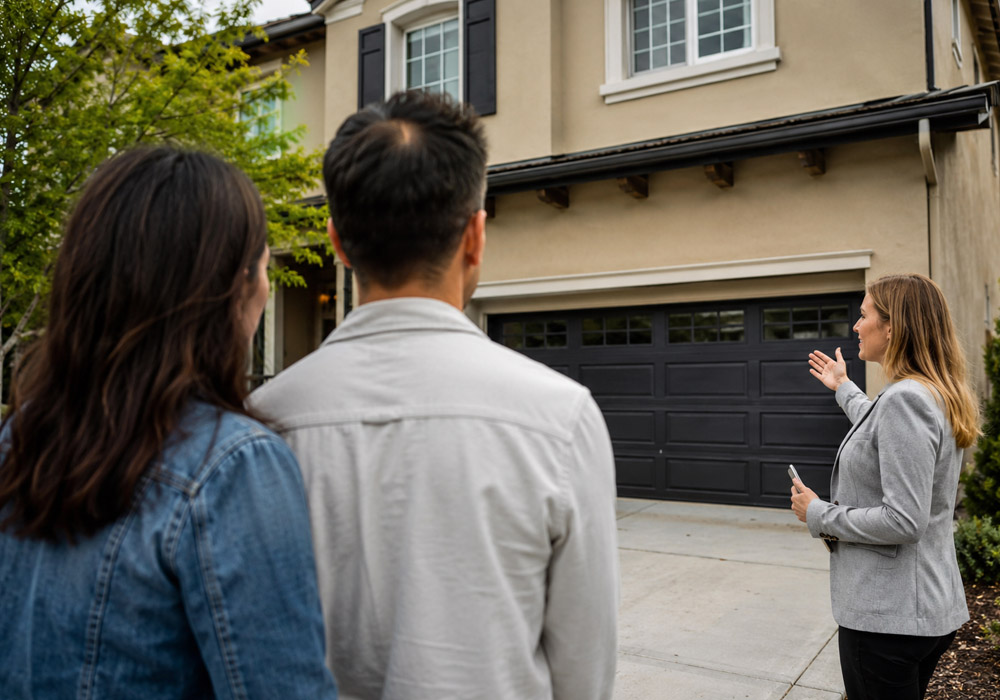
Stand at the curb in front of a typical suburban home and take a slow look. The garage door is not background noise. For many homes, the garage door covers up to 40% of the front facade. That’s nearly half of what a buyer sees before they ever walk through the front door.
Buyers form impressions fast. A battered, faded, or dented garage door signals one thing immediately: deferred maintenance. It doesn’t matter how clean your kitchen is. If the largest visible panel on your house looks worn out, the mental math a buyer does on repair costs starts before they’ve even parked. The condition and style of the garage door strongly influences how a home is perceived from the street. A clean, well-designed door can instantly make a property look modern and well-maintained, while an outdated or damaged door can diminish the home’s overall visual appeal.
You can pour money into landscaping and fresh paint and still lose buyers at the driveway if the garage door looks neglected. That’s not an opinion. That’s buyer psychology playing out in real estate transactions every day.
The ROI Numbers Are Hard to Argue With
Here’s where the garage door story gets genuinely surprising. Home improvement projects rarely recoup their full cost at resale. Kitchen remodels, bathroom renovations, basement finishes — they typically return somewhere between 60% and 80% of what you spend. The garage door breaks that pattern entirely.
According to Zonda’s 2025 Cost vs. Value report, published by Remodeling magazine, garage door replacement delivers an average ROI of 267.7%, making it the highest-returning home improvement project. A typical $4,300 investment adds approximately $8,350 to a home’s resale value, meaning homeowners recover $4,050 more than they spent.
That 268% figure is worth sitting with for a second. You spend roughly $4,000 to $5,000 on a new door, and buyers will pay more than double that back in the form of a higher sale price. No other exterior project comes close. No interior project even approaches it.
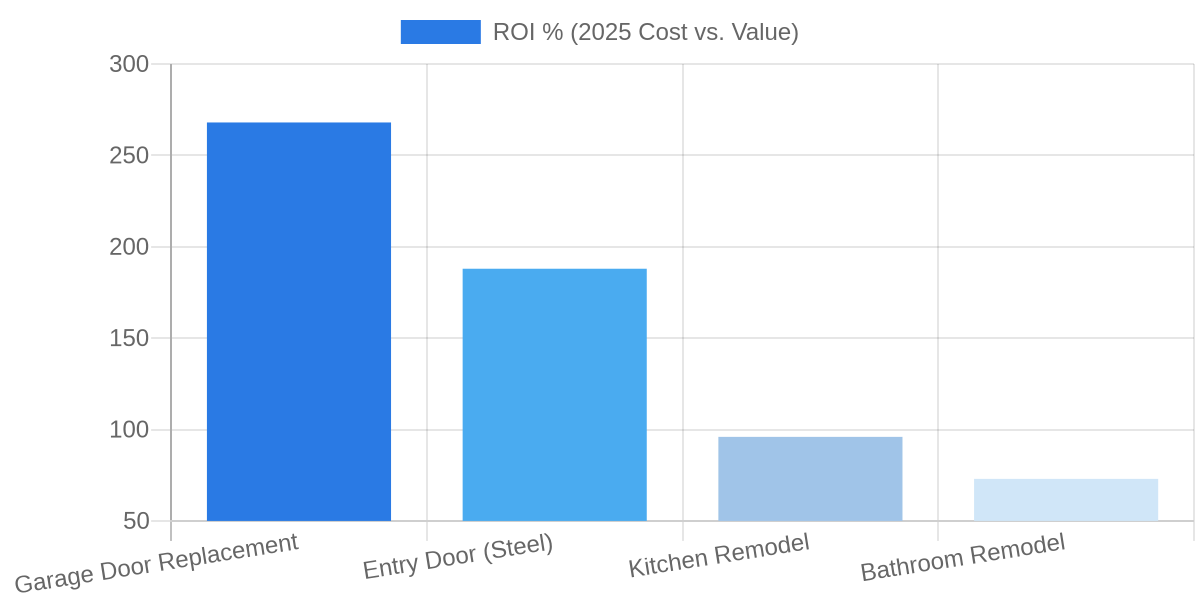
The chart above uses figures from Zonda’s 2025 report. The gap between garage door replacement and everything else isn’t a rounding error. It’s a structural difference in how buyers value visible, functional upgrades versus interior cosmetics they’ll personalize anyway.
Condition Matters Just as Much as Style
A new garage door is the obvious move if yours is genuinely past its useful life. But a well-maintained existing door can do nearly as much heavy lifting for your home’s perceived value, without the full replacement cost.
This is where regular service becomes a financial decision, not just a convenience. According to the Door & Access Systems Manufacturers Association (DASMA), the leading trade organization for the garage door industry, regular lubrication and inspection are the two most impactful things homeowners can do to extend the life of their garage door system.
A garage door opens and closes multiple times per day. At three cycles per day, that’s more than 1,000 uses per year, and over a 15-to-20-year lifespan, a door can cycle more than 20,000 times. Springs fatigue. Rollers wear. Tracks drift out of alignment. None of these problems announce themselves loudly until something fails, and a failure the week before your home goes on the market is exactly the wrong time to discover deferred maintenance.
Think of it this way: a tune-up that catches a worn spring costs a fraction of an emergency repair. An emergency repair costs a fraction of a full replacement. And a full replacement, if it happens under pressure before a listing, gets done in a rush instead of on your terms.
“Proactive service not only maintains performance but also protects against rust and seasonal wear, particularly valuable in areas with fluctuating temperatures.” — Columbus Door Sales, 2026 maintenance guide for homeowners
The Three-Layer Value Test: A Simple Framework for Your Garage Door
Before you decide whether to repair, maintain, or replace your door, run it through this original framework. It’s not complicated, but it forces you to look at the door the way a buyer would.
Layer 1 — Function. Does the door open, close, and reverse properly? Does it seal at the bottom? Are there any grinding, scraping, or rattling sounds during operation? A door with functional problems fails Layer 1, and no amount of new paint fixes that. Fix function first.
Layer 2 — Condition. Look for dents, rust spots, faded or peeling finish, and weather-stripping that’s cracked or missing. A door that functions properly but looks rough fails Layer 2. Cosmetic repairs, a fresh coat of paint, and new hardware can often resolve Layer 2 issues at minimal cost.
Layer 3 — Style. Does the door look like it belongs on the house? A raised-panel steel door that made sense in 2003 might look dated against a modern facade. If the door passes Layers 1 and 2 but looks genuinely out of place, that’s a replacement conversation. If it passes all three layers, consistent maintenance is all you need.
Most homeowners who haven’t looked critically at their garage door in a few years will find a Layer 2 problem. A professional tune-up resolves the vast majority of those issues in a single visit.
Climate Wear and the Local Reality
Where you live changes the math. A garage door in a mild coastal climate faces very different stress than one in a high-desert region where temperatures can swing 40 degrees between morning and afternoon in the same day. Southern Utah is a perfect example. The combination of intense UV exposure, temperature extremes, and dry air accelerates paint fading, weather-seal cracking, and the stiffening of lubricant on rollers and hinges.
A homeowner in a place like Cedar City might look at a door that appears fine from ten feet away and not realize the weather stripping has brittled to the point of losing its seal, or that the springs have been cycling in conditions that accelerate metal fatigue. That’s when calling in a professional pays for itself. If you’re already looking at scheduling a check, a local team offering garage door repair in cedar city, utah can catch those climate-specific issues before they quietly become expensive ones.
The point is simple: maintenance schedules designed for average climates may not be enough in places with real seasonal extremes. Adjust accordingly.
Practical Steps to Protect Your Investment
You don’t need to be handy to keep your garage door in good shape. You need a short, honest checklist done a couple of times per year.
- Watch the door move through a full cycle. It should travel smoothly and stay level. Any jerkiness or one side rising faster than the other signals a balance problem.
- Listen for sounds that weren’t there six months ago. Grinding means metal-on-metal contact. Popping usually points to spring tension. Squealing is often a roller or hinge needing lubrication.
- Check the bottom seal. It should compress evenly against the ground across the full width of the door. Daylight showing through means air, water, and pests can enter.
- Test the auto-reverse. Place a flat board on the ground in the door’s path and close it. The door should reverse immediately on contact. If it doesn’t, the safety sensor needs adjustment before anyone drives or walks under that door again.
- Book a professional inspection once a year. Your own eyes can catch obvious problems, but a technician can measure spring tension, check cable wear, and spot track alignment issues you’d never notice.
None of that takes more than ten minutes of your time for the visual checks. The professional visit is typically an hour. Against the ROI numbers above, that’s one of the cheapest maintenance hours in home ownership.
The Bottom Line
Your garage door isn’t a footnote in your home improvement budget. It’s the single most visible element on your home’s exterior and, according to current Cost vs. Value research, the highest-returning upgrade you can make before a sale. Keeping it functional and well-maintained isn’t just a curb appeal move. It’s a property value decision with a documented payoff.
So: when did you last actually look at yours?