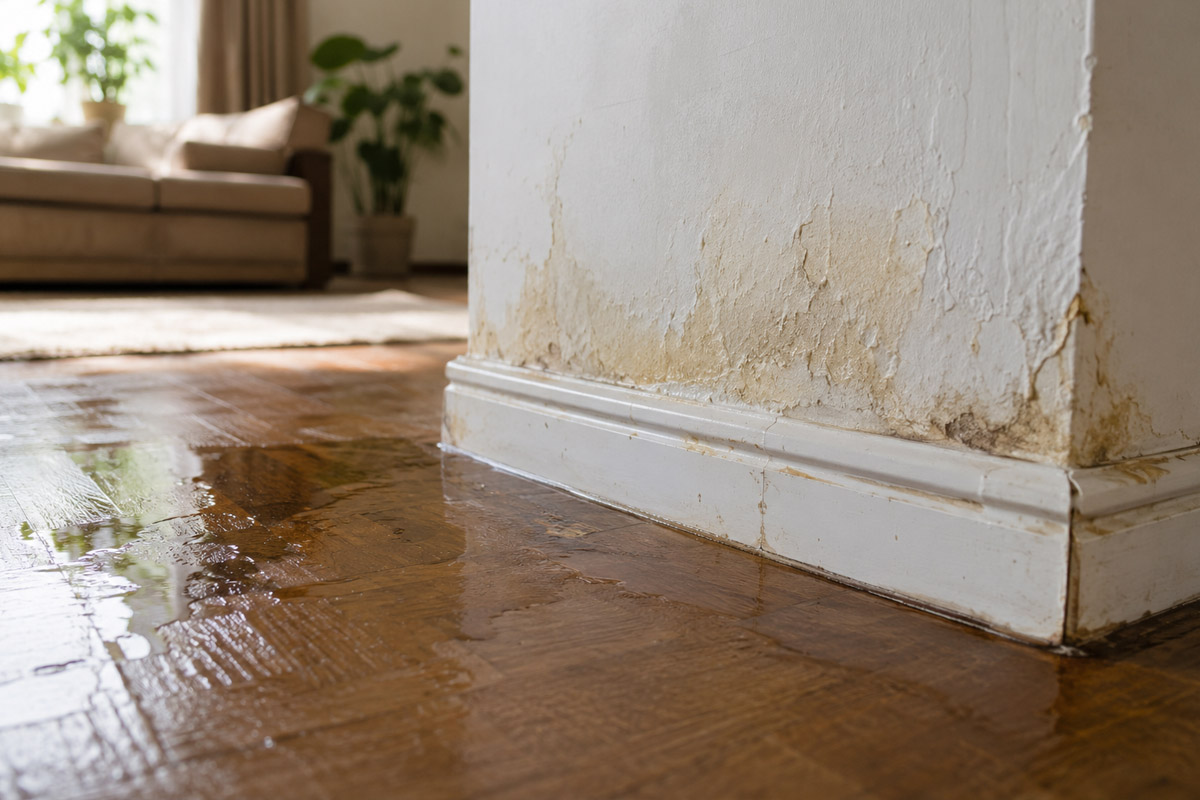
Your water bill jumped $40 last month and you haven’t changed a single habit. That’s not a coincidence. That’s a leak you haven’t found yet.
Hidden water leaks are one of the most quietly destructive things that can happen inside a home, notes H&M Property Management, a trusted provider of property management in Watsonville. They don’t announce themselves with a dramatic burst pipe. They just sit there, soaking into your drywall and warping your subfloor, for weeks or months before you notice anything obvious. By the time you do, the repair bill is a lot bigger than it would have been on day one.
Knowing what to look for changes everything. Here are five signs your home might have a hidden water leak, plus a practical framework for deciding when to handle it yourself and when to pick up the phone.
Why Hidden Leaks Are More Common Than You Think
Most homeowners assume a serious water leak would be obvious. It usually isn’t. According to the EPA WaterSense program, the average household’s leaks can account for more than 9,300 gallons of water wasted every year, and nine percent of homes have leaks that waste 50 gallons or more per day. That’s not a slow drip from a faucet you’ve been meaning to fix. That’s a real, active loss happening somewhere you can’t see.
The problem compounds fast. The EPA advises that if wet or damp materials or areas are not dried within 24 to 48 hours after a leak starts, mold will likely grow in most cases. A hidden leak behind a wall doesn’t get dried. It just stays wet, day after day, until you find it or a professional does.
Sign 1: Your Water Bill Is Creeping Up for No Reason
This is the clearest early warning sign, and it’s the one most people explain away. A utility bill that climbs month over month without a change in your routine almost always means water is leaving your system somewhere it shouldn’t be.
Pull up three months of bills and compare them side by side. If usage is trending up but your household habits haven’t changed, that’s your evidence. The EPA estimates the average family can waste 180 gallons per week, or 9,400 gallons of water annually, from household leaks. Translated to dollars, that’s a meaningful chunk of your annual water spend going nowhere useful.
The meter test is the easiest confirmation. Turn off every water-using appliance in your home, note the meter reading, wait two hours without using any water, and check again. If the number moved, something is leaking.
Sign 2: Soft Spots, Bubbling Paint, or Warped Flooring
Water changes the texture of everything it touches over time. If you press on a section of drywall and it gives a little more than it should, that’s a red flag. Bubbling or peeling paint on an interior wall that wasn’t exposed to steam or moisture is another. Flooring that was flat six months ago and now has a slight rise in one corner deserves attention.
These are physical symptoms of a slow, ongoing moisture source. They don’t develop from a one-time splash. A bubble in your bathroom wall paint that wasn’t there last spring is almost certainly tied to something leaking behind it, whether that’s a pipe fitting that’s been weeping or a slow supply line drip under a vanity.
Run your hand along baseboards in rooms that share a wall with a bathroom, kitchen, or laundry area. That edge, where the baseboard meets the floor, is often the first place visible warping shows up.
Sign 3: A Musty Smell That Won’t Go Away
Mold has a smell before it has a visible footprint. That earthy, damp odor in a room with no obvious moisture source is not something to light a candle and ignore. It’s telling you something wet is sitting inside your walls, your ceiling, or under your floor.
The smell tends to concentrate near the leak source. If the odor is consistently stronger near one wall of a bedroom or in a hallway cabinet, work from there. Open the cabinet under your bathroom or kitchen sink and take a real sniff. A musty smell inside a closed cabinet almost always means there’s been water making contact with the cabinet floor or the back panel repeatedly over time.
Don’t write this one off as “old house smell.” That’s not a thing. Old houses that smell musty have moisture they haven’t dealt with.
Sign 4: Low Water Pressure That Appeared Gradually
A slow drop in water pressure across your whole house, not just one fixture, can point to a pipe that’s been losing water somewhere in your supply line. This is easy to dismiss because it happens so gradually you adjust to the new normal before you notice something’s wrong.
Compare the pressure in your shower now to what it was two years ago. If it feels weaker, and you haven’t made any changes to fixtures or your municipal supply hasn’t flagged any issues, a hidden supply line leak is worth investigating. Pipe walls that have been weakened by corrosion or physical stress don’t always burst. They seep. And seeping pipes lose pressure.
Sign 5: Visible Staining on Ceilings or Walls
A brown or yellowish ring stain on a ceiling is one of the most obvious hidden leak signs, but homeowners still find ways to rationalize it. “It’s old.” “It was there when we moved in.” Unless you had that stain professionally assessed and confirmed inactive, it needs attention.
Ceiling stains almost always point to a plumbing or roof leak directly above. If the stain is below a bathroom, you’re probably looking at a toilet supply line, a wax ring, or a drain connection that’s been failing. If it’s below an exterior roof line, that’s a separate conversation. But in a two-story home, a ceiling stain in the kitchen below an upstairs bathroom is almost never just cosmetic.
New or growing stains are the most urgent. Photograph them and check back in two weeks. If the stain grows, the leak is active right now.
The STOP-CHECK-CALL Framework: Deciding What to Do Next
When you find evidence of a possible hidden leak, most people either panic and call someone immediately or tell themselves they’ll deal with it later. Neither response is ideal. Here’s a practical three-step model for working through it without either overreacting or letting it sit.
- STOP: Turn off any water supply connected to the area you suspect. Under-sink shut-off valves, toilet supply valves, or the main if you can’t isolate it. This limits ongoing damage while you assess.
- CHECK: Run the meter test described above. Look for the physical signs covered in this article. Take photos of everything you find, dated if possible.
- CALL: If the meter moved, or you found two or more of the signs above, it’s time to bring in a professional. DIY repairs on supply lines and slab leaks can make things worse if the underlying cause isn’t correctly identified first.
That last step matters more in some locations than others. Homes in coastal or tropical climates deal with accelerated pipe corrosion from humidity and salt air, which makes hidden leaks more frequent and harder to trace without professional tools. Professional leak detection in paia and similar coastal areas often involves acoustic equipment and pressure testing that goes far beyond what a homeowner can do with a flashlight and a wrench.
What the Data Says About Acting Fast
| Delay in Response | Likely Outcome
|
| Under 24 hours | Materials can typically be dried; mold risk is low |
| 24 to 48 hours | Mold growth window opens per EPA guidance; drywall and wood begin absorbing moisture |
| 1 to 2 weeks | Structural materials begin to degrade; mold likely established behind walls |
| 1 month or more | Significant structural and mold remediation typically required; costs multiply |
The table above reflects the EPA’s documented guidance on moisture and mold, not worst-case scenarios. The faster you act on the signs above, the smaller the repair.
“The key to successful mold control is moisture control. If mold is a problem in your home, you should clean up the mold promptly and fix the water problem.” This framing, from the EPA’s official guidance on mold, moisture, and your home (2026), underscores that the mold is never the root issue. The water is.
A Scenario Worth Thinking Through
Picture a homeowner in a single-story home who notices, in October, that the tile floor near the laundry room feels slightly soft underfoot. She assumes the grout just needs re-sealing. By January, there’s a faint smell near the hallway. By March, the baseboard on the adjacent bedroom wall is visibly warped. What started as a slow drip from a washing machine supply hose connection behind the drywall has now spread moisture across a 12-foot section of subfloor. The repair cost, by that point, isn’t just the $12 hose fitting. It’s subfloor replacement, drywall, and mold remediation across two rooms.
The soft tile in October was the moment to act. Every sign in this article is that moment, showing up differently. According to EPA WaterSense data (2026), fixing household leaks promptly saves homeowners an average of 10 percent on their water bills. That’s the easy math. The harder math is what it costs when you don’t.
Check your home against the five signs above this week, not eventually. If something looks off, run the meter test. If the meter moves, pick up the phone.