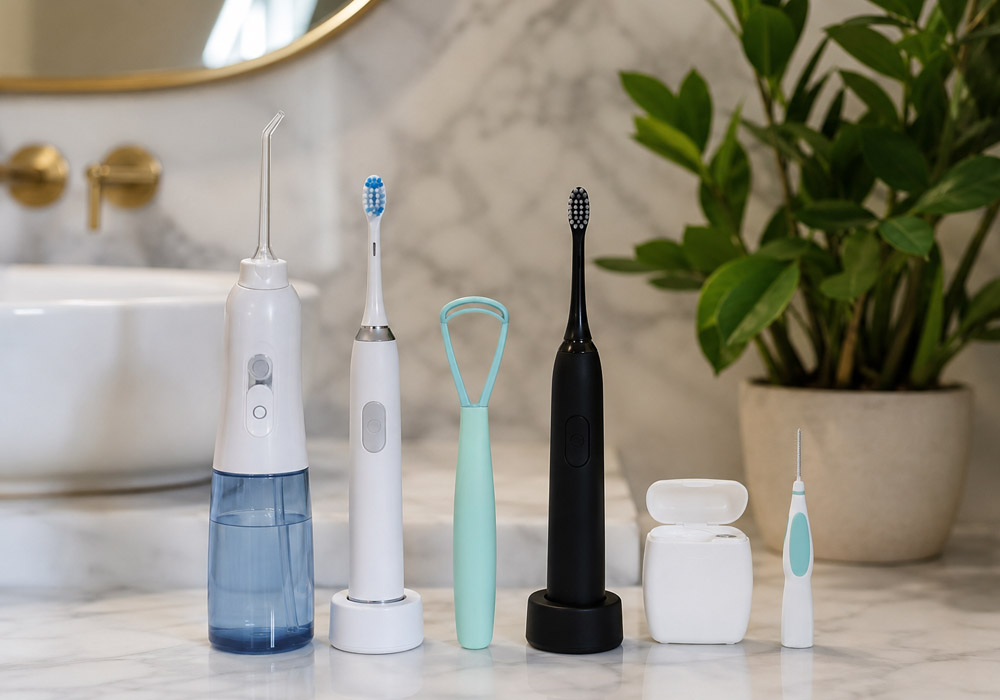
Your gums do a lot of quiet work. They hold your teeth in place, form a barrier against bacteria, and take the brunt of every brushing session. Most people only think about them after something goes wrong, which is a shame, because the right at-home tools can genuinely change the picture before problems even start.
This roundup focuses on the oral care products that make the biggest difference for gum health specifically. You won’t find generic toothpaste reviews here. Every pick has been chosen because it addresses plaque removal, gum line cleaning, or gum tissue protection in a way that everyday brushing alone just can’t match. And if you’re already dealing with gum-related concerns or want professional guidance on your routine, a periodontist kansas city can assess where your gum health actually stands and build a plan around it.
Here’s what we looked at when putting this list together:
- Clinical or dentist-backed evidence of gum health benefits
- Ease of daily use for real people with real schedules
- Pressure control features to prevent gum tissue damage
- Value across budget and premium price points
- Availability of specialized tips, heads, or modes for gum care
1. Waterpik Aquarius Water Flosser (WP-660)
The Waterpik Aquarius is about as close to a consensus pick as the water flosser category gets. It reigns as the best water flosser of 2026 thanks to its simple, user-friendly design. That simplicity matters because people actually use simple tools. A flosser collecting dust in a cabinet helps nobody’s gums.
What sets the Aquarius apart for gum health specifically is its pressure range. You need a model with a genuinely gentle low-pressure setting, a periodontal pocket tip for subgingival cleaning, and enough pressure range to increase as your gums heal. The Aquarius delivers exactly that, with ten pressure settings covering 10 to 100 PSI and a Pik Pocket periodontal tip included in the box.
Water flossers shoot pressurized water at the spaces between your teeth to flush out plaque and help keep gum tissue healthy. The Aquarius handles this better than most because the pressure dial gives you precise control. Start low if your gums bleed easily, and work your way up as things improve.
Pros:
- ADA accepted with the widest pressure range in its class
- Periodontal pocket tip included for deeper gum line cleaning
- Large reservoir means fewer interruptions mid-session
- Proven clinical results for reducing gingivitis and gum bleeding
Cons:
- Countertop-only design takes up bathroom real estate
- The cord limits where you can set it up
Best for: Anyone with gingivitis, early gum recession, or deep pockets who wants a tool their periodontist would actually approve of.
Learn more about the Waterpik Aquarius
2. Oral-B iO Series 9 Electric Toothbrush
Electric toothbrushes as a category already have a significant edge over manual ones for gum health. Research has shown that brushing with an electric toothbrush can help prevent gum disease and prevent tooth loss, while manual toothbrushes can leave up to 50% of bacterial plaque behind, the main culprit of gum disease. The Oral-B iO Series 9 sits at the premium end of this category, and for gum-focused users, it earns that price.
The Series 9 uses magnetic drive technology that produces a micro-vibrating motion across the bristles. It destroys oral plaque using a combination of oscillating, rotating and pulsing motions rather than vibrations. For gums, the pressure sensor is the standout feature. It flashes red when you’re pressing too hard, which is one of the most common causes of gum recession people never know they’re doing.
The companion app provides real-time zone-by-zone brushing feedback, so you stop neglecting the back molars where gum disease most often starts. The iO series connects to your smartphone to send real-time information while you brush.
Pros:
- Pressure sensor actively protects gum tissue during brushing
- Round brush head reaches the gum line from every angle
- Multiple cleaning modes including a dedicated “Gum Care” setting
- Smart app tracks coverage so no zones get skipped
Cons:
- Premium price point is a real commitment
- Replacement heads add ongoing cost
Best for: People who brush aggressively without realizing it, or anyone whose dentist has flagged gum recession.
Explore the Oral-B iO Series lineup
3. Philips Sonicare 4100 Electric Toothbrush
Not everyone needs to spend top dollar to protect their gums. The Philips Sonicare 4100 is the electric toothbrush that removes the affordability excuse from the conversation. At $49, the Sonicare 4100 removes every excuse not to own a gum-protection-capable electric toothbrush. It has a pressure sensor, a 2-minute timer with a 30-second QuadPacer, and a soft-bristle compatible design, the three non-negotiables for anyone managing gingivitis or early gum recession.
The sonic technology drives 31,000 brush strokes per minute, pushing fluid between teeth and along the gum line in a way that fingers and a manual brush simply can’t replicate. The most important variable is not the brush but using it consistently. A $49 brush used twice daily with correct technique will outperform a $219 brush used once a day carelessly.
The 4100 comes with a two-minute timer and a built-in pressure sensor. It’s not as feature-heavy as the iO Series 9, but it covers the fundamentals that actually matter for gum protection.
Pros:
- Budget-friendly entry into clinically effective brushing
- Pressure sensor and QuadPacer timer built in
- Compatible with soft-bristle heads for sensitive gums
- Simple one-button operation
Cons:
- No Bluetooth or app connectivity
- Only one cleaning mode
Best for: Budget-conscious buyers who want proven gum protection without any learning curve.
4. Curaprox Hydrosonic Pro Toothbrush
The Curaprox Hydrosonic Pro earns its spot here because it takes a different approach to the gum cleaning problem. The Curaprox Hydrosonic Pro is a powerful sonic toothbrush with uniquely designed crooked brush heads. It’s the combination of these two factors that allow for superior gum cleaning.
The angled heads are purpose-built to hug the gum line in a way that straight brush heads often miss. Curaprox also leans heavily on ultra-soft bristle counts, with their heads featuring far more bristles than a standard brush. More bristles at softer pressure means more contact surface along the gum margin without the tissue trauma that firmer bristles can cause over time.
For people who’ve been told they have sensitive or inflamed gums, the gentleness here is a meaningful selling point. You’re getting thorough cleaning without the kind of aggressive scrubbing action that can make already irritated gum tissue worse.
Pros:
- Angled brush heads designed specifically for gum line access
- Ultra-soft, high-density bristle design is gentle on inflamed tissue
- Multiple speed settings to match gum sensitivity levels
- Compact and travel-friendly build
Cons:
- Replacement heads cost more than major brand alternatives
- Less widely available in physical retail stores
Best for: People with sensitive or inflamed gums who need a gentler brushing motion without sacrificing cleaning quality.
5. Waterpik Cordless Advanced 2.0 Water Flosser
The countertop Aquarius is the clinical workhorse, but the Cordless Advanced 2.0 is the water flosser you’ll actually take on trips and use in a bathroom without counter space. Portability matters for consistency, and consistent use is the only thing that actually improves gum health over time.
Despite being cordless, this Philips water flosser features an 8-ounce water reservoir with enough capacity for a full clean and delivers solid pressure, with four nozzles included in the box. The Waterpik Cordless Advanced 2.0 competes in the same cordless space and similarly punches above its weight for pressure delivery.
The American Dental Association has approved four water flossers, including the Waterpik Cordless Advanced 2.0. That ADA Seal matters here because it confirms the device actually reduces plaque and gingivitis rather than just marketing around it.
The magnetic charging base keeps the unit charged without cables getting in the way. Three pressure settings cover most gum sensitivity situations, and the unit is small enough to fit in a travel bag without complaints.
Pros:
- ADA Seal of Acceptance for plaque and gingivitis reduction
- Fully cordless and travel-ready
- Magnetic charging base for clean countertop storage
- Works well for people with braces or implants
Cons:
- Smaller reservoir than countertop models means more refilling
- Fewer pressure settings than the Aquarius
Best for: Frequent travelers or anyone who doesn’t have counter space but still wants daily water flossing in their routine.
6. GUM Soft-Picks Advanced Dental Picks
Not every gum care tool needs a battery. GUM Soft-Picks Advanced sit in a category that’s easy to overlook, but they fill a real gap for people who skip flossing entirely because string floss is uncomfortable or difficult to use.
Gum disease creates a painful cycle. Your gums bleed, so you avoid flossing. You avoid flossing, so plaque builds up. Plaque builds up, so your gums get worse. Soft-Picks short-circuit that cycle by making interdental cleaning so low-effort that you’ll actually do it. The flexible rubber bristles slide between teeth gently, removing debris and stimulating gum tissue without the irritation that string floss causes on inflamed gums.
They’re disposable, portable, and require zero technique. You don’t have to wrap anything around your fingers or find the right angle. That low barrier to entry is the whole point. For people in the early stages of gum issues who are building a routine, GUM Soft-Picks are the bridge between “doing nothing” and “using a water flosser twice a day.”
Many dentists recommend water flossers for patients with periodontitis or gingivitis because the gentle pressure can help clean inflamed areas without further irritation, and the same logic applies to soft picks. Gentle, consistent interdental cleaning beats aggressive, occasional flossing every time.
Pros:
- Zero technique required, making daily use genuinely sustainable
- Flexible rubber bristles won’t cut or irritate sensitive gum tissue
- Portable and disposable, perfect for on-the-go use
- Inexpensive and widely available
Cons:
- Doesn’t reach as deep as a water flosser for pockets
- Disposable design creates more waste than reusable alternatives
Best for: People who hate traditional flossing and need a gentler, simpler daily alternative to keep plaque from building up along the gum line.
How These Tools Work Together
The honest answer is that the best at-home gum care routine combines more than one of these. An electric toothbrush handles the surface plaque and gum line on the tooth faces. A water flosser or soft pick cleans the spaces between teeth and below the gum margin where brushing can’t reach. Together, they cover the full picture.
| Tool | Primary Benefit | Best Price Range | ADA Accepted
|
| Waterpik Aquarius WP-660 | Deep gum pocket cleaning | Around $80 | Yes |
| Oral-B iO Series 9 | Smart pressure-safe brushing | $180 to $220 | Yes |
| Philips Sonicare 4100 | Affordable gum protection | Around $49 | Yes |
| Curaprox Hydrosonic Pro | Gentle gum line brushing | $80 to $120 | No |
| Waterpik Cordless Advanced 2.0 | Portable water flossing | Around $60 | Yes |
| GUM Soft-Picks Advanced | Easy daily interdental cleaning | Under $10 | No |
A Final Note on At-Home Tools vs. Professional Care
These products are genuinely useful, and using them consistently makes a real difference. But they work best as a complement to professional care, not a substitute for it. If you have symptoms of gum disease such as persistent bleeding, swollen gums, receding gum line, loose teeth, or persistent bad breath, see your dentist or periodontist for diagnosis and a treatment plan. A water flosser may be recommended as part of that plan, but it does not replace professional care.
Your at-home routine builds on what professionals treat and maintain. The tools in this list do their best work when you’re already on a regular periodontal maintenance schedule. Pick one or two that match your current routine, use them every day, and give your gums the consistent attention they’ve probably been missing.