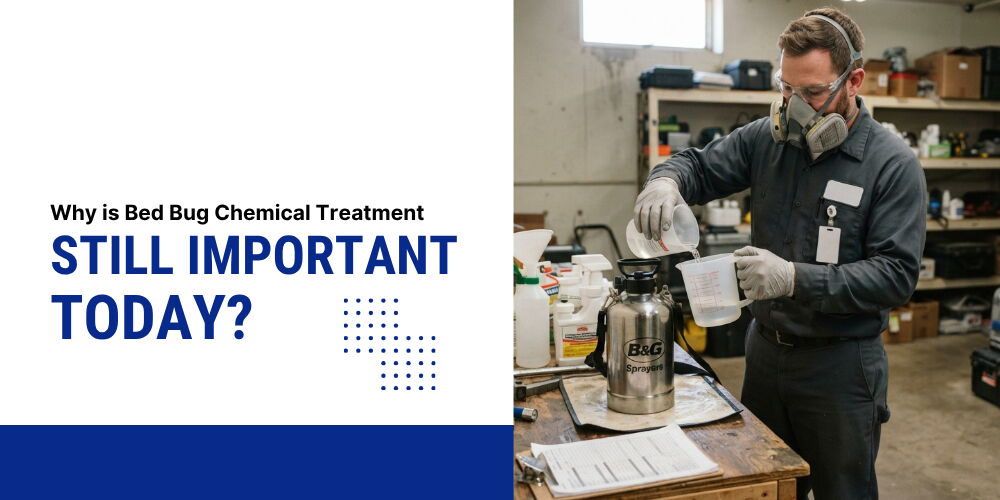
Many homeowners assume that chemical treatment has become outdated because heat treatment has gained popularity in recent years. However, professional pest control does not rely on a single solution for every infestation. Instead, experts often use an integrated pest management approach that combines multiple treatment methods tailored to the property’s unique conditions.
By understanding how chemical treatment works alongside heat treatment, homeowners can see why professionals continue to include both methods in comprehensive bed bug management plans.
What Bed Bug Chemical Treatment Does
Bed bug chemical treatment focuses on applying professional-grade insecticides to areas where bed bugs hide, travel, and rest. Before any product is applied, technicians perform a detailed inspection to identify activity signs and the insects’ common harborage sites. This step helps ensure that treatment targets the areas where bed bugs are most likely to come into contact with the products.
Professionals typically apply liquid insecticides, dust formulations, or other approved products to the following:
- Bed frames
- Furniture joints
- Baseboards
- Cracks
- Crevices
Rather than treating the entire room, bed bug chemical treatment focuses on areas where bed bugs are active. As bed bugs move through these treated areas, they come into contact with the products carefully placed by trained technicians.
Another important feature of the treatment is its residual action. Certain professional products remain active on treated surfaces for a period, allowing them to continue working after the initial application.
How Heat Treatment Supports Bed Bug Chemical Treatment
Although bed bug chemical treatment remains an important tool, professionals sometimes recommend adding heat treatment to create a more comprehensive approach. Rather than serving the same purpose, the two methods address different aspects of bed bug control.
Heat treatment raises the temperature throughout an affected room or structure, allowing heat to reach mattresses, upholstered furniture, wall voids, and other difficult-to-access hiding places.
Professional technicians decide whether to combine both methods after evaluating the infestation’s size, location, and severity. As a result, treatment decisions remain based on evidence rather than a one-size-fits-all approach.
Benefits of an Integrated Bed Bug Chemical Treatment Plan
Combining bed bug chemical treatment with heat treatment enables professionals to develop a plan tailored to the property’s specific needs. Instead of relying on a single method, technicians can use each approach where it provides the greatest value.
Better Coverage
An integrated strategy helps address bed bugs throughout the treatment area. While heat reaches many concealed spaces within the room, bed bug chemical treatment focuses on targeted locations identified during the inspection. This combination allows technicians to address both broad treatment areas and specific harborages.
Flexible Treatment Options
Every infestation presents different challenges. Therefore, professionals can adjust the treatment plan according to the home’s layout, the extent of the infestation, and other inspection findings. This flexibility allows technicians to select the most appropriate combination of methods instead of applying the same solution to every property.
Improved Monitoring
Integrated treatment also supports better follow-up. After completing the initial service, technicians inspect the treated areas to evaluate activity and determine whether additional measures are necessary. These follow-up visits help confirm that the treatment plan continues to perform as expected and provide homeowners with clear guidance throughout the process.
Customized Solutions
No two bed bug infestations develop in the same way. Consequently, professional pest control companies create customized plans based on inspection results rather than assumptions. By combining bed bug chemical treatment with heat treatment when appropriate, technicians provide solutions that address each property’s unique conditions and treatment goals.
Why Professional Planning Matters for Bed Bug Chemical Treatment
Successful bed bug control begins with a professional inspection. Technicians evaluate the extent of the infestation, identify hiding places, and determine whether bed bug chemical treatment, heat treatment, or a combination of both offers the most suitable solution.
They also provide preparation instructions before treatment and conduct follow-up inspections afterward to evaluate progress. This structured process ensures that every stage of the treatment plan supports the overall goal of eliminating the infestation as efficiently as possible.
Why Integrated Bed Bug Treatment Works
Modern bed bug control often combines multiple proven methods instead of relying on a single treatment. When professionals integrate bed bug chemical treatment with heat treatment, they can develop a strategy tailored to the specific needs of the infestation. To explore your options, learn more about bed bug conventional treatment from HeatTech.