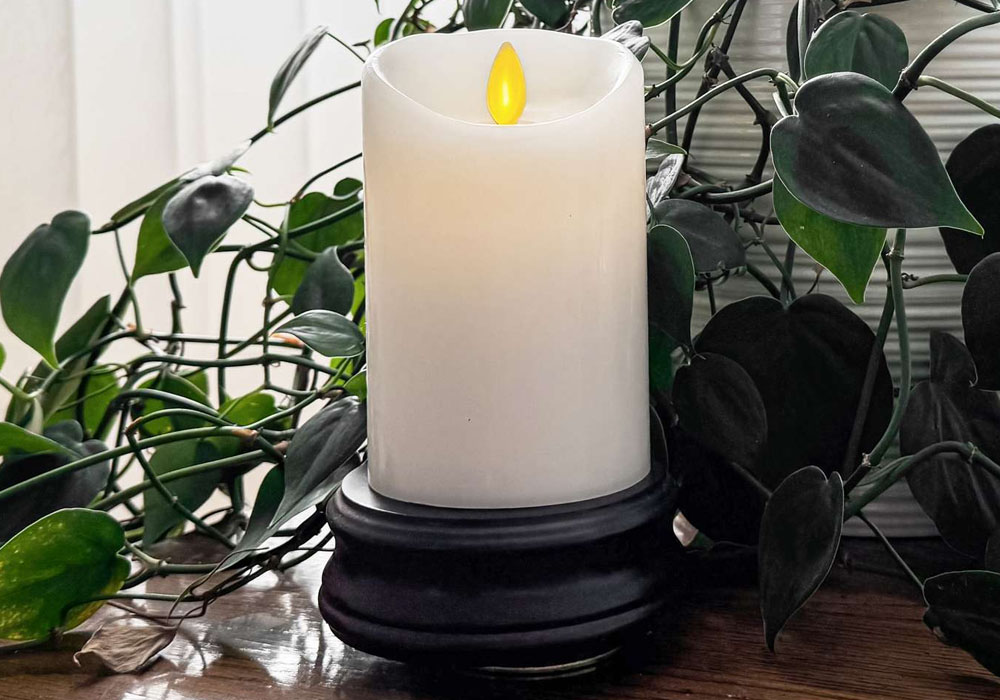
A question that seems to crop up every year, often in a particularly misleading headline. The truth is that there are arguments on both sides, but the safest stance is to weigh both the potential air quality implications and the fire risk that candles pose.
The one area where there is genuine cause for concern, however, is the one that flameless pillar candles do away with altogether.
What is Actually Produced by Burning a Candle
Combustion produces particulates and trace amounts of VOCs in the air, which is exacerbated by burning paraffin wax (common in candles) and a long wick, with the latter often being a factor in the former, especially if the candle is burning in an air current. Even so, the amount of soot and VOCs produced by candles is minimal in most cases, often on the order of several hours of burning in a sealed room with multiple candles before any significant risk presents itself. Most research into candle-produced particulate matter and its health effects has been concerned with prolonged exposure or a lack of ventilation, which is not indicative of day-to-day use of candles.
Where Science is Less Clear
For most, the risk posed by occasional candle use is minimal, though it is amplified for individuals with severe allergies or respiratory issues. Lead wicks are another potential concern, though they have been banned in the US for over two decades, and so a candle purchased in the US or from a reputable source elsewhere is unlikely to contain one. The exception is older candles made before the ban, or ones bought from unregulated sources.
The One Issue That Cannot Be Disputed
Candles start fires, with the National Fire Protection Association citing thousands of home fires every year, with a significant portion of these occurring in bedrooms and caused by a source of ignition being too close to something combustible, or the candle simply being left unattended. There is no dispute about the potential for a candle to cause a fire; the only argument is about whether the risk is worth the ambiance created by one.
Why Pets Are a Particular Concern
Cats are a concern due to their curiosity, ability to reach places one might not think possible, and speed in doing so, and pets in general are also at risk from the soot and other particulate matter from a candle. Birds, in particular, are exceptionally vulnerable to airborne particles, with respiratory systems far more efficient than ours, which is exactly what makes them so sensitive to anything in the air. Essential oils, which are sometimes used to scent candles, can also be toxic to cats, depending on which oil is used, and so present a separate hazard outside of an open flame.
What Using a Flameless Candle Removes
The obvious advantage of flameless candles as far as home safety is concerned is that they remove the fire hazard entirely, along with the particulate matter and potentially VOCs (if the scent is a concern) produced by a real candle. What it does not remove is the aroma, which is often the point of buying a scented candle in the first place, and so the decision to buy one is not an easy one. It comes down to what one is using the candle for; if the point is the scent, then a real candle can provide it as long as the precautions below are actually followed, while a flameless one is best suited to the situations where the ambiance is wanted and the fragrance is not necessary.
How to Burn a Real Candle More Safely
For those who still wish to burn candles, most of the concerns about fire hazards are easily mitigated by trimming the wick to approximately a quarter of an inch, burning candles in a ventilated space, avoiding burning them where there are drafts, leaving a space between the burning candle and anything flammable, and not letting a candle burn when unattended. None of these are particularly difficult to do, though many people skip several of these due to inattention.
Where the Switch to Flameless Candles is Worth Considering
Bedrooms are a place where a candle is likely to be left burning when someone falls asleep, which is how most bedroom candle fires start, with the same being true for any space containing children or pets. Windowsills and areas near curtains are also particularly dangerous, as the combination of a draft and flammable materials is a recipe for disaster, and the same can be said for outdoor tables, where wind can put out a candle flame too easily.
Conclusion: Probably Not Harmful, Definitely Flammable
The concerns about air quality are, for most people, likely not worth worrying about much, provided one burns candles in a ventilated space, though it is worth exercising caution if one has respiratory issues or other concerns about indoor air quality. The other potential issue, fires, is much more concrete, with numerous reports of fires, particularly in bedrooms, caused by candles. If one wishes to have the beauty and ambiance of a candle without its associated risks, then a flameless pillar candle is the safest option.