A pool changes the entire rhythm of a backyard, notes Oklahoma Red Door Management, a trusted Edmond property management company. Once it goes in, everything else- the patio, the plantings, the lighting- has to answer to it somehow. Get that relationship right, and the whole yard feels like it was built around one idea instead of stitched together after the fact.
This piece walks through what actually matters: layout, materials, privacy, zoning, lighting, and the smaller details that round it all out. Nothing here requires a total renovation budget, just some intentional choices made early.
Start With the Pool as Your Layout Anchor
Before you pick a single plant or paver, stand at your back door and trace the lines your eyes actually follow toward the water. Most people design the pool first and figure out the rest later, but the sightline from the kitchen window, the patio door, and the outdoor dining spot should shape where everything else goes. A pool that sits slightly off center from your main view often reads better than one crammed dead center.
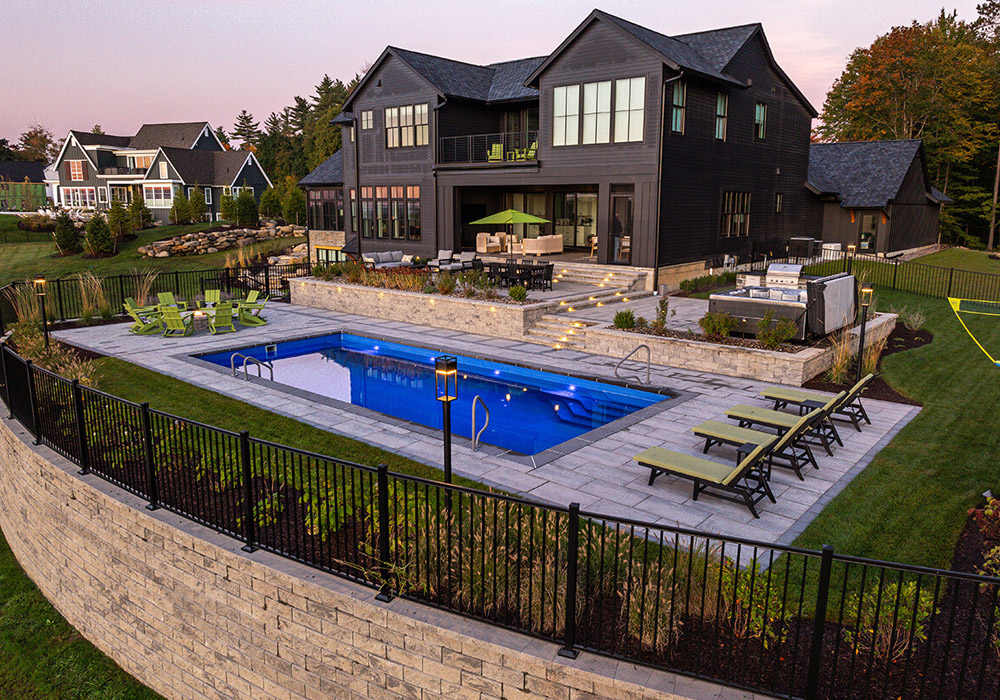
Once you map the sightlines, you’ll need to decide how formal the layout should feel. A designer with the Minneapolis pool landscaping firm Tracer Companies has pointed out that pools with clean geometric edges tend to look sharper when the surrounding beds and walkways mirror that same symmetry, while free-form pools settle in nicer next to looser, asymmetrical plantings. That single decision ends up guiding almost every other choice in the yard.
Sun and shade patterns matter just as much as sightlines. Track where the shadows fall at noon and again in early evening, since a pool that bakes under direct sun all afternoon needs a different planting and seating plan than one that gets natural shade from a mature tree line. This isn’t something you want to guess at after the concrete is already poured.
Finally, give the pool some room to breathe. Cramming a hot tub, a shed, and a full outdoor kitchen right against the coping makes the whole space feel tight, even if the yard itself is large. Leave a few feet of buffer between the water’s edge and anything solid, and the pool will feel like the focal point instead of one crowded feature among many.
Choosing Materials That Handle Wet Feet and Weather
Not every surface that looks good in a catalog photo works well next to standing water. Textured concrete, natural stone, and porcelain pavers each handle slip resistance differently, and the right pick depends on how your family actually uses the space. Kids running around a pool deck barefoot need a rougher, more forgiving surface than adults hosting a quiet dinner party.
Heat retention is another factor people tend to overlook until July hits. Dark stone and standard concrete can get uncomfortably hot underfoot by early afternoon, so lighter tones or specialty coatings designed to stay cooler are worth the extra cost if you live somewhere with long, sunny summers. Nobody wants to hop across their own patio like it’s a bed of coals.
Color coordination matters too, though not in the way most people assume. You don’t need the deck to match the house exactly, but pulling one or two tones from your home’s exterior into the hardscape keeps the whole yard feeling connected rather than like two separate design projects that happen to share a fence line.
Drainage deserves just as much attention as looks. A deck that slopes even slightly toward the house or a low spot will pool water and create slick patches long after everyone’s gotten out of the pool. Grading the surface to carry splash water away from seating areas keeps the space usable and safe well after swim time ends.
Layering in Privacy Without Closing Off the View
A single row of tall hedges might block the neighbors, but it can also make a backyard feel boxed in. Tiered planting beds work better, with taller screening shrubs in the back and shorter, layered plants stepping down toward the pool. That layered approach gives you privacy without the flat, wall-like effect of one solid line of greenery.
Mixing evergreens with seasonal flowering shrubs keeps the screen doing its job year-round while still giving the yard some visual variety. Evergreens hold the privacy line through winter, and flowering plants add color and texture during the months you use the pool most. Relying on one plant type alone tends to look sparse for at least part of the year.
Pergolas and slatted fencing offer a more architectural way to handle privacy, especially in yards where a neighbor’s second-story window looks straight down into the pool area. Angling the slats or positioning the structure carefully can block that specific sightline without shutting out breeze or natural light the way a solid fence would.
None of this should come at the cost of the view you actually want to keep. If there’s a nice tree line, a distant skyline, or just an open sky worth seeing from the pool, plan the screening around preserving that instead of blocking everything indiscriminately. Privacy and a good view aren’t mutually exclusive if you’re deliberate about where each barrier goes.
Zoning the Space for Lounging, Dining, and Play
Families with young kids usually benefit from splitting the pool area into distinct zones, starting with a shallow end kid zone that stays visually and physically separate from the quieter adult lounging space. A shift in decking material or a low planter row can mark that boundary without needing an actual fence between the two areas.
Shaded dining deserves its own spot, ideally set back just far enough from the water that splashing guests don’t end up soaking the dinner table. A pergola, umbrella, or even a strategically placed shade tree gives that dining nook some separation while keeping it close enough to still feel like part of the same gathering.
A fire feature often becomes the natural gathering point once the sun goes down and swimming winds down for the evening. Placing it a reasonable distance from the pool, with seating that faces both the fire and the water, gives guests a reason to stick around well past the point when everyone’s out of the pool and drying off.
Open lawn space still has a place in a well-zoned yard, even with a pool as the centerpiece. Kids need room for yard games, and a stretch of grass near the pool area gives them somewhere to run that isn’t concrete. Leaving even a modest patch of open lawn keeps the whole yard from feeling like one continuous hardscape.
Wrap Up
A backyard built around a pool works best when every piece, from the hardscape material to the fire feature placement, supports the water instead of competing with it. None of these choices need to happen all at once, but making them with the pool in mind from the start saves a lot of second-guessing later.
Whether you’re starting from a blank yard or reworking an existing one, the goal stays the same: a space that feels cohesive, handles real family use, and still looks good long after the initial excitement of a new pool wears off.