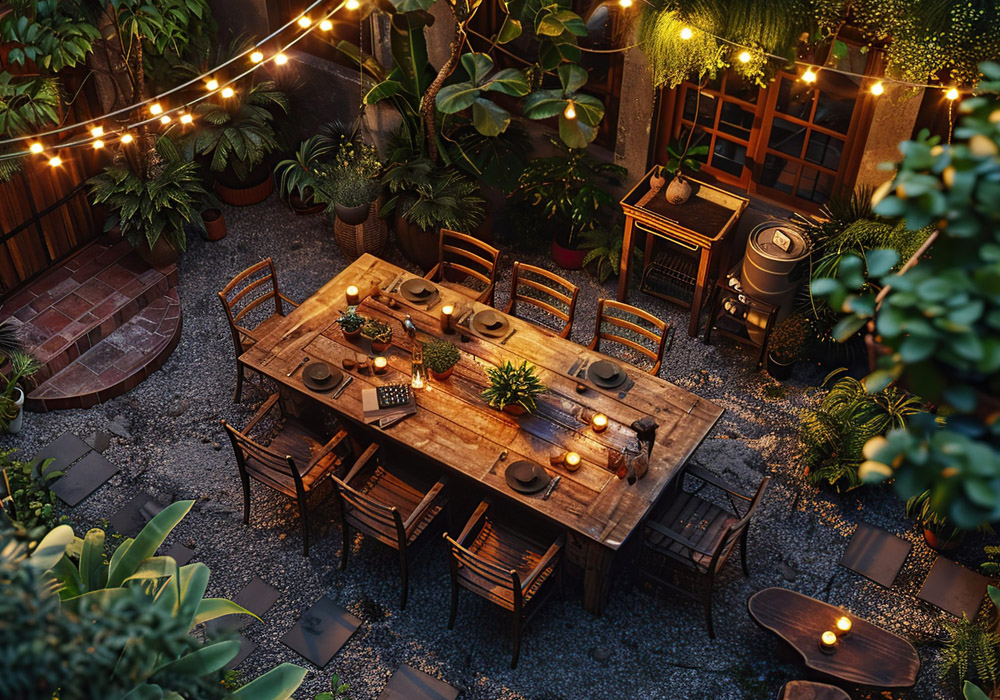
A great patio dinner doesn’t happen by accident. It takes the right spot, the right weather backup, and a menu that actually fits the season, all working together before the first guest even sits down.
This guide walks through the pieces that make outdoor dining feel effortless, from picking a setting to setting the mood once the sun goes down. Get these basics right, and the rest of the evening tends to fall into place on its own.
Choosing the Right Outdoor Venue
Before you settle on a spot for your patio, take a good look at how the sun moves across it throughout the day. A table that gets pounded by afternoon glare turns lunch into a squinting contest, while too much shade can leave guests reaching for jackets by evening. Walk the space at different hours if you can, and pick a layout that balances both.
Next, think about what’s happening around your chosen spot. A patio next to a busy street or a noisy AC unit will fight against conversation all night long. Traffic, construction, and even loud neighbors can turn a relaxed dinner into something closer to shouting over a table. Test the noise levels at the time you actually plan to host before locking anything in.
Good views matter just as much as good food, so look for a setting with something worth looking at, whether that’s a garden, a skyline, or open water. Boardwalk Kitchen & Bar built its whole outdoor setup around this idea, and their staff will tell you that a well-placed plant or two does more for the mood than most people expect. Borrow that thinking for your own patio.
It also helps to visit a few local restaurants with outdoor seating before you finalize your own plans. Notice how they arrange tables, handle spacing, and use plants or lighting to separate one area from another. You don’t need to copy anyone directly, but seeing what works in practice will save you from guessing and give you a shortcut to a setup guests actually enjoy.
Weather-Proofing Your Patio Plans
A retractable awning or shade sail gives you control over sun and rain without committing to a permanent structure. You can pull it back on a mild evening or close it up when the weather turns unpredictable. This kind of flexibility matters most in climates where the forecast changes from morning to afternoon, so guests never have to move mid-meal.
Outdoor heaters stretch your patio season by weeks, sometimes months, depending on where you live. Freestanding units work well for open spaces, while tabletop heaters suit smaller, more intimate setups. Whichever style you pick, place them where they warm guests without blasting heat directly into anyone’s face, and keep a clear path around them for safety.
Even with the best planning, rain shows up uninvited sometimes. Keep an indoor space ready to go, whether that’s a dining room, a covered porch, or a large tent nearby. Let guests know ahead of time that there’s a backup plan, so nobody feels like the whole evening falls apart the moment a few drops start falling.
Checking the weather a few days out, and again the morning of, helps you adjust the menu, seating, or timing before problems show up. Wind can knock over centerpieces, sudden heat can wilt flowers, and a cold snap can catch guests off guard in summer clothes. A quick look at the forecast saves you from most surprises.
Crafting a Seasonal Outdoor Menu
Build your menu around what’s actually in season near you. Local produce tastes better, costs less, and gives your patio dinner a sense of place that pre-packaged ingredients never quite manage. Farmers markets are a great starting point, and many chefs will tell you the best dishes start with whatever looks freshest that morning, not the other way around.
A good outdoor menu mixes lighter dishes with something more filling, so guests can pick based on appetite and the weather. Salads, grilled vegetables, and cold soups work well on warmer days, while a heartier pasta or roasted dish balances things out for cooler evenings. Giving people options keeps the meal from feeling one-note.
Grilling fits naturally into outdoor dining, both for the flavor and the show it puts on for guests. Skewers, flatbreads, and quick-cooking proteins keep things moving without tying you to the grill all night. Plus, the smell alone does a lot of the work in setting the mood before anyone even takes a bite.
Refreshing drinks round out the meal and keep guests comfortable, especially on warmer nights. Iced teas, fruit-infused water, and light spritzers all work well alongside food without overwhelming it. Rotate your drink menu with the seasons the same way you would the food, and you’ll give people something new to look forward to each time.
Setting the Mood with Lighting
String lights do a lot of heavy lifting for outdoor spaces, but the trick is layering them instead of relying on just one strand. Run a set along a fence line, another over the seating area, and maybe a shorter strand around a tree or trellis. The layered effect reads as intentional rather than like an afterthought.
Candles add a warmth that string lights alone can’t quite match, especially once the sun goes down. Cluster a few at different heights on the table, and use enclosed lanterns if there’s any wind to worry about. The flicker does something for the mood that a fixed bulb just can’t replicate.
Good patio lighting needs to do two jobs at once: it has to look good and still let people see their food. Skip anything too dim near the table itself, and save the softer, moodier lighting for the edges of the space. That balance keeps things cozy without anyone squinting at their plate.
A single bright overhead light can wash out everything you’ve worked to set up, so it’s usually best left off or dimmed way down. Harsh, direct light flattens shadows and makes a space feel more like a parking lot than a dinner spot. Softer, indirect sources almost always look better once the sun sets.
Wrap Up
Planning a patio dinner comes down to a handful of early decisions: the right venue, a solid weather plan, and a menu that matches the season. Get those right, and everything else- the lighting, the furniture, the drinks- tends to fill in naturally.
Start with one or two changes if the whole list feels like a lot at once. A better view, a warmer light, or a simple seasonal cocktail can shift the whole feel of an outdoor dinner without a full overhaul.