Severe weather can leave Hamilton homeowners facing an uncomfortable decision: call a professional immediately or attempt to handle the damage themselves.
When a storm has damaged roofing, siding, gutters, flashing, or other exterior components, trying to save money with a do-it-yourself repair can be tempting. Unfortunately, storm damage is one area where the cheapest immediate option can quickly become the most expensive long-term decision.
Calling an emergency storm damage contractor in Hamilton, Ohio can help homeowners protect themselves, prevent additional property damage, and identify problems that may not be visible from the ground.
Professional storm repair is not simply about convenience. In many situations, it is the safer and more financially responsible choice.
Why Storm Damage Repairs Are Different From Normal Home Maintenance
Storm damage often creates conditions that are unpredictable.
A homeowner replacing a loose piece of trim on a sunny weekend is dealing with a very different situation than someone climbing onto a roof after high winds, hail, or heavy rainfall.
Storms can weaken roofing materials without completely removing them. Decking can become saturated. Tree limbs can compromise structural areas. Gutters and flashing can loosen. Electrical lines can also become involved.
That means a surface that looks stable from the ground may not actually be safe to walk on.
An experienced storm damage contractor approaches the property with these risks in mind before repair work begins.
Roof Access After a Storm Can Be Dangerous
One of the biggest reasons to avoid DIY storm repairs is simply the risk of getting hurt.
Roofs can already be dangerous under normal conditions. Following a storm, the risks increase substantially.
Wet shingles can become extremely slippery. Loose shingles may shift underfoot. Damaged decking can create soft areas that are difficult to identify. Wind-damaged gutters or ladders may also be unstable.
A homeowner may climb onto the roof intending to replace one missing shingle and discover that the surrounding roofing system has been compromised.
Professional contractors have the equipment, training, and experience necessary to evaluate roofing conditions more safely.
Avoiding a serious fall is worth considerably more than the amount saved by attempting a repair without professional assistance.
DIY Repairs Can Miss the Actual Source of a Leak
One of the most common mistakes homeowners make after a storm is assuming that visible damage is the only damage.
A water stain on a ceiling does not necessarily indicate that the roof is leaking directly above that location.
Water can enter around flashing, vents, chimneys, valleys, or damaged shingles and travel along the roof deck before appearing inside the home.
That can make diagnosing storm-related leaks surprisingly difficult.
An experienced Hamilton storm damage contractor can inspect the complete roofing system rather than treating only the most obvious symptom.
Finding the correct source early helps reduce the chance of paying for multiple unsuccessful repairs.
Small Storm Problems Can Quickly Become Expensive Water Damage
The financial advantage of calling a contractor often comes down to preventing secondary damage.
Consider what happens when a small section of roofing is compromised.
Rainwater enters underneath the shingles. Moisture reaches the roof decking. Insulation becomes wet. Drywall may eventually begin showing stains.
What started as a relatively contained roofing repair can eventually involve:
- Roof decking replacement
- Insulation removal
- Drywall repair
- Interior painting
- Ceiling repairs
- Mold remediation
- Electrical inspections
The longer water intrusion continues, the larger the potential repair scope becomes.
Emergency storm contractors can often provide temporary protection, such as tarping or stabilization, while permanent repairs are being planned.
That early intervention can make a substantial difference in the overall cost of storm recovery.
Improper Repairs Can Create Additional Roof Problems
Roofing systems are designed to move water in very specific ways.
Shingles, flashing, underlayment, vents, valleys, gutters, and roof penetrations all work together.
A repair that looks reasonable to someone without roofing experience can unintentionally interfere with that system.
For example, excessive roofing cement may temporarily cover an opening but create drainage problems later. Incorrectly installed shingles can allow wind-driven rain underneath them. Improper fastener placement can create new entry points for moisture.
Professional roof repairs are designed to correct the damaged area while maintaining the performance of the surrounding roofing system.
That distinction becomes especially important when the roof has already been stressed by severe weather.
Hamilton Weather Can Make Quick Storm Response Important
Hamilton and the surrounding southwest Ohio region experience weather conditions that can be hard on residential roofing systems.
Strong thunderstorms, high winds, hail, heavy rainfall, winter precipitation, and rapid temperature changes can all place stress on roofs and exterior building materials.
Wind can lift shingles or flashing. Hail can damage roofing surfaces. Heavy rainfall can expose weaknesses around penetrations and valleys. Falling tree limbs can cause immediate structural damage.
Because another round of weather may arrive before a homeowner has time to complete a DIY repair, quickly getting professional assistance can help reduce additional exposure.
Professional Contractors Know What Damage to Look For
Some storm damage is obvious.
Missing shingles, fallen branches, detached gutters, and interior leaks are difficult to overlook.
Other problems are much easier to miss.
A professional inspection may identify issues such as:
- Lifted or loosened shingles
- Damaged flashing
- Hail impacts
- Cracked roofing materials
- Loose ridge caps
- Compromised pipe boots
- Gutter damage
- Damaged siding
- Soft or deteriorated decking
- Water intrusion inside the attic
Finding these problems early provides homeowners with a more complete understanding of the property’s condition.
It also allows repairs to be prioritized before hidden damage develops into a more serious issue.
Emergency Repairs Can Protect the Home Until Permanent Work Begins
Not every damaged roof can be permanently repaired immediately after a storm.
Materials may need to be ordered. Additional inspections may be necessary. Extensive damage may require scheduling a larger project.
That does not mean the property should remain exposed.
One of the most important services an emergency storm damage contractor can provide is temporary stabilization.
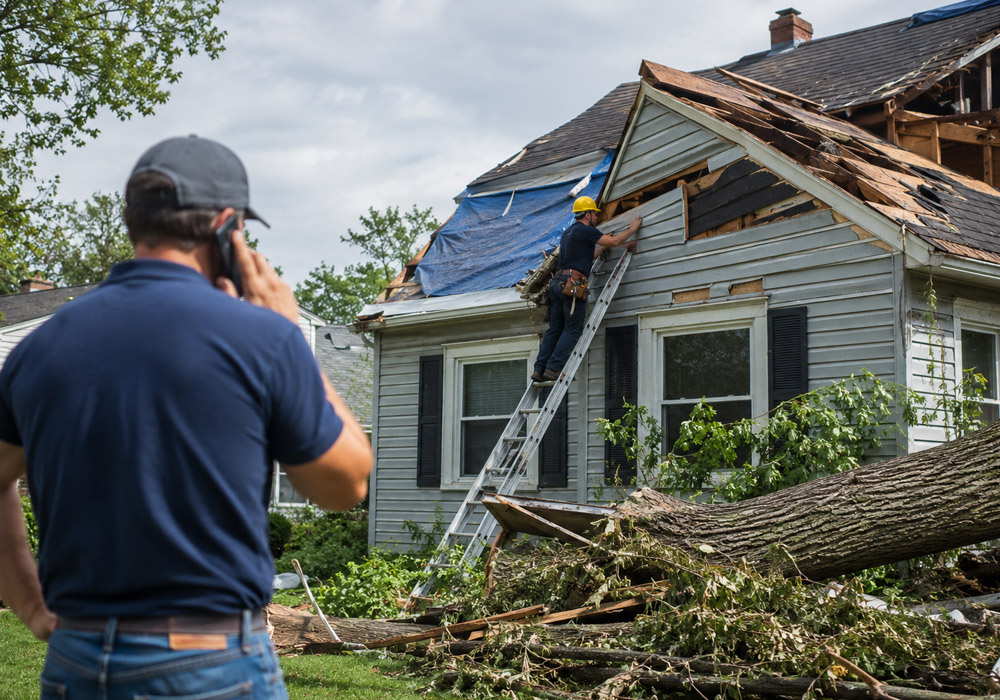
Contractors may tarp damaged roofing, secure loose materials, address openings, or complete immediate repairs designed to reduce additional water intrusion.
The goal is to protect the home while the complete repair strategy is being developed.
Attempting to install temporary protection without knowing how to properly secure it can sometimes create additional roof damage or become dangerous during windy conditions.
Professional Documentation Can Be Valuable After Major Storm Damage
When storm damage is significant, documentation matters.
Experienced contractors can photograph affected areas, identify the type of damage present, and prepare repair estimates.
That documentation can give homeowners a clearer record of the property’s condition following the storm.
It can also make conversations with insurance companies, mortgage companies, or other parties involved in the restoration process more organized.
Homeowners should always review their individual insurance policy and work directly with their insurance provider regarding coverage decisions. A contractor can document physical damage and repair requirements but does not determine whether an insurance claim will be approved.
DIY Storm Repair Is Not Always the Cheapest Option
DIY projects are usually justified by one argument: labor is expensive.
That can be true for straightforward projects.
Storm damage, however, creates a different calculation.
A homeowner attempting the repair may need to purchase roofing materials, safety equipment, ladders, tools, tarps, sealants, and fasteners.
If the first repair fails, those expenses are followed by another repair.
If the delay allows water intrusion to continue, interior restoration may also become necessary.
Professional repairs may cost more upfront, but they can reduce the risk of paying for the same problem repeatedly.
The relevant question is not simply, “Which option costs less today?”
Homeowners should also ask, “Which option gives me the best chance of fixing the problem correctly before more damage occurs?”
When Should a Hamilton Homeowner Call an Emergency Storm Damage Contractor?
Homeowners should consider contacting a professional promptly whenever a storm causes visible or suspected damage to the home’s roofing or exterior.
Situations that deserve quick attention include active roof leaks, missing shingles, fallen trees or branches, damaged flashing, sections of siding that have been removed, damaged gutters, visible roof punctures, or water entering the attic.
Homeowners should also schedule an inspection when significant wind or hail has moved through the area even if obvious damage cannot immediately be seen.
The absence of water inside the home does not always mean the roof escaped damage.
What Should Homeowners Do Immediately After a Storm?
The safest first step is usually to inspect the property from the ground.
Take photographs of visible damage when it is safe to do so. Look for missing roofing materials, damaged siding, fallen branches, displaced gutters, and debris around the property.
Inside the home, check ceilings and attic areas for signs of moisture.
Avoid climbing onto the roof to investigate.
If water is entering the home, move belongings away from the affected area when that can be done safely and place containers beneath active drips.
Then contact a qualified contractor to evaluate the damage.
If fallen power lines, electrical hazards, major structural damage, or other immediate safety concerns are present, stay away from the affected area and contact the appropriate emergency services or utility provider.
Professional Storm Repairs Protect More Than the Roof
The purpose of emergency storm repair is not simply to replace damaged shingles.
It is to protect the entire structure underneath them.
The roof protects insulation, framing, drywall, electrical components, flooring, furnishings, and nearly everything else inside the house.
Taking shortcuts with storm damage therefore puts far more than roofing materials at risk.
Professional repairs help homeowners protect the larger investment they have made in their property.
Frequently Asked Questions About Storm Damage Repair in Hamilton, Ohio
Is it safe to inspect my own roof after a storm?
Homeowners can usually perform a preliminary inspection from the ground, but climbing onto a storm-damaged roof is not recommended. Wet surfaces, loose materials, damaged decking, and hidden structural issues can create serious fall hazards.
How quickly should storm damage be inspected?
Storm damage should generally be inspected as soon as practical after conditions are safe. Early inspections can help identify openings or damaged roofing components before additional rain causes further problems.
Should I call a contractor even if the roof is not leaking?
Yes. Wind, hail, and falling debris can damage roofing materials without causing an immediate interior leak. Some roof problems develop gradually after the initial storm.
Can a storm damage contractor temporarily protect my roof?
Yes. Depending on the damage, a contractor may be able to tarp or stabilize affected areas until permanent repairs can be completed.
Is professional storm repair cheaper than doing it yourself?
The initial price may be higher than purchasing a few materials yourself, but professional repairs can be less expensive over the life of the problem because they reduce the likelihood of failed repairs, hidden damage, repeated material purchases, and secondary water damage.
What types of storm damage require immediate professional attention?
Active leaks, missing roofing sections, tree impacts, punctures, major flashing damage, structural movement, and large areas of displaced roofing or siding should receive prompt professional attention.
The Cost of Waiting Can Exceed the Cost of Calling
After a major storm, homeowners naturally want to control expenses.
But repairing storm damage is not simply another weekend home improvement project.
The combination of dangerous roof conditions, difficult leak diagnosis, hidden damage, and the possibility of additional rainfall makes professional assistance especially valuable.
Calling an emergency storm damage contractor in Hamilton, Ohio provides homeowners with a safer way to understand the extent of the damage, stabilize the property, and complete necessary repairs correctly.
Paying for professional help early can often be significantly less expensive than paying later for roofing repairs, structural deterioration, and interior water damage caused by a temporary DIY solution that did not fully address the problem.
When storms damage a home, protecting the structure quickly and safely should come before trying to save a few dollars on the initial repair.