Chronic pain in older adults is rarely purely a joint problem or a nerve problem. It’s a mobility problem, a mood problem, and a safety problem, all rolled into one. The families who manage it well aren’t the ones who spend the most money on treatments – they’re the ones who see pain and movement as one system, not two problems.
The pain-immobility spiral is the real enemy
Here’s what really happens when an older adult gets chronic pain, whether from osteoarthritis, spinal stenosis, or nerve damage. The pain shows up first. Then the avoidance shows up. It hurts to move, so the person moves less. That avoidance has a name: kinesiophobia, or fear of movement.
Kinesiophobia feels protective at the time. It’s not. Muscles atrophy fast in older adults if they aren’t used, faster than most families realize. Joints that don’t move through their full range of motion get stiffer. Balance systems dependent on regular input from muscles and joints – a sense called proprioception – start to atrophy. And proprioception decay is one of the biggest predictors of falls.
So the sequence goes like this: pain leads to fear, fear leads to inactivity, inactivity leads to deconditioning, deconditioning leads to falls, and falls lead to more pain and more fear. Each loop tightens the next. According to the CDC, more than one in four older adults falls each year, and a single fall doubles the chances of falling again. That’s not a coincidence of statistics. That’s frequently the tail end of a spiral that began with unmanaged pain months or years earlier.
Breaking this cycle means intervening at more than one point at once. You can’t just treat the pain and hope movement follows. You have to re-instill confidence in movement while you’re treating the pain source.
Low-impact movement rebuilds what fear takes away
It is widely known that exercise can help, but giving general advice to “stay active” is not helpful for those who experience real joint pain. The kind of movement you do is just as important as how much of it you get.
For instance, tai chi is a great option and has been studied a lot. It’s slow, weight-bearing, and trains balance and proprioception in a way that doesn’t jar arthritic joints. Water therapy works in a similar manner based on the principle that the buoyancy takes the stress off your joints while you still have to work your muscles against resistance.
Chair yoga is a good alternative for those who aren’t yet stable enough to engage in standing exercises, but need to maintain their flexibility in their hips, shoulders, and spine.
None of these need to be done in a formal clinical setting. They can be done at home for 20-30 minutes a few times a week. Consistency is more important than intensity. The point isn’t to push yourself to peak athletic performance. It’s simply to keep the joints lubricated and the muscles engaged, and to give the nervous system regular exercise in balance so it doesn’t lose the ability.
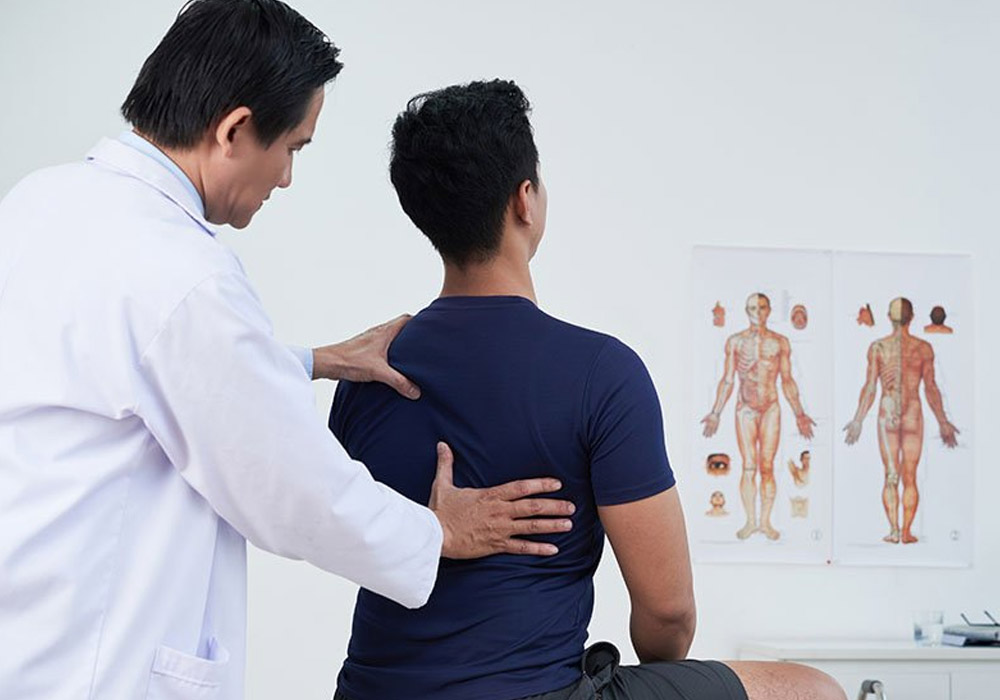
Myofascial release, a hands-on technique that targets tight connective tissue, is another tool worth mentioning. A physical therapist trained in this method can loosen the soft tissue restrictions that often accompany chronic pain, which in turn makes the low-impact exercises above easier to tolerate.
Pain lives in the brain too, not just the joints
This is the part of the treatment plan that gets skipped over dinner. Chronic pain is not only a signal from a damaged joint to the brain. The brain’s processing of such signals shifts over time, and in the case of chronic pain often becomes hyperactive, opening the pain response rather than shutting it down.
Cognitive Behavioral Therapy for pain (sometimes CBT-CP) works on this specifically. It doesn’t deny that the pain is real but works instead on changing how a person relates to and responds to the pain signal. This has the effect of reducing how much pain impedes function. Mindfulness-based stress reduction works on a related pathway, aiming to reduce the stress response that makes pain perception worse.
These are not “alternative medicine” in the frustratingly vague sense of the term. These are strategies that do have a rapidly increasing body of solid evidence behind them, and if desired, you can ask your geriatrician or a pain subspecialist how to start one. Many older adults have never discussed them with a provider because the initial pain management conversation tends to be “what medication should we start.”
Get the home audited before an accident forces the issue
Waiting for a fall to acknowledge the hazards in a house is backwards, but that is what triggers most home modifications. A proactive environmental audit captures the problems first.
First are transitions. Threshold strips between rooms, even tiny ones, are an ordinary trip hazard for anyone with reduced foot clearance or proprioception problems. Eliminating them or substituting them with beveled, low-profile versions makes a difference more than people know.
Then, lighting. High-contrast LED task lighting in hallways, stairwells, and bathrooms helps elderly eyes evaluate depth and distance, which decreases with age regardless of any unique eye condition. Faint, yellow lighting makes every other fall-prevention strategy less effective.
Bathrooms get their specific check. Grab bars must be installed at the proper angle and height for the particular user, not wherever the studs are located. A curbless shower eliminates one of the highest-risk transitions in the house. This is universal design thinking – modifications that work for a broad range of physical abilities rather than considering accessibility as a unique expansion.
A formal fall risk assessment, typically organized by an occupational or physical therapist, combines all of this. It assesses gait, balance, and the specific risks in the real living space of that person, then creates a prioritized list rather than a basic tip to “be cautious”.
Professional in-home care closes the gap family members can’t
A perfect exercise plan, a fully accessible home, and a well-organized medication list don’t mean much if they’re not put into practice every single day. That’s where a lot of families hit a wall. Adult children have jobs, their own kids, and their own physical limits. Helping a parent safely through a daily exercise routine or a difficult transfer isn’t something everyone is trained or physically able to do, and attempting it without the right technique risks injury to both people.
This is a strong argument for bringing in professional support rather than treating it as a last resort. A trained caregiver can supervise daily exercises, help with bathing and transferring, and – critically – notice small changes in gait or balance before they become a fall. Partnering with a trusted caregiver agency gives families that on-site support without requiring anyone to become an amateur physical therapist on top of everything else they’re managing. It also means someone experienced is watching for the subtle warning signs that families, too close to the situation, sometimes miss.
Medication reviews matter more than most families realize
Taking multiple medications at the same time, which is known as polypharmacy, is very common among older adults who are coping with chronic pain. This also adds to the risk of falling, although this risk factor is often overlooked. Pain relievers, sleeping pills, blood-pressure medications, and anti-anxiety drugs can all cause dizziness or fatigue when taken separately. When combined, the effects of these drugs can become even more severe, and this may not always be easy to predict.
A geriatrician is the right person to lead a full medication review, ideally at least once a year or every time a new illness is diagnosed. The idea is not to stop taking painkillers. It’s to understand whether each prescription you are taking is still necessary, still in the right amount, and not working against another drug in the background. Families are sometimes surprised to discover that a medication that was taken for a short-term illness several years ago was never stopped and is now causing the exact drowsiness or unsteadiness that everyone attributed to “just being old”.
Mobility aids only help if they fit
Using a cane, walker, or wheelchair that’s not the right height for you will cause more harm than good. People tend to think that something is better than nothing, but a poorly sized device simply shifts your posture in ways that put additional stress on your back, shoulders, and potentially armpits and wrists. And as your stability is reduced, you become more likely to fall, not less.
Each mobility aid has a correct size and fit, which a physical therapist should help you adjust. You can learn how to place your hands, how to use it in a way that feels comfortable, and how to climb stairs and get up curbs and also to walk on rough terrain. It may sound trivial but this is one of the single best interventions on this entire list in terms of cost vs. another fall avoided.
Diet plays a bigger role in joint pain than people assume
Having systemic inflammation in your body makes pain from any source worse, and one of the more easily controlled levers on inflammation is diet. An anti-inflammatory eating pattern that’s rich in omega-3 fatty acids (from fish or flaxseed), magnesium (from leafy greens and nuts), and adequate hydration won’t cure osteoarthritis, but it can turn the volume down on how much daily discomfort you feel.
Dehydration in particular is an underappreciated pain contributor. Older adults often drink less water than they need, in part because the thirst sensation diminishes with age. And mild dehydration can make joint stiffness and muscle cramping even worse. This is a low-cost, low-risk piece of the puzzle that’s easy to overlook when more dramatic interventions beckon.
Caregivers need relief too
The caregiver of a parent living with chronic pain faces a burden that many from the outside fail to see. Sleep is lost. Backs are injured from lifting. The aggregate sorrow of witnessing your parent suffer under the weight of unrelenting pain is self-destructive in ways that defy measurement.
Respite care is tailor-made for this scenario. Professional short-term assistance, whether it’s a few hours a week or more, gives family caregivers the time to rest, get their health back on track, and return to their caregiving role with something left in the tank. Family caregiver burnout doesn’t only affect the caregiver, either; it usually leads to their parent getting subpar care. It’s best to include planned respite at an early stage, not wait until someone cracks.
Aging at home is a system, not a single decision
None of these pieces work well on their own. A flawlessly adapted bathroom will not have much of an impact if the medication list is causing dizziness. A great exercise routine falls apart if there is no one to safely supervise it. If done correctly, aging at home means that pain management, mobility, mental health, environmental safety, and the capacity to provide care must be seen as pieces of a single plan, not as a list of separate problems to solve whenever they arise.