Australia has one of the highest skin cancer rates in the world, and most public awareness around it still centres on fair skinned people who burn easily in the sun. That focus makes sense given the numbers, but it has also created a blind spot for everyone else.
People with olive, brown or dark skin are far less likely to think of themselves as at risk, and this belief is not entirely their fault. Decades of sun safety messaging in Australia have rarely mentioned darker skin tones at all.
The result is that many people quietly assume a skin cancer check is something other people need, not something they need themselves. That assumption leaves a lot of people underprotected, regardless of how their skin looks or reacts to the sun.
The Skin Type Myth That Puts People at Risk
Darker skin does offer some natural protection against UV damage, but it does not remove the risk entirely. Melanoma in people with darker skin tones is often diagnosed later, partly because both patients and some clinicians assume it is unlikely to occur.
This delay matters. A later diagnosis generally means the cancer has had more time to spread, which makes treatment more complex and outcomes less predictable.
Why Fitzpatrick Skin Types Do Not Tell the Whole Story
The Fitzpatrick scale, which classifies skin from Type I (very fair) to Type VI (deeply pigmented), is a useful clinical tool, but it was never designed to predict who needs regular screening. Sun exposure history, occupation, genetics and even certain medications all play a role that the scale does not capture.
Someone with olive skin who spent years working outdoors carries a different risk profile to someone with the same skin tone who has always worked indoors, even though both might fall into the same Fitzpatrick category.
Why This Misconception Persists
Public health campaigns in Australia have historically focused on fair skinned people, since they represent the majority of cases. This messaging, while accurate on a population level, has left many people with darker skin believing they are essentially immune.
Clinicians are not immune to this bias either. Suspicious lesions on darker skin are sometimes mistaken for other conditions, such as fungal infections or bruising, which can delay a referral for a proper check.
What Actually Determines Your Risk Level
A handful of factors matter more than skin colour alone. These include a personal or family history of skin cancer, the number of moles you have, a history of blistering sunburns, and cumulative UV exposure over your lifetime.
People who spent their childhood in Australia, even those with darker skin, generally carry more cumulative UV exposure than someone who moved here as an adult. That history is worth mentioning to your doctor when discussing how often you should be screened.
What Happens During a Thorough Check
A proper skin examination covers areas people often overlook themselves, including the scalp, between the toes, behind the ears and the soles of the feet. Many melanomas in people with darker skin actually appear in these less sun exposed areas, which is part of why self checks alone are not always enough.
Dermoscopy and Why It Matters
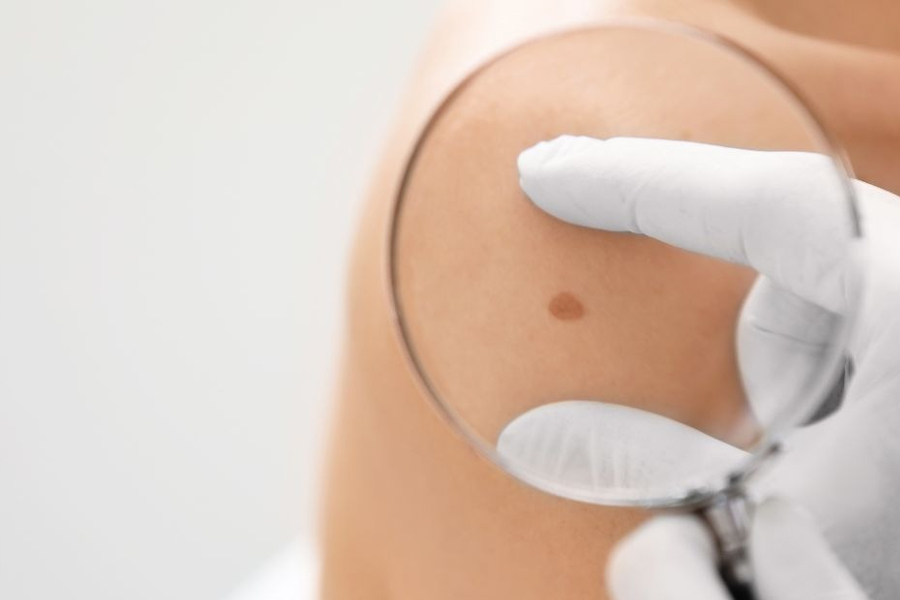
Dermoscopy uses a handheld magnifying device to examine moles beneath the skin’s surface, revealing patterns invisible to the naked eye. This tool has significantly improved the accuracy of early detection across all skin types, not just fair skin.
Building a Routine That Works for You
Rather than relying on a one size fits all schedule, it helps to think about your own risk factors honestly. Sun exposure during childhood, time spent outdoors for work or sport, and any personal history of unusual moles all deserve a mention during your next appointment.
Regardless of skin tone, checking your own skin monthly between professional visits gives you a better chance of noticing changes early, which remains one of the strongest predictors of successful treatment.
The Bottom Line on Skin Type and Screening
Skin type is one piece of a much larger picture, not the deciding factor in whether you need regular screening. Understanding your full risk profile, rather than relying on assumptions about skin colour, is the most reliable way to catch problems early and keep your skin cancer risk properly managed.
Talking to Family Members About Their Risk
Risk factors like family history and cumulative sun exposure are often shared across a household, yet skin cancer rarely comes up in everyday family conversation the way other health topics do.
Mentioning your own screening schedule to siblings or parents, especially if a check has ever flagged something worth monitoring, can prompt a family member to book their own appointment sooner than they otherwise would have.
What to Bring Up With Your GP
A short list helps make the most of a limited appointment. Note any moles that have changed, any new spots that appeared in the last twelve months, and roughly how much time you spend outdoors in a typical week.
This information gives your GP or dermatologist a clearer picture than skin tone alone ever could, and it often shapes how frequently they recommend you come back.
Key Takeaways at a Glance
Here is a quick summary of how skin type and other risk factors typically translate into recommended check frequency. Your GP or dermatologist can adjust this based on your individual history.
- Fair skin with a family history of melanoma or many moles: a full body check every 6 to 12 months.
- Fair to medium skin with some sun damage but no strong family history: a full body check every 12 months.
- Darker skin with minimal outdoor exposure history: a check every 1 to 2 years, sooner if new spots appear.
- Outdoor workers of any skin tone: a full body check every 6 to 12 months, given the higher cumulative UV exposure.
- Anyone with a changing or unusual spot: see a doctor promptly, regardless of where you sit on this list.