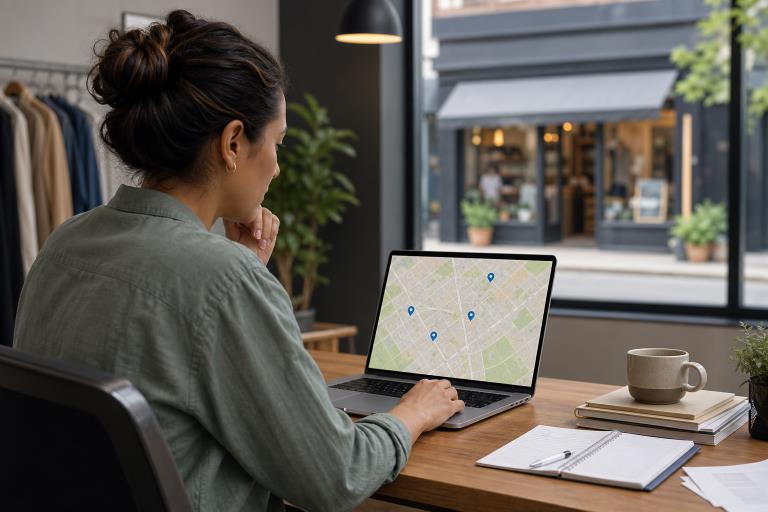
Location-based advertising helps businesses reach people when a message is most likely to be useful. A local retailer can promote an in-store offer, a restaurant can reach nearby diners before lunch, and a home service company can focus its budget on neighborhoods it can realistically serve. Effective geofencing marketing for local business growth starts with a business goal, not simply the smallest possible map boundary. In 2026, strong campaigns connect place with context. Location can add meaning to search behavior, customer interests, time of day, seasonality, and purchase intent. It is useful as one signal among many, but it should never be treated as a complete picture of an individual.
Why Location Still Matters In 2026
Digital advertising is often broad by default. Location gives marketers a way to make messaging more practical. Someone near a store may need directions or a limited-time offer. A homeowner in a service area may need an estimate. A person attending an event may benefit from parking, dining, or follow-up information. Local relevance also helps businesses avoid wasting spend. Rather than showing the same message across an entire state, a campaign can prioritize the areas where customers are most likely to visit, call, book, or buy. The goal is not to follow people around the internet. The goal is to make advertising more relevant to a real business opportunity.
How Location-Based Advertising Works
The basic process is straightforward. First, a marketer selects a geographic area or group of relevant places. Next, an advertising platform creates an eligible audience using permitted location signals. Ads appear across appropriate digital channels, and the campaign tracks actions such as site visits, calls, directions requests, form fills, store visits, or purchases. Results then guide adjustments to budget, creative, timing, and targeting. Not all location signals have the same quality. GPS can be highly precise in some situations, while Wi-Fi, IP address data, app permissions, and other signals may be less exact. Marketers should understand the likely accuracy of a data source before making narrow claims or building overly tight boundaries.
How To Build A Location Strategy
Start With One Clear Goal
Choose the outcome that matters most: store visits, calls, appointments, event registrations, product awareness, qualified leads, or sales. A campaign that aims to achieve every goal at once can be difficult to evaluate.
Map Places Connected To Customer Behavior
List stores, offices, neighborhoods, campuses, venues, shopping areas, and service territories that matter to the business. Then set boundaries based on realistic travel time, local traffic, competition, and delivery capacity. A downtown coffee shop may need a tight footprint, while an HVAC company may need several nearby communities.
Add Time And Audience Context
Layer location with day of week, time of day, seasonality, weather-sensitive demand, recent interactions, and customer type. A lunch offer should not run like a weekend-dinner promotion, and a roof-repair message may perform best when local weather creates an immediate need.
Useful Campaign Examples
Retailers can promote a seasonal offer to shoppers near a store during peak buying hours. Restaurants can change their creative for commuters, nearby residents, and event attendees. A commuter may see “Order ahead for pickup,” while a resident sees “Dinner delivered nearby,” and an event attendee sees “Show your ticket for a post-event special.” Home service providers can prioritize neighborhoods within a profitable travel range. Automotive dealers can use market-area campaigns to support test drives and service appointments. Real estate professionals can share neighborhood guides with people researching a local move. Healthcare marketers should use broad, helpful service-area messaging while avoiding assumptions about sensitive audiences.
Privacy, Consent, And Consumer Trust
Responsible location marketing requires clear data practices, appropriate consent, sensible retention policies, and vendor oversight. Avoid messaging that implies a business knows a specific person’s movements. Use aggregated reporting when individual-level detail is unnecessary, and keep creative helpful rather than overly personal. Sensitive locations require particular caution. Places connected to health, religion, politics, schools, or other personal matters should not be targeted without careful legal and ethical review. The Federal Trade Commission has taken action involving the sale and use of sensitive location data, reinforcing the importance of consent, transparency, and data minimization. See the FTC’s guidance through its location-data enforcement action for useful context.
Match Creative, Timing, And Measurement
Precise targeting cannot rescue weak creative. Test local references, service-area language, seasonal offers, directions, travel-time cues, and calls to action that fit the objective. Compare two messages, two time windows, and two geographic areas, while changing one major variable at a time. Measure more than clicks. Track reach, frequency, engagement, calls, booking requests, directions requests, store visits, cost per action, qualified leads, and revenue where possible. Compare exposed and unexposed groups when available, and allow enough time for delayed purchases or longer sales cycles.
A Practical Campaign Checklist
- Set one primary business goal.
- Choose locations tied directly to that goal.
- Confirm that data sources and audience methods are appropriate.
- Use boundaries that reflect actual travel behavior.
- Apply timing rules that match customer demand.
- Create messages that feel locally useful.
- Set reasonable frequency limits.
- Define success before launch.
- Review privacy, consent, and vendor policies.
- Test, measure, and improve continuously.
Conclusion
The best location-based advertising is not about drawing the smallest boundary possible. It is about connecting place with purpose. Use reliable signals, thoughtful, creative, respectful data practices, and business metrics that go beyond impressions. In 2026, relevance matters more than precision alone. Successful campaigns focus on reaching the right audiences with messages that provide value and fit naturally into local experiences. Businesses should consider customer needs, timing, community context, and measurable outcomes when planning their strategies. By combining location insights with strong marketing fundamentals, brands can create campaigns that are more effective, transparent, and customer-focused. The goal is not simply to reach people in a certain area, but to build meaningful connections that encourage engagement, trust, and long-term relationships.