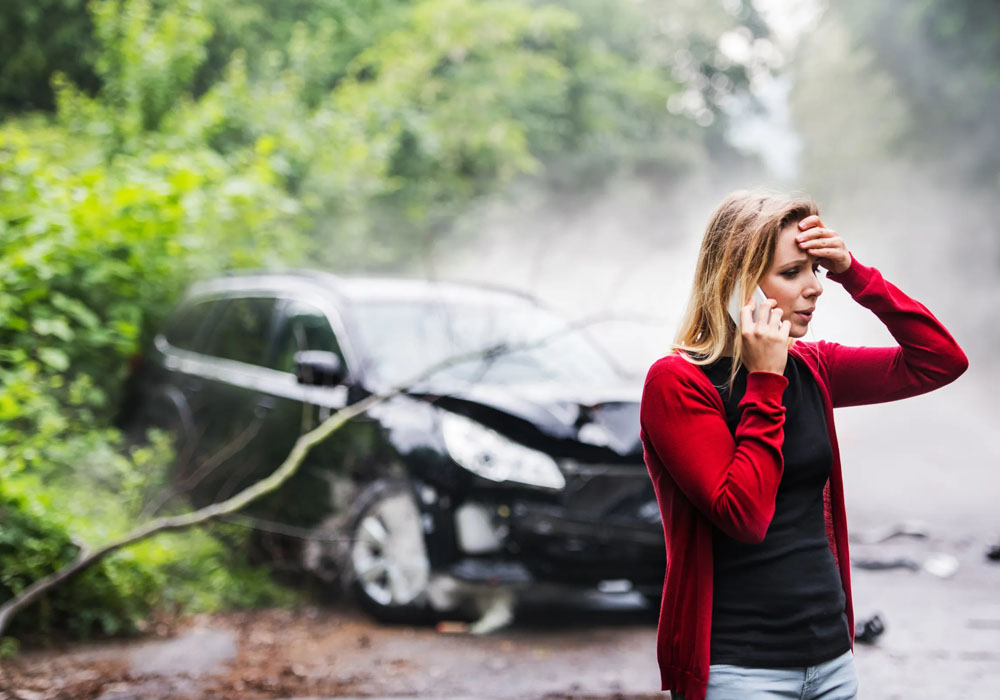
Most drivers believe that if the officer makes a report, the question of liability is more or less answered. This is not the case. While police reports are taken seriously by insurance adjusters, they are often overridden by electronic evidence that presents a more accurate, more impartial account of the incident.
What a police report actually is – and what it isn’t
Officers who come to the scene of the crash almost never witness the collision. They get there after the fact, speak to often-shaken or confused drivers and witnesses, then form an opinion based on those interviews. The opinion is then put in writing and filed.
Experience tells us that for the vast majority of civil and criminal proceedings, written police reports are inadmissible hearsay. Hearsay is defined as an out-of-court statement offered to prove the truth of the matter asserted. There are several exceptions to the general rule barring hearsay evidence, but an officer’s conclusions about Driver A’s “failure to yield” in an accident report, for instance, are out-of-court statements that are offered to prove the truth of the matter asserted (i.e. that Driver A failed to yield) based on second-hand information. Plaintiff’s attorneys know this and can file a motion to have that evidence excluded as hearsay from the trial record, and opposing attorneys are usually successful at keeping it out of evidence.
What this means in a practical sense is that a police report that’s favorable to your legal position isn’t bulletproof, and one that goes against you isn’t fatal to your claim. The real battle is over objective facts that don’t require memory or creative interpretation – facts like measurements of skid marks, damage to the vehicle, and injuries to people.
The black box in almost every modern vehicle
Almost 99.5% of model year 2013 and newer light-duty vehicles are equipped with Event Data Recorders that can gather pre-crash data elements such as vehicle speed, throttle position, and braking status (NHTSA).
An EDR – sometimes referred to as the vehicle’s “black box” – records a snippet of telematics data in the moments before a wreck. Speed at impact. Braking, and intensity of braking. Steering wheel turn. Seatbelt buckled or not. Throttle open or closed. This information doesn’t depend on eyewitness accounts or memories. It’s a precise record of what the vehicle was doing.
The catch is that the EDRs on most vehicles are designed with a write-over process. In other words, once the EDR starts filling up the data buffer, new data begins to overwrite old data. If the vehicle gets repaired and put back into use or totaled, the data is likely lost forever. This info must be downloaded before the vehicle is in a shop, back on the road, or shredded.
For commercial trucks, the EDR equivalent is called an Electronic Control Module and, in addition to other data points, it tracks things like driver hours, hard brakes, and system glitches. A fleet manager may know exactly what’s on there. That’s the real reason you need to get in touch quickly.
Third-party surveillance footage disappears fast
Video footage is harder to come by but can be the most conclusive evidence available if you can obtain it. Traffic cameras, toll booth systems, parking lot cameras, ATM cameras, and storefront security systems may have captured your accident from an angle nobody considered during the initial investigation. This footage is often more useful than dashcam footage because it provides an external, unbiased view of the entire sequence.
The catch is that most commercial surveillance systems automatically overwrite their recordings within 24 to 72 hours. Some systems hold footage for a week. Very few keep it longer than 30 days without a specific reason to preserve it.
Securing this footage requires identifying every possible camera in the immediate vicinity of the crash, then moving quickly. A formal written request to the business or property owner is the starting point. If they’re uncooperative, or if the other party in the accident has a relationship with that business, a subpoena duces tecum can force their hand before the footage is overwritten. This is not a step most people can execute effectively without legal support.
This is also where working with experienced attorneys makes a material difference. The car accident lawyers at Briskman Briskman & Greenberg have the resources to deploy accident reconstruction experts, identify third-party evidence sources, and legally compel the preservation of digital records before they disappear.
Photo metadata and why SMS destroys it
If you take a photo of the accident with your smartphone, your camera automatically writes EXIF data into each image file. This metadata records the specific time and date, GPS coordinates, device type, and camera settings used. If you use these pictures as evidence in a dispute, this data can be used to verify that the photographs were taken at the scene, when you claimed they were taken, and that they haven’t been altered in any way.
Unfortunately, many people inadvertently destroy this evidence themselves by texting photos via SMS or MMS. When you do this, the compression process used in text messaging strips the EXIF data from the image file. You send the photo to the other party, but you don’t send any of the metadata that makes that photo admissible in court.
Instead, immediately after the accident, back up your photos and video files to cloud storage. Email the photos and videos to yourself if necessary (which doesn’t strip metadata and generally doesn’t compress the files), but don’t rely on text messages as your method of transferring the originals. Use a cloud app to save them, so all of the data is preserved and the full, original, unaltered files are retained for your records.
Rideshare and telematics data
If an accident is significant enough that you’re considering suing for damages, you’re going to want to get your hands on this information once the litigation process has started. You get it by serving discovery requests on the company or the insurer, asking for all available logs, tracker data, associated video, etc. If the driver was an Uber driver, for example, you wouldn’t have to serve a separate records custodian at Uber. Uber would confirm as much in its typed responses to your interrogatories. Your follow-up to that would be asking Uber to report what specific logs exist and which ones they would’ve had access to immediately following the collision, which ones they’d have access to currently if previously collected logs hadn’t been deleted, etc. This might include trackers, any dongle data, phones or other secondary devices that may have been in the car at the time, etc.
The spoliation letter: locking evidence in place legally
A spoliation of evidence letter is a formal written notice that is sent to any party in possession of evidence that could be relevant to a case. The letter demands that the evidence be preserved and that the party does not destroy, alter, or overwrite that evidence.
You want to get this letter to the other driver, their insurance company, to trucking companies if it was a commercial vehicle that was involved, to rideshare companies, to any third party who might have had control over surveillance footage. Once a party receives a valid spoliation letter, and that evidence is destroyed after they receive it, that can be used against them in litigation, and courts can instruct a jury that they are permitted to assume the destroyed evidence was unfavorable to the party that destroyed it.
Writing an effective spoliation letter requires you identify every category of relevant digital evidence, go through and name specific systems and data types, and get the letter sent within a timeframe that is actually meaningful given the retention windows involved because a letter sent two weeks after the crash, after the EDR data has been overwritten and the surveillance footage has been deleted, accomplishes nothing.
The window for this is measured in hours and days, not weeks.
How accident reconstructionists use digital data to challenge officer findings
An accident reconstructionist is essentially a forensic technician who tries to piece together what happened in a crash using actual or digital data. They do this by obtaining and analyzing digital data from the vehicle, estimates of skid marks, measurements of the crush to the vehicle, the geometry of the road, and information on traffic conditions to provide a technical version of events based on the evidence.
Their main value in contesting an officer’s report is that an officer’s opinion might be undercut if it’s later revealed that, for example, the EDR data suggested the vehicle estimated to have been speeding was going well under the limit. In that case, the reconstructionist can testify to that effect, and their testimony will likely take precedence over what is essentially the officer’s opinion.
Eyewitness accounts are well known to be quite unreliable sources of information. Memories are fragile things, perception can be fooled quite easily, and sometimes people hold biases without even knowing it. Digital data doesn’t suffer from these issues – it just records what happened.
Managing your own digital footprint after the crash
What you do with your smartphone following a crash is more important than you may realize. First and foremost, back up any dashcam videos to the cloud. If your dashcam operates on a loop recording system that footage will begin to be overwritten the second you get back on the road. Turn off loop recording or remove and safeguard the SD card.
Social media is a different exposure. Defense lawyers and insurance company professionals monitor claimant social media accounts as a matter of course. A photo of you at a family function three weeks after a crash that “seriously injured” you may be used to argue that your injuries are not as severe as you claim. Your posts can have their intent twisted by taking them out of context. The safest course is to make no public posts of any kind relating to the crash, your recovery, or your physical condition until after the case is fully and finally settled.
Cell phones also present a two-edged sword. The data in your phone may help establish your timeline and location which can be to your benefit in building your case. The other driver’s phone data – for screen activity, app use, and cell phone logs – can be important in establishing distracted driving. This information is not easy for a private citizen to obtain but it is discoverable.
The police report is a starting point, not a verdict
Police officers make mistakes and can be influenced when preparing reports, but they are always doing their best in chaotic, high-pressure situations. Many accident reports are correct. However, even without poring over the smallest technical detail, the police report doesn’t always tell the entire story. If that description of the crash scene didn’t match what happened, the one thing you have in your favor is the truth. The technical data don’t lie and they don’t depend on someone else’s judgment call of how something went down.
If the police report went against you, or if you know it’s incomplete, the evidence to correct it may already exist. The only question is whether you move fast enough to preserve it.