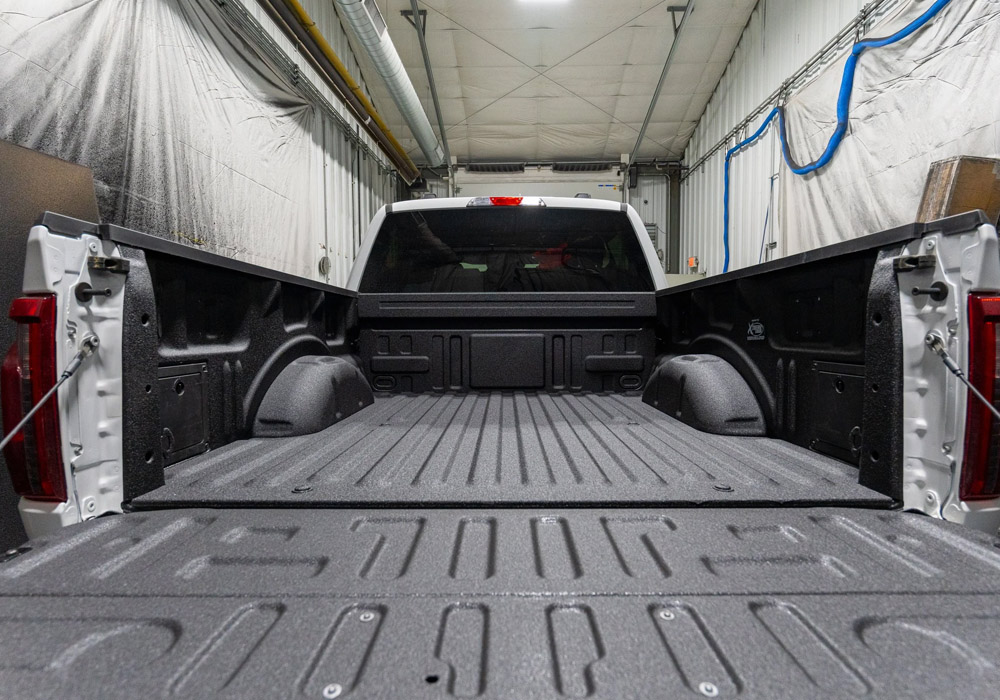
A bed liner spray kit applies a textured coating over a prepared surface. The material underneath is called the substrate, and its condition affects how the surface is prepared before application. Knowing which substrates the coating will effectively adhere to helps determine the preparation each surface requires. Here are some types of materials you can protect with liner spray kits:
Metal and Steel
Metal and steel are compatible with a high-performance urethane elastomeric texture coating. The formulation supports high-build applications, such as protective linings, and it creates a textured surface after curing. On metal surfaces, the coating provides protection against impact, abrasion, and corrosion.
Proper preparation establishes the surface condition needed for adhesion. Maximum adhesion generally requires abrasion, grit blasting, or etching before a primer and the coating are applied. New metal requires near-white metal blast preparation. Metallic substrates must remain dry, and the specified primer should be applied before the spray-on liner is added.
After curing, the bed liner forms a tough, abrasion-resistant rubber coating over the prepared metal. Its textured finish provides a non-slip surface in wet and dry conditions. The cured coating also remains flexible at low temperatures, but it becomes stiffer as temperatures decrease.
Wood and Concrete
A bed liner spray kit applies a high-build urethane coating to wood and concrete to protect against impact and abrasion. The formulation produces a textured layer that forms a tough rubber coating with high resistance to wear after curing. Before application, the wood and concrete require appropriate preparation, which may include abrasion, grit blasting, or etching to create a suitable surface for adhesion. Wood and concrete often require specific primers because their preparation requirements differ from those for steel truck-bed surfaces. Temperature affects how quickly the coating cures, and thicker applications also need additional curing time.
Rubber and Urethane
Rubber and urethane are compatible substrates for the coating when properly prepared. The coating can be applied directly over existing rubber or urethane, allowing the original material to remain in place beneath the new layer. Because substrates often differ in composition and surface condition, preparation requirements should be determined based on the existing material.
The finished coating provides a flexible protective layer that can withstand changing conditions after curing. Some bed liners remain flexible in temperatures as low as –70°F, and this helps them respond to temperature-related movement without becoming brittle. The coating also provides chemical resistance across a pH range of 2 to 12, with strong resistance to chlorinated water, seawater, and oils. This helps protect the substrate from exposure to environmental and chemical conditions.
Get a Bed Liner Spray Kit
Choosing a bed liner kit requires matching the coating process to the substrate’s material. Each substrate, including wood, concrete, and steel, requires specific preparation procedures and material-specific primers. Reviewing the appropriate preparation procedures before application confirms how each surface needs to be prepared for coating. This supports long-term durability, so truck beds and other surfaces remain protected from abrasion, impact, and liquid spills. Contact a bed liner provider today for material-specific preparation guidance.