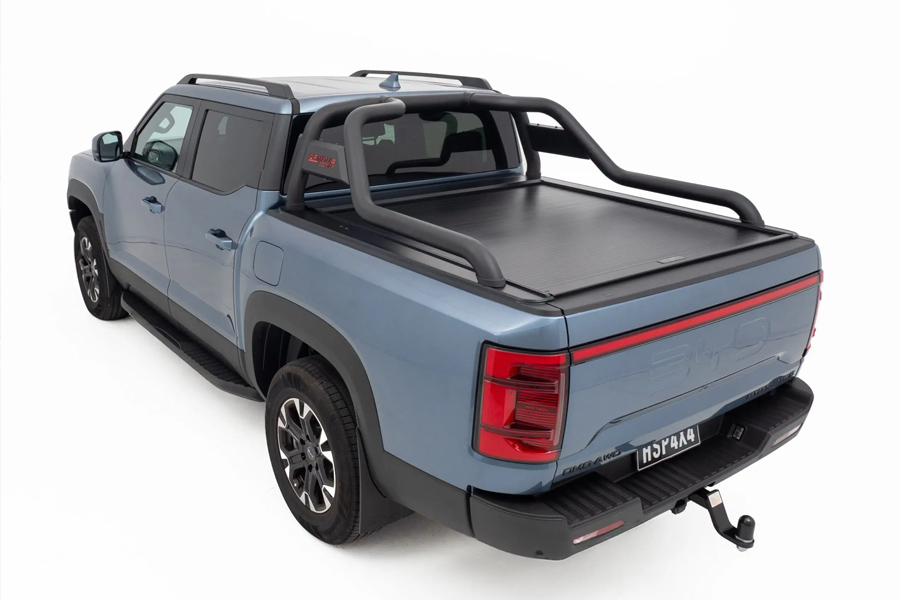
The BYD Shark 6 sold close to 20,000 units in its first year in Australia, which made it the country’s first plug-in hybrid dual-cab ute to actually catch on. That kind of volume means an accessory market has grown fast around it, and sports bars are one of the first upgrades most owners look at.
Fitting one isn’t as simple as bolt-and-go though, because BYD’s factory setup and the aftermarket options don’t always play nicely together. Before buying anything, it helps to know that not every bar suits every configuration of the vehicle. A BYD Shark sports bar can be either a standalone unit or one designed specifically to integrate with a roller-top tonneau cover, and picking the wrong type for your setup means a return trip to the fitter.
Two Very Different Bar Styles
Factory and A-frame style sports bars are the traditional look, sitting behind the cab like most utes have had for decades. These typically support up to 80 kg of dynamic load and around 200 kg of static, evenly distributed weight, which covers most tie-down and light rack use.
Armour-style bars are a newer alloy design, built lighter to reduce the weight added to the vehicle. Because they’re alloy rather than steel, they carry less dynamic load capacity on their own, generally around 40 kg dynamic when paired with certain crossbar systems, though they make up for it with corrosion resistance since alloy doesn’t rust the way steel mounting hardware can over years of coastal or outback use.
Quick summary of the differences:
- Factory/A-frame bars: heavier steel build, higher static load rating, classic ute silhouette
- Armour alloy bars: lighter overall, reduces impact on GVM, better rust resistance long term
- Armour bars are not compatible with every rack system, including some tub-mounted ladder racks
- Factory-style bars generally offer broader aftermarket accessory compatibility
Compatibility Is the Real Issue
Here’s where owners get caught out. Some ladder rack and tub rack systems are explicitly built to skip the sports bar entirely, mounting instead to a roller cover’s side rails. That’s actually a feature for some setups, since it means the sports bar and the rack aren’t fighting for the same mounting points. But it also means an armour bar and certain rack systems are not compatible with each other by design, so pairing the wrong two products together isn’t a fitting problem, it’s a mismatch problem that no amount of extra brackets will fix.
| Sports Bar Type | Dynamic Load | Static Load | Rack Compatibility |
| Factory/A-frame style | ~80 kg | ~200 kg | Broad, most crossbar systems |
| Armour alloy bar | ~40 kg | Varies by pairing | Limited, check specific rack |
| No sports bar (roller cover only) | Depends on crossbar used | Up to 200 kg on some kits | Full crossbar range available |
Before ordering, it is worth confirming three things with whoever supplies the bar. First, whether it’s designed to bolt to the tub directly or only integrates with a specific roller cover. Second, what the actual load rating is in kilograms, not just a vague “heavy duty” claim. Third, whether your intended rack or crossbar accessory has been tested against that specific bar model, since compatibility lists change between model years.
Fitting and Warranty Notes
Most quality bars are designed for DIY installation and don’t require drilling into the tub, since they use existing mounting points or roller cover channels. That said, fitting centres exist for a reason. A bar that’s slightly out of alignment might look fine on day one and then develop rattles or stress cracks around the mounting brackets within a year of highway driving. If you’re not confident measuring and torquing brackets to spec, paying for a fitting appointment is cheap insurance against a $2,000 accessory failing early. Warranty terms differ too, and it’s worth registering the product the day it’s fitted rather than letting that slip, since claims without registration can get messy.