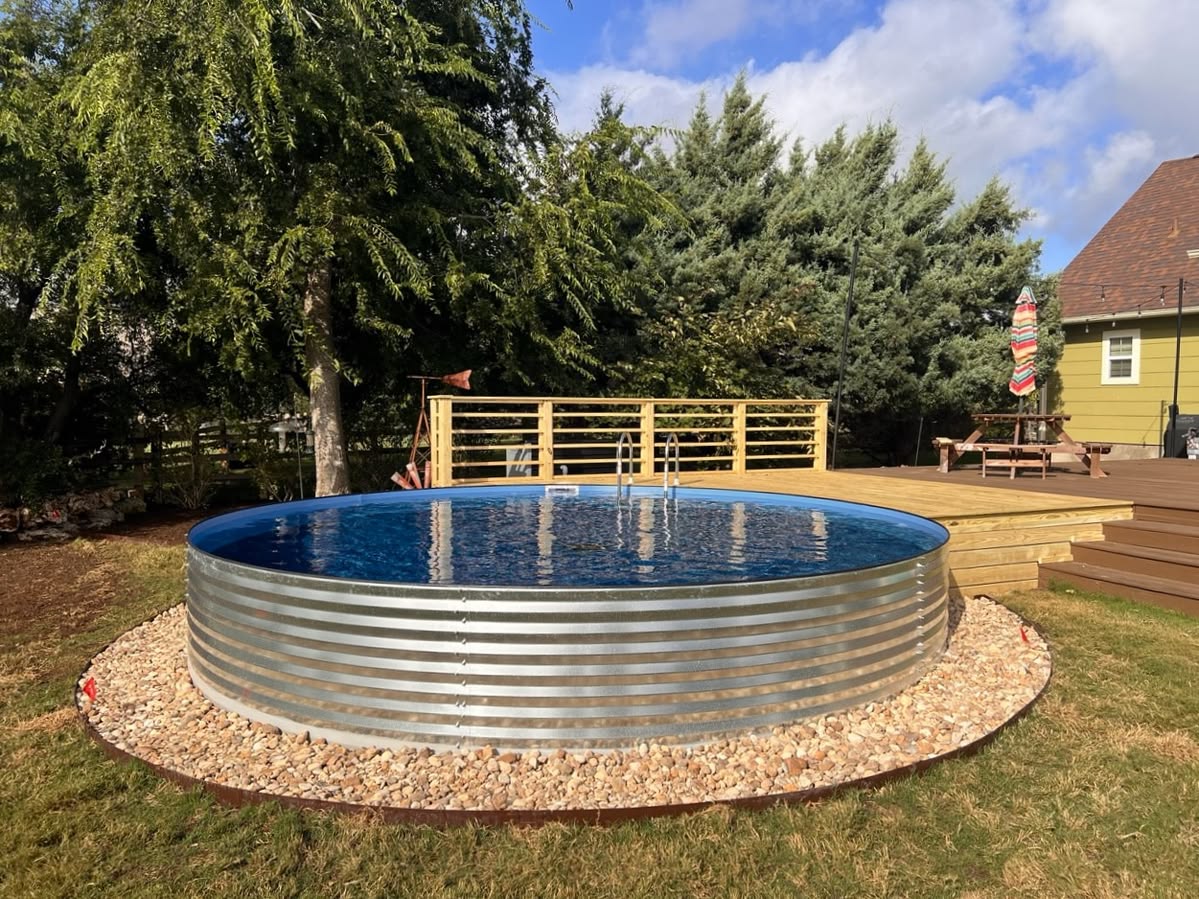
A semi-inground plunge pool sits partway below ground and partway above it, giving you the finished look of a traditional inground pool without the full excavation, the concrete, or the long wait. It works on flat yards and sloped ones alike, fits smaller backyards, and is usually ready to swim in days, not months. This guide breaks down what a semi-inground plunge pool actually is, what it costs, and how it stacks up against other pool types.
What Is a Semi-Inground Plunge Pool?
A semi-inground plunge pool is a small, deep pool built partly into the ground, with the rest of the wall left exposed above the surface. The recessed portion can range from a few inches to several feet, depending on the yard and how built-in you want the final look to be. Because only part of the pool is dug into the ground, the project needs far less digging than a full inground pool, while still giving you that clean, sunken appearance around the edges. These pools are typically built with a steel or aluminum wall frame and a vinyl liner, rather than poured concrete or fiberglass shells. That construction keeps the price down and the install time short, while still holding up to years of regular use. The pool can be set anywhere from fully above ground to mostly recessed, so the same basic structure adapts to flat lots, sloped backyards, and tight spaces alike.
StainlessSwim offers semi in-ground plunge pools, and the entire process is handled in-house, from site planning and grading to wall assembly, liner installation, and equipment hookup. You’re not coordinating separate contractors for excavation, plumbing, and finishing – one team manages the project start to finish.
Benefits of a Semi-Above-Ground Plunge Pool
Speed is usually what draws people to a semi-inground plunge pool first, shares MTD Property Management Lincoln Park. Without a full dig, hauling away soil, or pouring concrete, most projects wrap up in two to three days rather than weeks or months. That means far less disruption in the yard – no heavy equipment parked for an entire season, no fenced-off construction zone, and no months of waiting before the pool is usable.
A semi-inground design also handles sloped or uneven lots better than a fully recessed pool, since the builder doesn’t need to level the entire yard before starting. That makes it a practical option for backyards where a traditional inground pool would need extensive grading work first. Maintenance stays simple too – steel walls and vinyl liners are easier to clean and repair than concrete, and there’s no resurfacing every decade, so upkeep stays manageable year after year.
Clean Built-In Look
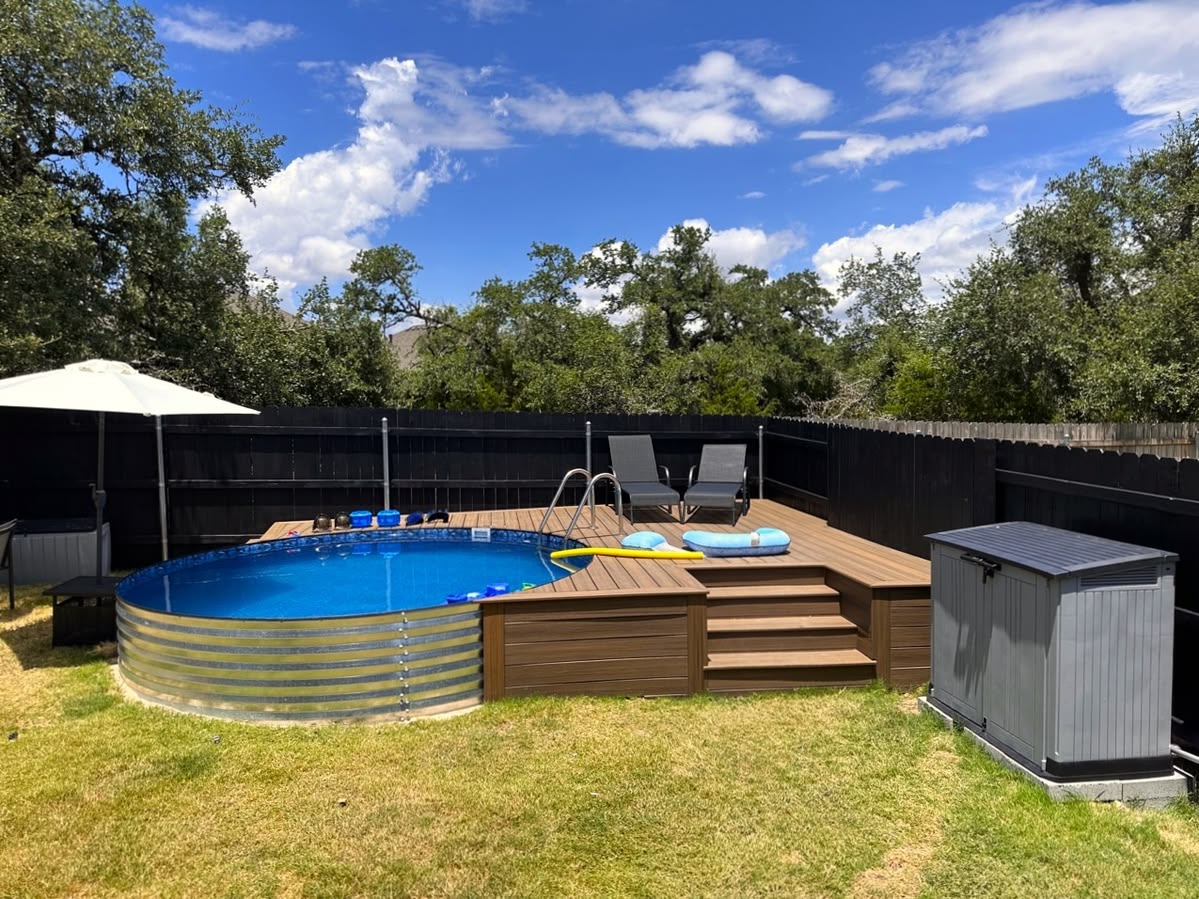
The above-ground portion of a semi-inground pool is usually shallow enough that, once a deck or patio is built around it, the pool reads as a permanent, built-in fixture rather than a tank sitting on the lawn. A recess of two or three feet, paired with composite decking, creates a transition that looks intentional, not improvised. For homeowners who want the visual payoff of an inground pool without the inground price tag, this is usually the deciding factor.
How a Semi-Inground Plunge Pool Compares to Other Pool Options
Plunge pools come in a few different builds, and the differences in price, durability, and installation time are significant. Some options are meant for quick, budget-friendly setups, while others are built to last for decades with a much higher upfront cost. Choosing between them usually comes down to how long you want the pool to last and how much of the process you’re willing to handle yourself.
| Feature | Stock Tank Pool | Kit Standard Semi-Inground Pool | Traditional In-Ground Pool | StainlessSwim Semi In-Ground Plunge Pool |
| Install Time | 1–2 days (DIY) | 3–7 days (DIY/contractor) | 4–8 weeks | As little as 2–3 days |
| Wall Material | Galvanized steel, no liner | Steel or aluminum, basic liner | Concrete or fiberglass | 18-gauge galvanized steel, 20-gauge vinyl liner |
| Typical Lifespan | 5–10 years | 10–15 years | 25+ years | 15–20+ years |
| Excavation Needed | None | Minimal | Full dig required | Minimal |
| Maintenance | Low, but liner-free walls wear fast | Moderate | High, resurfacing needed over time | Low, easy upkeep |
| Customization | Very limited | Limited sizes only | Extensive but costly | Size, depth, color, and deck options |
A stock tank pool is the cheapest option but isn’t built for long-term use or a finished appearance. A standard kit closes part of that gap but often comes with a thinner liner and equipment you’ll need to upgrade later. A traditional inground pool delivers durability and permanence, but at a cost and timeline most homeowners can’t justify for a small backyard pool. A professionally built semi-inground plunge pool lands in between, offering stronger materials and a finished look without the inground price or wait – which is exactly the space StainlessSwim builds in.
Semi-Inground Plunge Pool Cost
Pricing for a semi-inground plunge pool depends mainly on diameter, depth, and how much of the wall is recessed. Smaller pools around 9 to 12 feet in diameter typically start under $10,000, while a 15-foot pool usually runs somewhere between $11,000 and $13,000, and larger 18- to 21-foot pools can reach $13,000 to $16,000 or more due to the extra steel, liner material, and labor. Depth adds cost too – most pools come in a standard depth around 46 inches, while a deeper 5-foot custom option typically adds $2,000 to $2,500 to the base price.
Beyond the base pool, total project cost depends on add-ons: a heating and cooling unit can run around $3,000, underwater lighting usually adds a few hundred dollars, a sturdier flooring upgrade costs a few hundred more, and an equipment cabinet to hide the pump and filter typically adds $400 to $500. Decking is usually the largest variable, priced per square foot and depending on material – treated wood generally starts around $40 to $45 per square foot, while composite options like Trex or cedar run closer to $45 to $50 per square foot. Getting an accurate number means pricing out the pool size, recess depth, and deck together rather than looking at the base price alone. StainlessSwim offers semi-inground plunge pools starting from $9,999, with the final price shaped by size, depth, and any add-ons chosen.
Conclusion: Why Choose a Semi-Inground Plunge Pool
A semi-inground plunge pool is the practical middle ground between a basic above-ground setup and a full concrete inground build. It costs a fraction of what a traditional pool costs, installs in days instead of months, and still delivers the finished, built-in look most homeowners actually want in their backyard. For anyone weighing a backyard upgrade against a tight budget or timeline, it removes the usual trade-off between price and appearance. It’s a straightforward way to get a real pool without the months-long commitment a traditional build usually demands.
StainlessSwim builds these as custom tank pools, sized and shaped around your yard rather than sold as a one-size kit. Each pool uses 18-gauge galvanized steel walls and a vinyl liner, with size options from 9 to 21 feet and depths up to 5 feet, plus the choice to set it above ground, partially recessed, or fully sunken. The team handles site prep, wall assembly, plumbing, and equipment installation directly, and decking can be added in treated wood, Trex, or cedar to match the rest of the yard.