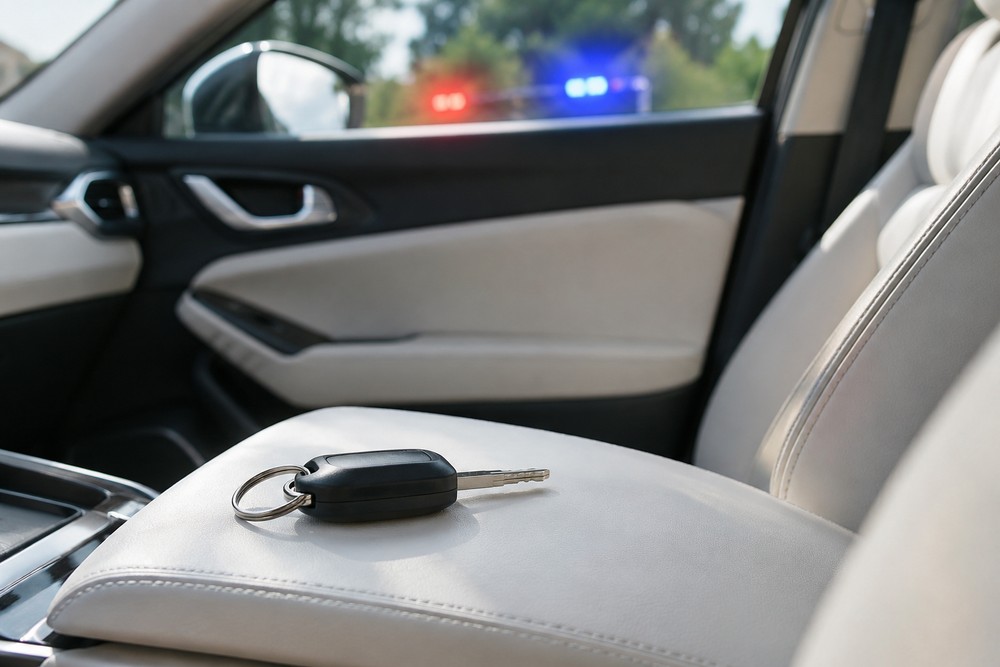
Two puffs of a legal product. A prescription bottle in the console. A traffic stop that starts with a burned-out taillight and ends with a chemical test request. A lot of drivers assume a DUI charge only happens after a night of drinking, and that assumption is exactly what makes drug-related cases so messy for the person in the driver’s seat.
Most people also assume the breath test settles everything. It doesn’t. A breathalyzer measures alcohol and nothing else, so when an officer suspects cannabis, a prescription medication, or something else entirely, the case shifts onto a different track with different evidence, different timelines, and a much wider field of dispute. If you’re facing that shift right now, a DUI Drugs attorney is the person who reads the toxicology report before you sign anything, because the charge you’re handed at the stop is rarely the charge that survives.
Here’s what actually happens, in order, plus a roadside plan you can use tonight.
Why the breath test never answers the real question
Alcohol impairment has a number on it. Drug impairment doesn’t, at least not in the same straightforward way. Officers are trained to spot impairment through driving behavior, physical cues, and field sobriety testing, and the National Highway Traffic Safety Administration publishes the training standards that shape how those evaluations run.
That matters to you because the evaluation is a performance, and performances can be graded. Did the officer follow the script? Were the instructions clear? Was the surface flat, the lighting adequate, your footwear reasonable?
I’d rather have a client who failed a field test on uneven gravel than one who passed everything and got charged anyway. The first case has room in it. The second one means the officer testified that you looked fine and still requested a blood draw, which is a strange thing for a report to say and a useful thing for a defense to read out loud.
How a drug DUI case gets built, step by step
The evidence stack in these cases is longer than most drivers expect. Walk through it and you’ll see where the weak boards usually sit.
- Driving observation. Speed, lane position, response time, a near miss. Officers document this first because it’s the piece that doesn’t depend on a lab.
- Personal contact. Odor, speech, eye movement, coordination, and whatever you say when asked where you’re headed. That last one carries more weight than people realize.
- Field sobriety testing. Standardized cues, scored piece by piece. Physical conditions and medical issues belong in the record here.
- The chemical test. Blood or urine, analyzed at a lab. Results can take weeks, and the cutoffs used for detection are not the same as the cutoffs used to prove impairment.
- The charging decision. This is where prosecutors weigh the whole stack and pick a theory. Sometimes they pick a theory the evidence doesn’t support, and that’s the opening.
Prescription medication complicates all five steps. A valid prescription is not a free pass, and the label warning on the bottle can be used against you. Cannabis complicates it differently because detection windows stretch far past the window of impairment. A positive result tells you something was there. It doesn’t tell you when, and it doesn’t tell you whether you were affected at the moment the officer pulled you over. The National Institute of Justice funds the forensic work behind those tests, so the science is real and the limits in it are real too.
The roadside plan I’d hand to a friend
Not legal advice for your specific case. A discipline to follow when adrenaline is doing the thinking.
- Keep your hands visible, your answers short, and your voice even. Silence isn’t your friend in every jurisdiction, so know your state’s rule before you need it.
- Ask what you’re being stopped for. Polite, once. You want the stated reason on record.
- If a test is requested, do not guess at the consequences. Refusal carries its own penalties in most states under implied consent laws, and the decision deserves a real answer, not a panicked one.
- Write down everything within an hour: the time, the location, the weather, the lighting, what you said, what the officer said, what you took and when. Memory fades fast and details win cases.
- Call a lawyer before you discuss the stop with anyone else.
The prescription question deserves one extra step. Get your pharmacy records and the prescribing information together before anyone asks for them, because the timeline of when you took a medication compared to when you drove is often the whole ballgame.
Where the timelines usually run out
North Dakota gives drivers a short window to challenge a license revocation, and it starts ticking from the notice, not from your first court date. The North Dakota Courts publish the filing information if you want to see how quickly those deadlines move. I’ve watched people treat the license hearing as optional because the criminal charge felt like the bigger problem. That’s backwards. The license hearing can run before the criminal case finishes, and losing it means you can’t drive to work while everything else plays out.
Then there’s the question of what you tell your employer, your insurer, and your family. Nobody owes you a script for those conversations. But the sequence matters: deal with the license deadline, then the criminal case, then the collateral fallout. Most people do it in reverse and make the fallout worse.
What a lawyer actually does with a drug case
Reads the lab package, not just the result. Requests the maintenance records on any testing device. Checks the officer’s training certification and whether the testing was performed the way the training says. Reviews the video for the parts of the encounter the report left out. A case built on a blood draw can collapse on a chain of custody problem, and a case built on a field test can soften once the conditions of the stop are spelled out.
The thing I’d want you to take from all this: the charge you receive is a starting position, not a verdict. It’s negotiated, challenged, and sometimes reduced, and the work starts before the first hearing, not after.
One question to ask yourself tonight
If the stop happened last night and you’re reading this today, the license clock is already running. What are you doing in the next 24 hours to get the facts in order? Write the timeline, find the prescription records, and make the call before the deadlines make the decision for you.