Clinical Evolution of Non-Invasive Aesthetic Treatments
The landscape of aesthetic medicine has undergone a profound transformation, moving from predominantly surgical interventions to a sophisticated array of non-invasive techniques. This evolution is largely driven by technological advancements that allow for precise tissue remodeling and cellular rejuvenation without the need for incisions or extensive recovery periods. Unlike traditional surgical procedures, which often involve cutting, lifting, or excising tissue, non-invasive treatments work by stimulating the body’s natural regenerative processes from within. They operate on the principle of delivering controlled energy (such as heat, cold, sound, or light) to targeted areas, prompting the skin and underlying tissues to repair, tighten, or reduce fat. This epidermal-sparing approach means the surface of the skin remains largely intact, minimizing visible signs of treatment and allowing for a quicker return to daily activities.
The shift towards these methods reflects a growing patient preference for subtle, natural-looking enhancements and a desire to avoid the risks, downtime, and permanence associated with surgery. By September 2026, the market for these procedures has expanded dramatically, offering solutions that cater to a wide range of aesthetic concerns, from skin laxity and wrinkles to unwanted fat and uneven skin tone.
Core Modalities in Non-Invasive Aesthetic Treatments
The breadth of non-invasive aesthetic treatments available today is impressive, each leveraging distinct scientific principles to achieve specific outcomes. These modalities can be broadly categorized by the type of energy or substance they employ:
- Cryolipolysis: This technique utilizes controlled cooling to freeze and eliminate fat cells without damaging surrounding tissues. Once crystallized, the fat cells are naturally processed and eliminated by the body. It’s particularly effective for localized pockets of stubborn fat.
- Radiofrequency (RF) Energy: RF devices deliver controlled heat to the deeper layers of the skin, stimulating collagen production and tightening existing collagen fibers. This leads to improved skin firmness and reduced wrinkles. Some advanced RF systems can also target fat cells.
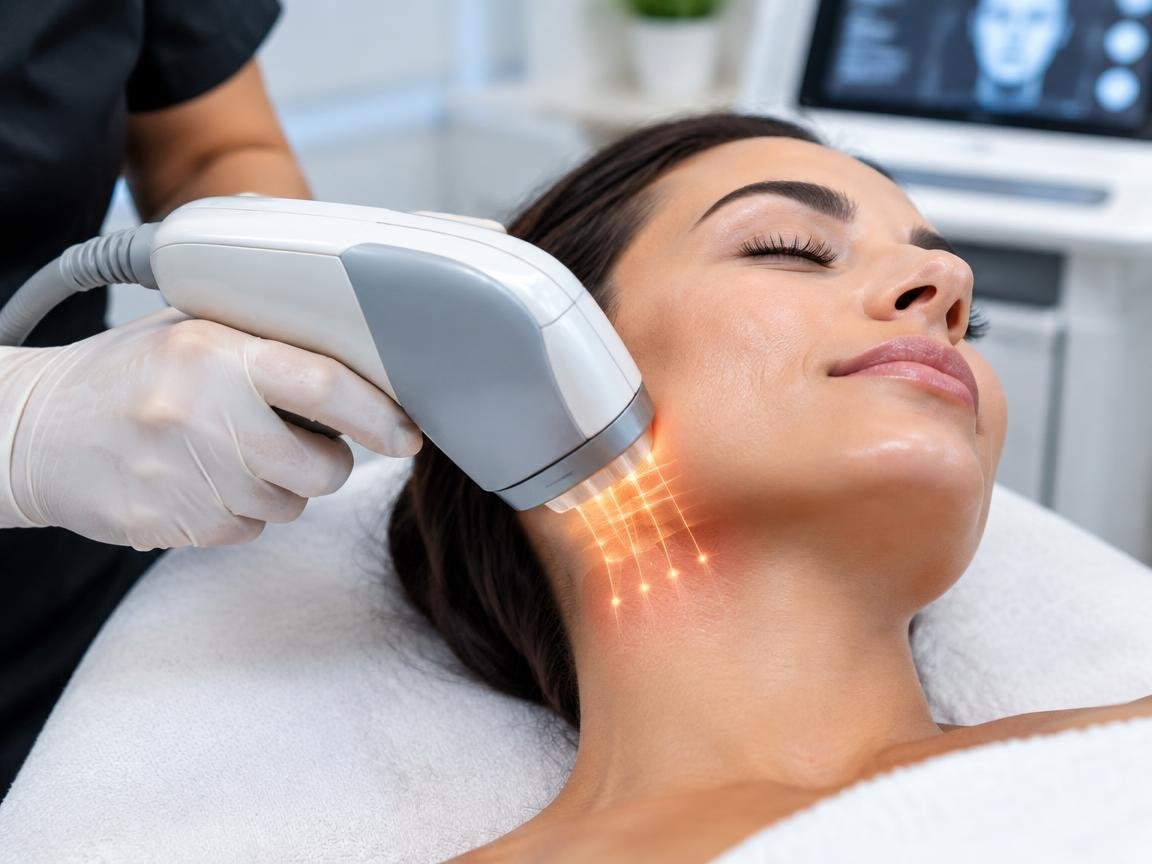
- Microfocused Ultrasound (MFU): As we will explore in detail, MFU uses focused sound waves to create thermal coagulation points at precise depths within the skin and subcutaneous tissue, including the superficial musculoaponeurotic system (SMAS). This thermal energy triggers a wound-healing response that results in new collagen formation and tissue lifting.
- Fractional Lasers: These lasers create microscopic treatment zones in the skin, stimulating the body’s natural healing process to produce new, healthy skin cells and collagen. Non-ablative fractional lasers, in particular, resurface the skin without removing the outer layer, leading to improvements in texture, tone, and fine lines with minimal downtime.
- Neuromodulators (e.g., Botox-type injectables): These injectable substances temporarily relax specific facial muscles responsible for dynamic wrinkles (those that appear with facial expressions), such as frown lines, forehead furrows, and crow’s feet. They are the nation’s most popular non-surgical wrinkle treatment.
- Dermal Fillers: Composed of substances like hyaluronic acid, calcium hydroxylapatite, or poly-L-lactic acid, fillers are injected beneath the skin to restore lost volume, smooth wrinkles, and enhance facial contours. They can plump lips, fill hollows, and define features.
Beyond these, innovations in non-invasive body contouring continue to expand options for those seeking to refine their physique without surgery. These advanced body sculpting techniques offer targeted solutions for areas resistant to diet and exercise.
Cellular Mechanisms and Epigenetic Rejuvenation
Understanding the underlying cellular mechanisms is key to appreciating the efficacy of non-invasive treatments. Many of these procedures fundamentally rely on stimulating the body’s natural healing and regenerative capabilities.
One of the most significant mechanisms is neocollagenesis, the process by which the body produces new collagen. Collagen is the primary structural protein in the skin, responsible for its firmness, elasticity, and youthful appearance. As we age, collagen production declines, leading to skin laxity and wrinkles. Treatments like radiofrequency, microfocused ultrasound, and fractional lasers all work by inducing controlled thermal injury or mechanical stimulation in the dermis, which signals fibroblasts (the cells responsible for collagen production) to synthesize new collagen. This gradual process leads to progressive tightening and rejuvenation over several weeks to months.
For treatments like microfocused ultrasound (MFU), the energy penetrates to specific depths, including the superficial musculoaponeurotic system (SMAS), a layer of muscle and fibrous tissue that surgeons target during a facelift. By creating thermal coagulation points in the SMAS, MFU induces contraction and lifting, providing a non-surgical alternative for facial laxity. The average length of perioral wrinkles, for instance, has been shown to decrease by 7.2% (p < 0.001) and nasolabial folds by 18.5% (p = 0.011) two months after intelligent microfocused ultrasound (iMFU) treatment, demonstrating significant improvements. Furthermore, 81.3% of participants exhibited measurable improvement in photoaging manifestations after iMFU treatment, with 71.9% achieving clinically significant improvement.
Beyond collagen, some cutting-edge non-invasive treatments are now demonstrating effects at the genetic level. Recent research on non-ablative fractional lasers, for example, has shown that they can induce changes in DNA methylation, effectively reversing the skin’s epigenetic signature of aging. This means the treatment isn’t just addressing symptoms but is influencing how genes are expressed, potentially “resetting” the biological clock of skin cells. A human study found that 83.9% of aging-associated sites showed methylation shifts toward a younger profile after treatment, with visible improvements in brown spots (a median 38% reduction) and texture. This exciting development suggests that certain non-invasive therapies are moving beyond purely cosmetic improvements into the realm of regenerative aesthetics treatments, offering deeper, more fundamental cellular rejuvenation. The integration of such advanced science into aesthetic practices highlights the innovative approaches seen in holistic rejuvenation approaches today.
Photobiomodulation, often using red-light therapy, is another mechanism sometimes employed as an adjunct. It can reduce post-procedure inflammation and discomfort, accelerating the healing process and enhancing overall results.
Comparative Analysis: Non-Surgical vs. Surgical Procedures
When considering aesthetic enhancements, patients often weigh the pros and cons of non-surgical versus surgical options. The choice hinges on several factors, including the desired outcome, tolerance for downtime, risk profile, and budget.
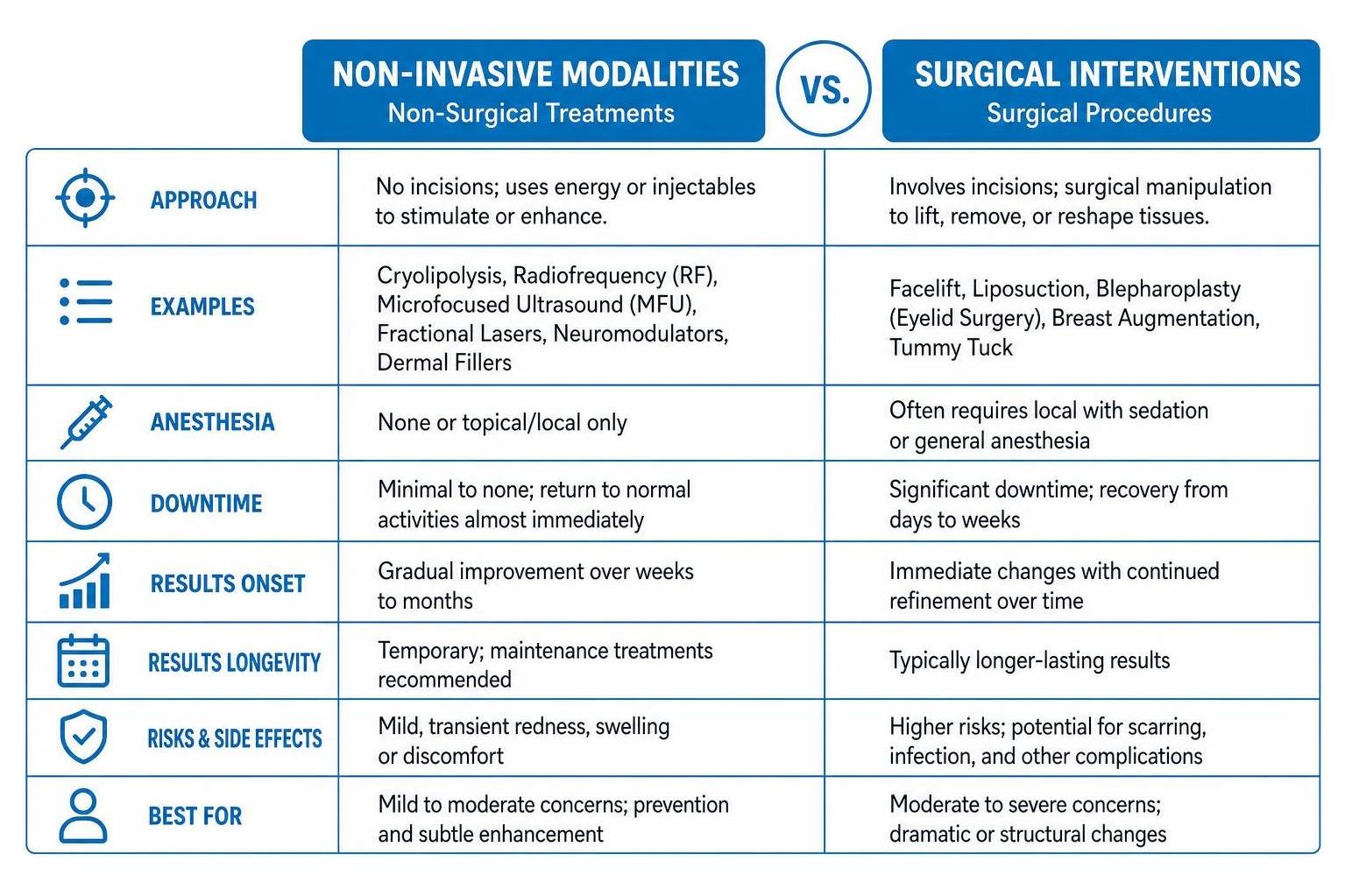
The fundamental difference lies in the approach: non-surgical procedures avoid incisions, general anesthesia, and significant structural repositioning of tissues. Surgical procedures, conversely, involve invasive techniques to achieve more dramatic and often longer-lasting results through tissue excision, lifting, and reshaping.
Benefits of Non-Invasive Treatments:
- Minimal Downtime: Most non-invasive procedures involve little to no recovery period, allowing patients to resume their normal activities almost immediately. Common side effects like transient erythema (redness) and localized edema (swelling) are typically mild and resolve quickly.
- Lower Risk Profile: Without incisions or general anesthesia, the risks of infection, scarring, and complications are significantly reduced.
- Gradual, Natural-Looking Results: Many non-invasive treatments stimulate the body’s natural processes, leading to subtle, progressive improvements that appear more natural over time.
- Flexibility and Customization: Treatments can often be tailored to specific concerns and combined to achieve comprehensive rejuvenation.
- Cost-Effective (Initial): The upfront cost of a single non-invasive session is typically much lower than that of surgery.
Limitations of Non-Invasive Treatments:
- Less Dramatic Results: While effective, non-invasive treatments generally cannot achieve the same level of dramatic transformation as surgical procedures, especially for significant skin laxity or volume loss.
- Multiple Sessions Required: To achieve optimal results, many non-invasive treatments require a series of sessions spaced weeks or months apart.
- Maintenance Needed: Results are not permanent, and periodic maintenance treatments are often necessary to sustain the effects.
- Not Suitable for All Concerns: For severe sagging, excess skin, or profound structural changes, surgery remains the gold standard.
Longitudinal Cost and Treatment Frequency
One of the key considerations for patients is the cost of treatment over time. While the initial investment for a single non-invasive session is considerably lower than a surgical procedure, the cumulative expenditure can sometimes equal or even exceed that of surgery, especially if multiple sessions and ongoing maintenance are required.
For example, a series of non-surgical fat reduction treatments or multiple sessions of skin tightening might accumulate costs over several years. A patient pursuing multiple CoolSculpting sessions for chin fat might find the total cost comparable to surgical liposuction for the same area. The procedure durability also plays a role; a surgical facelift might last 10-15 years, whereas non-invasive skin tightening may require annual or bi-annual maintenance sessions. Patients need to consider the full treatment plan, including initial sessions and future touch-ups, when evaluating the long-term financial commitment.
Safety Profiles and Recovery Expectations
The safety profile of non-invasive aesthetic treatments is generally excellent, with minimal serious adverse events. The predominant adverse events associated with intelligent microfocused ultrasound (iMFU) treatment, for example, comprised transient erythema (incidence: 46.9%), edema (6.2%), and procedural pain (mean VAS score 2.4 ± 0.8). These are typically mild and short-lived.
Most non-invasive procedures boast rapid recovery, often allowing patients to return to work or social activities the same day. Downtime is usually limited to minor redness, swelling, or bruising, which typically resolves within a few hours to a few days. Some treatments, like microfocused ultrasound, might cause a sensation of muscle pain, which 90% of patients reported as transient and lasting a median of 6 days in one study. This contrasts sharply with surgical recovery, which can involve weeks of swelling, bruising, and activity restrictions, along with the inherent risks of anesthesia and potential complications. The focus on epidermal sparing and controlled delivery of energy to specific tissue depths contributes significantly to this enhanced procedural comfort and safety.
Clinical Evidence and Measurable Outcomes
The efficacy and safety of non-invasive aesthetic treatments are increasingly supported by robust clinical evidence, including prospective studies, split-face trials, and objective quantitative metrics. This scientific rigor helps validate the claims of these technologies and provides patients with a clearer understanding of what to expect.
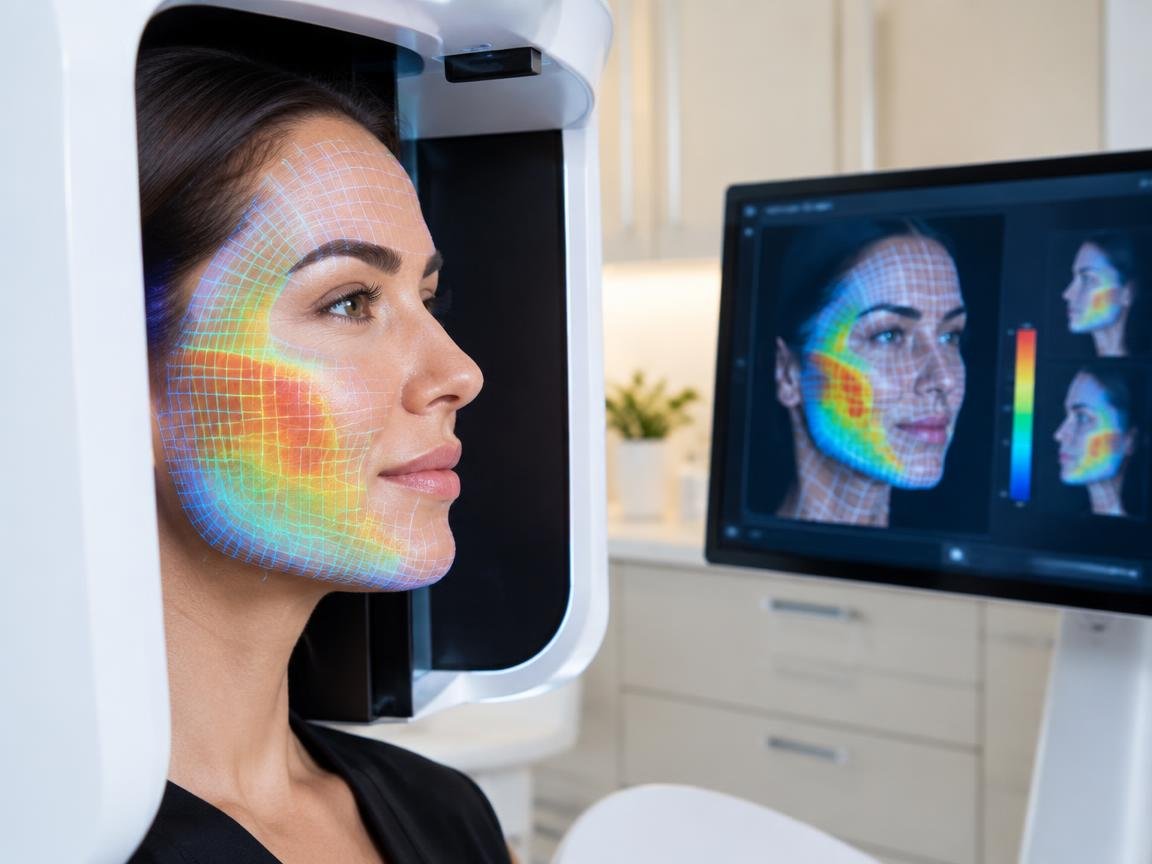
One common approach in clinical trials is the use of split-face methodology, where one side of a patient’s face receives treatment while the other serves as an untreated control. This allows for direct comparison and objective assessment of improvements. Global Aesthetic Improvement Scale (GAIS) scores, assessed by blinded, independent evaluators, are frequently used to quantify overall improvement. For instance, 71.9% of participants in an iMFU study achieved clinically significant improvement (≥ 1-grade change on the GAIS). The overall patient satisfaction rate on iMFU-treated sides was 75%, reflecting positive patient-reported outcomes.
Beyond subjective assessments, objective photogrammetry and 3D imaging play a crucial role in measuring subtle changes in facial geometry and tissue lifting. These tools provide quantifiable data that support visible improvements.
Quantitative Tissue Tightening Metrics
Clinical studies often employ precise measurements to track changes in specific facial features:
- Mandibular Angle and Side Face Angle: These metrics quantify the definition and lift along the jawline. One study on iMFU treatment showed a significant increase in side face angle from 12° ± 2.6° to 13° ± 1.5°, and the mandibular angle increased from 16° ± 2.4° to 18° ± 1.9° on treated sides. This indicates a measurable improvement in jawline contour and definition. Another study on microfocused ultrasound introduced a reproducible photographic area-reduction metric (Area x) to objectively quantify mandibular lift, showing significant reduction as early as one month post-treatment.
- Nasolabial Fold and Perioral Wrinkles: These common signs of aging are also objectively measured. The nasolabial fold surface area, for example, decreased by 12.3% (p = 0.02) on iMFU-treated sides at the 2-month follow-up. The length of perioral wrinkles and nasolabial folds also showed significant reductions, as mentioned earlier.
- Acoustic Focal Zones: The precise targeting of acoustic focal zones in treatments like MFU allows for controlled thermal injury at specific depths, leading to predictable collagen remodeling and tissue contraction. This precision contributes to the consistent and measurable improvements seen in these studies.
These quantitative metrics, combined with high patient satisfaction rates, underscore the clinical efficacy of non-invasive aesthetic treatments in achieving measurable and meaningful rejuvenation.
Patient Selection and Treatment Optimization
Choosing the right non-invasive aesthetic treatment and maximizing its benefits requires careful consideration of several factors, starting with thorough patient evaluation and realistic expectations. Not every treatment is suitable for every individual, and a personalized approach is paramount.
Key considerations for patient selection:
- Skin Laxity: Non-invasive treatments are generally most effective for mild to moderate skin laxity. Patients with severe sagging or significant excess skin may still be better candidates for surgical intervention.
- Skin Type and Condition: Certain treatments may be more appropriate for specific skin types or concerns (e.g., laser treatments for pigmentation, RF for texture).
- Patient Goals: Understanding what the patient hopes to achieve is crucial. Non-invasive treatments offer refinement and rejuvenation, not dramatic transformation.
- Medical History: A comprehensive review of medical history is essential to identify any contraindications, such as certain medical conditions, medications, or previous aesthetic procedures.
- Lifestyle Factors: Habits like smoking, excessive sun exposure, and poor nutrition can impact treatment outcomes and longevity.
A qualified provider will conduct a thorough tissue assessment, often using imaging tools, to determine the most appropriate treatment plan. This involves evaluating skin thickness, fat distribution, and the degree of laxity to select the optimal modality and treatment parameters.
Maximizing Longevity from Non-Invasive Aesthetic Treatments
Achieving excellent results from non-invasive treatments is only half the battle; maintaining those results over time requires commitment and adherence to specific post-treatment protocols.
- Post-Treatment Skincare: A high-quality, medical-grade skincare regimen is fundamental. Products rich in antioxidants, retinoids, peptides, and growth factors can support cellular repair, enhance collagen production, and protect the skin from environmental damage. Following provider-directed pre- and post-care regimens is crucial for optimal outcomes.
- Sun Protection: Daily and consistent use of broad-spectrum sunscreen (SPF 30 or higher) is non-negotiable. UV radiation is a primary driver of collagen breakdown and premature aging, undermining the benefits of aesthetic treatments.
- Maintenance Schedule: As results are not permanent, periodic maintenance sessions are often recommended. The frequency will depend on the specific treatment, individual aging process, and desired level of correction. For instance, the peak aesthetic improvement from microfocused ultrasound occurs around 3 months, with a slight decline by 6 months, suggesting the need for maintenance sessions thereafter.
- Healthy Lifestyle: A balanced diet, adequate hydration, regular exercise, and avoiding smoking contribute significantly to overall skin health and can prolong the effects of treatments.
- Combination Protocols: Often, combining different non-invasive modalities (e.g., a skin tightening treatment with injectables or laser resurfacing) can yield more comprehensive and long-lasting results than a single treatment alone.
Essential Provider Credentials and Safety Standards
The expertise of the provider is arguably the most critical factor in ensuring both safety and efficacy of non-invasive aesthetic treatments. Patients should be diligent in selecting a qualified professional.
- Board Certification: Look for providers who are board-certified in relevant specialties such as plastic surgery, dermatology, or ophthalmology. This indicates a high level of training, expertise, and adherence to rigorous professional standards. All ASPS members, for example, are board-certified by the American Board of Plastic Surgery.
- Clinical Training and Experience: Ensure the provider has extensive experience with the specific non-invasive treatments you are considering. Ask about their training, how many procedures they have performed, and their approach to managing potential complications.
- Anatomical Knowledge: A deep understanding of facial and body anatomy is crucial to safely and effectively administer treatments, especially injectables and energy-based devices that target specific tissue layers.
- Facility Accreditation: The clinic or medspa should be clean, well-maintained, and adhere to appropriate safety and hygiene standards.
- Regulatory Standards: The provider and facility should comply with all local, state, and national regulatory guidelines for aesthetic procedures.
- Consultation and Communication: A qualified provider will offer a thorough consultation, discuss realistic expectations, explain potential risks and benefits, and provide clear pre- and post-procedure instructions. They should also be transparent about costs and treatment plans.
Choosing procedures performed by board-certified professionals and ensuring proper pre- and post-procedure care instructions are followed are best practices for any patient considering these treatments. Avoid relying solely on social media for provider selection; instead, check board certifications, professional memberships, and reviews on multiple reputable platforms.
Frequently Asked Questions About Non-Invasive Procedures
Patients often have specific questions when exploring non-invasive aesthetic treatments. Here, we address some of the most common inquiries.
How do energy-based treatments achieve deep tissue lifting without incisions?
Energy-based treatments, such as microfocused ultrasound (MFU) and radiofrequency (RF), achieve deep tissue lifting by delivering controlled energy to the deeper layers of the skin and underlying support structures without breaking the skin’s surface.
For MFU, focused acoustic energy bypasses the superficial skin layers and creates precise thermal coagulation points at specific depths, typically 1.5mm, 3.0mm, and 4.5mm. The 4.5mm depth specifically targets the superficial musculoaponeurotic system (SMAS), the same foundational layer that plastic surgeons manipulate during a surgical facelift. This thermal energy causes immediate contraction of collagen fibers and initiates a wound-healing response, leading to the gradual production of new, stronger collagen (neocollagenesis). This process results in a natural lifting and tightening effect over several months.
Radiofrequency devices, on the other hand, use electrical current to generate heat in the dermis. This bulk heating causes existing collagen fibers to contract and stimulates fibroblasts to produce new collagen and elastin, leading to improved skin firmness and elasticity. Both modalities leverage the body’s natural healing mechanisms to remodel tissue from within, providing a non-surgical alternative for facial and body contouring.
How do long-term costs compare between non-surgical and surgical options?
The long-term cost comparison between non-surgical and surgical options is nuanced and depends heavily on individual goals, the specific procedures chosen, and the longevity of results.
- Initial Costs: A single non-surgical treatment session is almost always significantly less expensive than a surgical procedure. For example, a neuromodulator treatment might cost a few hundred dollars, while a surgical facelift can range from several thousand to tens of thousands of dollars.
- Maintenance and Cumulative Investment: Non-surgical treatments often require multiple initial sessions (e.g., 3-5 sessions for fat reduction or skin tightening) and periodic maintenance treatments (e.g., every 6-18 months) to sustain results. Over several years, these cumulative costs can add up. It’s possible for the total expenditure on non-surgical maintenance to equal or even exceed the cost of a single-stage surgical procedure, especially if the surgical result is very long-lasting.
- Procedure Durability: Surgical results, particularly for procedures like facelifts, can last 10-15 years or more, offering a long-term solution. Non-surgical results typically last from several months to a few years, necessitating repeat treatments.
Patients should consider their budget, desired level of correction, and willingness to commit to ongoing maintenance when evaluating the long-term financial implications. A comprehensive consultation with a qualified provider can help outline a realistic cost projection for both pathways.
What is the typical downtime associated with non-invasive aesthetic options?
One of the most significant advantages of non-invasive aesthetic options is their minimal downtime, allowing for a rapid return to daily activities.
- Immediate Return: Many treatments, such as neuromodulators, dermal fillers, and some laser procedures, have virtually no downtime. Patients can often return to work or their normal routine immediately after the procedure.
- Minor Transient Effects: The most common side effects are minor and temporary, including:
- Minor Erythema (Redness): This is common after energy-based treatments and typically subsides within a few hours to a day.
- Temporary Swelling (Edema): Mild swelling can occur, especially with injectables or certain energy treatments, usually resolving within 24-48 hours.
- Bruising: Small bruises can occur at injection sites but are generally minor and can be covered with makeup.
- Procedural Pain/Discomfort: While treatments are generally well-tolerated, some patients may experience mild discomfort during or shortly after the procedure. For instance, the mean VAS score for pain during iMFU treatment was 2.4 ± 0.8, indicating mild discomfort. Any muscle soreness, as seen with microfocused ultrasound, typically resolves within a week.
Compared to the weeks or months of recovery associated with surgical procedures, non-invasive treatments offer a convenient solution for those seeking aesthetic improvements without significant interruption to their lifestyle.
Conclusion
The rise of non-invasive aesthetic and body contouring treatments marks a pivotal moment in cosmetic medicine. By September 2026, these innovative procedures have become a cornerstone of personal enhancement, offering effective, low-risk alternatives to traditional surgery. From advanced energy devices that stimulate neocollagenesis and remodel tissues to cutting-edge lasers that influence DNA methylation, the science behind these treatments continues to evolve, delivering increasingly sophisticated and natural-looking results.
This procedural innovation empowers individuals to refresh their appearance, tighten their skin, and sculpt their bodies with minimal downtime and reduced risk. While non-surgical options may require a series of treatments and ongoing maintenance, their benefits in terms of safety, convenience, and gradual improvement are undeniable. The key to successful outcomes lies in personalized planning, selecting a highly qualified provider, and adhering to post-treatment care. As technology advances, we anticipate even greater refinements in non-surgical longevity and aesthetic refinement, further solidifying their role as a preferred choice for those seeking to enhance their natural beauty.