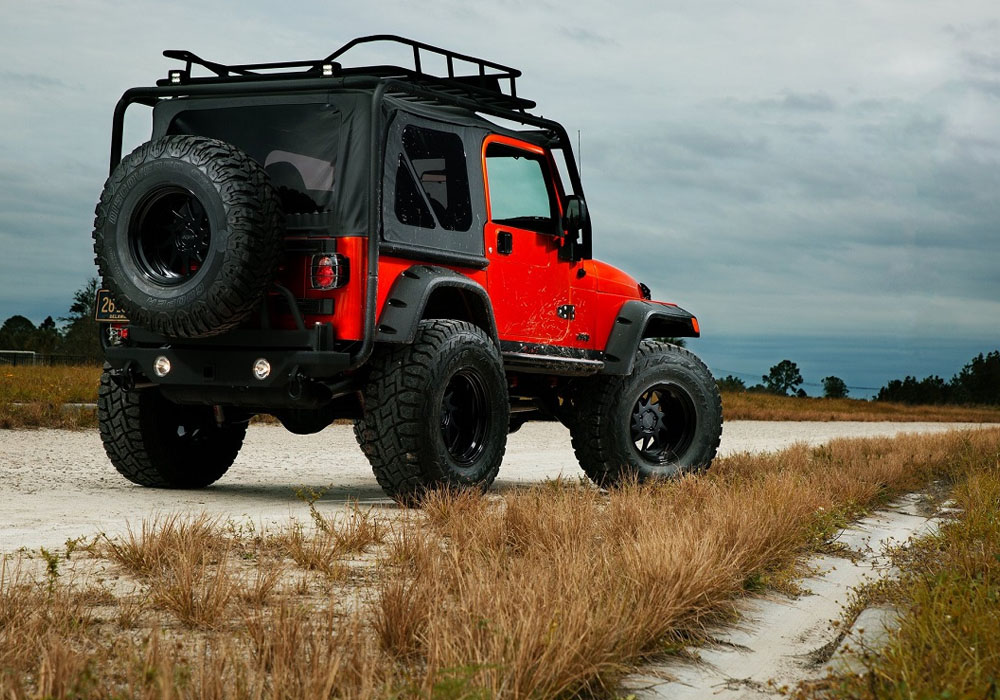
A narrow trail, loose rocks, and deep ruts reveal why the Jeep TJ remains highly respected among off-road drivers. Its compact body, simple mechanical layout, and solid axles create a direct connection between the driver and the terrain. New owners soon learn that its reputation comes from practical capability rather than modern electronic aids.
Anyone who examines a Jeep TJ for sale may notice a wide range of stock examples, restored models, and trail-ready builds. The model arrived for 1997 and introduced coil-spring suspension, round headlights, and the durable 4.0-liter inline-six found in numerous available vehicles. This article explains the design traits, major versions, and ownership factors behind the TJ’s lasting off-road legacy.
A Compact Design Built for Tough Trails
The standard TJ has a 93.4-inch wheelbase, which helps it pass across tight switchbacks and uneven trail sections. Short front and rear overhangs also reduce the chance of bumper contact on steep obstacles. A 2004 Wrangler Sahara, for example, had a 42-degree approach angle, a 31.9-degree departure angle, and 8.2 inches of ground clearance.
These dimensions give drivers useful control on rocky paths where long vehicles may have trouble. The narrow body also provides extra space between trees, ledges, and trail barriers. That compact footprint remains one of the TJ’s strongest traits for technical off-road routes.
Solid Axles and Coil Springs Define Its Character
The TJ replaced the YJ’s leaf springs with coil springs derived from the Grand Cherokee suspension design. This setup improved ride comfort and axle movement while preserving the strength of solid front and rear axles. Better axle articulation helps the tires maintain contact across uneven ground.
The suspension also supports a broad range of lift kits, shocks, control arms, and protective parts. Owners can create a mild trail vehicle or a highly specialized rock crawler without complex electronic systems. Careful part selection remains essential because excessive lift height can affect steering geometry, driveshaft angles, and road stability.
Powertrain Choices Worth Knowing
The 4.0-liter inline-six has become closely associated with the TJ due to its strong low-speed torque and straightforward design. Four-cylinder engines also appeared during the production run and can suit light trails or short local trips. Transmission choices included several manual units plus three-speed and four-speed automatic options.
New owners should review the complete drivetrain rather than focus on engine size alone. Axle ratios, tire diameter, transfer-case condition, and transmission health all affect trail performance. A well-maintained stock powertrain can provide dependable service without major mechanical changes.
Important Components to Inspect
- Frame rails near control-arm mounts
- Skid plates and lower body seams
- Front and rear axle seals
- Transfer-case operation
- Steering joints and track bars
- Suspension bushings and shock mounts
What New Owners Should Prioritize
A careful review matters when a Jeep TJ for sale has aftermarket suspension, large tires, custom axles, or trail armor. Service records can reveal axle repairs, cooling-system work, clutch replacement, and other useful maintenance details. Original or lightly modified examples may also provide a clearer base for future upgrades.
New owners should begin with recovery points, suitable tires, basic skid protection, and dependable maintenance. Advanced modifications should follow actual trail experience rather than visual trends. This approach helps preserve road manners while supporting practical off-road goals.
The Jeep TJ remains memorable because its size, axles, suspension, and drivetrain work together as a focused off-road package. It offers direct mechanical feedback that helps new owners learn tire placement, throttle control, and obstacle selection. Its broad parts support also allows each vehicle to serve a specific trail purpose. A thoughtful purchase starts with frame condition, drivetrain health, modification quality, and complete service documentation. Proper upkeep can protect the model’s original character while preparing it for responsible trail use. That balance between classic design and adaptable capability continues to define the TJ legacy.