Buying near the ocean in Ponte Vedra Beach means evaluating far more than a beautiful view, walkability, or the asking price. Salt air, wind exposure, drainage, insurance, association rules, and storm preparation can all shape the cost and experience of ownership.
Buyers who want neighborhood-level guidance can work with Ponte Vedra Beach real estate agents Christie’s International Real Estate First Coast. CIRE First Coast is a Northeast Florida real estate firm with home-search and buyer resources for communities including Ponte Vedra Beach, Atlantic Beach, Jacksonville, Amelia Island, and St. Augustine, making its local perspective useful when comparing coastal property styles, locations, and lifestyle priorities.
Start With the Complete Monthly Cost
A mortgage payment is only one piece of a coastal home budget. Before making an offer, estimate the full monthly and annual ownership cost, then leave room for repairs and weather-related expenses.
- Principal, interest, property taxes, and homeowners insurance
- Flood insurance or separate wind coverage when applicable
- HOA or condominium dues, plus any special assessments
- Electricity, water, landscaping, pool service, and pest control
- Maintenance for decks, exterior paint, HVAC equipment, docks, seawalls, or irrigation systems
- An emergency fund for deductibles, storm preparation, and unexpected repairs
For example, a lower-priced home may look more affordable than a newer property farther inland, yet higher insurance premiums, association dues, or deferred exterior maintenance can reverse that conclusion. Compare the entire ownership picture, not the listing price alone.
Review Flooding, Drainage, and Storm Exposure
Coastal risk is property-specific. Two homes on nearby streets can have different elevations, drainage patterns, construction details, and insurance requirements. Review the property address through flood insurance rate maps, but do not stop there. Ask the seller for available elevation documentation, prior flood or water-intrusion disclosures, and details about past repairs.
- Walk the yard, driveway, and street after rain if possible.
- Ask whether water has entered the home, garage, crawl space, or pool area.
- Look for grading issues, standing water, stained walls, or corrosion.
- Confirm whether the home has impact-rated openings, shutters, roof straps, flood vents, or other storm-resistance features.
- Understand whether a seawall, bulkhead, dock, or retaining structure needs its own evaluation.
Get Insurance Quotes Before You Commit
Request quotes early enough to use the information in your purchase decision. Insurance availability, coverage limits, deductibles, roof age, prior claims, and the condition of major systems can affect both eligibility and cost. Florida buyers can also use the consumer tools provided by the Florida Office of Insurance Regulation when researching insurers and coverage options.
Ask each insurance professional to explain hurricane or named-storm deductibles, exclusions, and whether detached structures, pools, docks, or seawalls are covered. A policy that appears less expensive may carry a deductible or coverage limitation that changes its practical value.
Schedule Inspections That Fit a Coastal Property
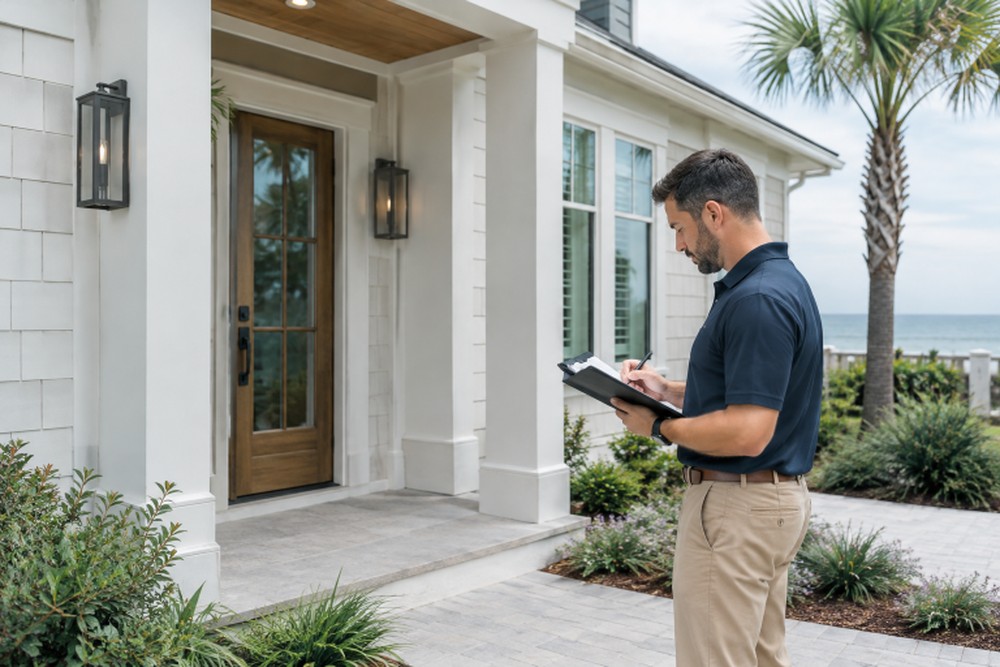
A standard home inspection is the starting point. Depending on the property, buyers may also need specialized evaluations for the roof, foundation, moisture, mold, HVAC corrosion, electrical systems, plumbing, termites, septic equipment, pools, docks, and seawalls.
Treat inspection findings as a decision-making tool. Minor maintenance items may be expected, but a deteriorated roof, a compromised drainage system, an aging seawall, or extensive moisture issues can affect your offer terms, repair requests, financing, and long-term budget.
Verify Permits, Repairs, and Storm History
Do not rely solely on a seller’s verbal description of improvements. Request records of major work and compare them with the home’s current layout.
- Review permits for additions, enclosed patios, decks, pools, roofs, and major renovations.
- Ask for invoices, warranties, and contractor information when available.
- Confirm the status of open permits, code issues, or unresolved violations.
- Ask about storm damage, insurance claims, water intrusion, and post-storm repairs.
- Make sure structural or exterior work was completed by qualified professionals.
Test the Neighborhood in Real Life
A Ponte Vedra Beach home should work on an ordinary Tuesday as well as a sunny weekend. Visit at different times to observe traffic, parking, noise, beach access, lighting, and the route to schools, grocery stores, medical care, and daily services. A quiet street in the morning can feel very different during seasonal activity, special events, or beachgoing hours.
Read HOA, Condo, and Rental Documents Carefully
Association documents can influence your costs, freedom to renovate, rental plans, and resale options. Review the declaration, bylaws, budget, reserve information, recent meeting minutes, master insurance details, and any pending capital projects. Clarify rules for rentals, pets, parking, exterior changes, beach access, docks, gates, and amenity fees before removing contingencies.
Consider Resale Flexibility Before Buying
Even a long-term purchase deserves a resale review. Compare recent closed sales with similar homes, study price reductions and time on market, and consider whether the floor plan appeals to full-time residents, second-home buyers, or future investors. Features such as elevated living space, a newer roof, storm protection, practical parking, and flexible outdoor areas may matter to future buyers.
Pre-Offer Questions to Ask
- What is the realistic total monthly cost of ownership?
- Can I obtain coverage that fits my budget and risk tolerance?
- Has the property experienced flooding, leaks, storm damage, or insurance claims?
- Are major improvements permitted and documented?
- Which repairs or replacements may be needed within the next five years?
- What HOA, condo, rental, or renovation restrictions apply?
- Does the location work during both busy and quiet periods?
- Would this home remain attractive if my plans change?
Common Coastal Buyer Questions
Is every Ponte Vedra Beach home in a high-risk flood zone?
No. Flood exposure depends on the specific parcel, elevation, drainage, construction, and mapping. Review the exact address and ask property-specific questions.
Is newer construction automatically safer?
Newer homes may have more recent building systems and storm-related features, but location, elevation, construction quality, maintenance, and insurance terms still require review.
Buy the Whole Property, Not Just the View
Coastal ownership can be rewarding when the decision is grounded in details. Calculate the true cost, investigate storm and water exposure, secure insurance information, inspect carefully, review community documents, and spend time in the neighborhood. That preparation helps turn a beautiful Ponte Vedra Beach property into a confident purchase.