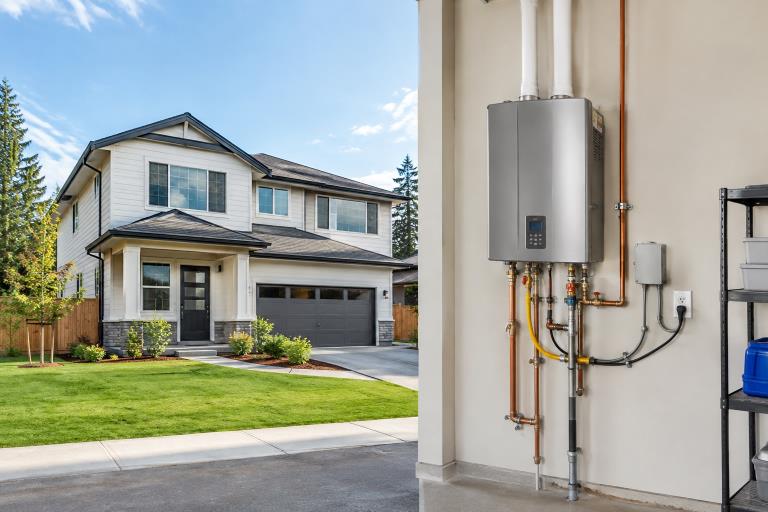
A tankless water heater heats water on demand rather than storing a supply of hot water in a storage tank. For homeowners considering tankless water heater installation in Frederick MD, the decision should involve more than choosing a compact unit. Household demand, available fuel, water quality, utility capacity, and installation conditions all affect the system’s performance.
When correctly sized and professionally installed, a tankless system can provide reliable hot water, free up floor space, and reduce the standby heat loss associated with keeping a large tank hot. However, it is not automatically the best option for every home. Understanding its operating limits and maintenance needs helps prevent expensive surprises after installation.
How A Tankless Water Heater Works
When someone opens a hot-water faucet, cold water enters the unit and passes through a heat exchanger. The system detects water flow, activates its gas burner or electric heating elements, and warms the water before it travels to the fixture. When the faucet closes, the heating process stops.
Unlike a traditional storage heater, a tankless model does not keep dozens of gallons heated and waiting for use. That is why it is often described as providing endless hot water. In practice, continuous hot water depends on the unit’s flow-rate capacity and the temperature rise it must produce. As recent tankless water heater coverage notes, balanced piping, appropriate sequencing, and routine flushing all contribute to intended performance.
For example, a shower, dishwasher, and washing machine running at the same time may exceed the capacity of a smaller unit, especially during colder weather when incoming water starts at a lower temperature. The result can be reduced flow or less stable water temperature at one or more fixtures.
Main Benefits And Trade-Offs
Potential Benefits
- Less energy is lost to keeping stored water hot between uses.
- Wall-mounted equipment can save valuable floor space.
- Hot water can continue as long as demand stays within the unit’s rated capability.
- Many models include digital controls and diagnostic displays.
- Regular service can help protect performance over the life of the equipment.
Possible Drawbacks
- Initial installation costs can be higher than a like-for-like tank replacement.
- Gas piping, venting, electrical capacity, or drainage may need upgrades.
- A unit that is too small may struggle during simultaneous hot-water use.
- Scale management and flushing are important, particularly with hard water.
- Fixtures far from the heater may still have to wait for hot water.
Gas Vs. Electric Systems
Gas Tankless Water Heaters
Gas models are often selected for whole-home applications because they can deliver higher flow rates than many electric units. Installation may require confirmation that the gas line can supply the appliance, along with approved venting, combustion-air provisions where required, and condensate drainage for condensing models.
Electric Tankless Water Heaters
Electric systems do not use combustion venting, which can simplify placement. Still, whole-home electric units may require multiple dedicated high-amperage circuits. Older homes sometimes need panel or electrical-service upgrades before installation. Smaller electric units can be useful for a single sink, an addition, or another point-of-use application.
How To Size A Tankless Water Heater
Tankless equipment is sized by required flow rate and temperature rise, not by tank capacity. A practical sizing process includes the following steps:
- Identify fixtures likely to run at the same time.
- Estimate each fixture’s expected flow rate.
- Add those simultaneous flow rates together.
- Consider the cold-water temperature entering the home.
- Determine how much the unit must raise the temperature to reach the desired setting.
- Compare the results with the manufacturer’s performance data.
In a two-bathroom home, one shower may be used while a dishwasher runs and another person washes hands. A system should be selected for the realistic demand, rather than for a single faucet operating alone. Undersizing can lead to temperature changes, weak flow, or insufficient hot water when the household is busiest.
Installation Needs And Possible Upgrades
Replacing a tank water heater with a tankless model is not always a simple swap. A contractor may need to evaluate gas-line capacity, electrical service, water pressure, pipe size, venting route, condensate disposal, shutoff valves, and service ports. Permits and inspections may also apply depending on the location and scope of work.
Location matters as well. Installing the unit far from bathrooms or kitchens does not eliminate the time needed for hot water to move through long pipe runs. Recirculation systems can reduce that wait, but they should be chosen and configured carefully to avoid unnecessary energy use.
Hard Water, Scale, And Routine Maintenance
Hard water contains dissolved minerals that can collect inside a heat exchanger. Over time, scale may restrict water flow and reduce the unit’s effectiveness. Manufacturer instructions should guide the service schedule, but homes with hard water may need more frequent attention.
- Follow the manufacturer’s maintenance instructions.
- Flush the heat exchanger with an approved solution when service is due.
- Inspect inlet screens and filters.
- Check vents, water connections, and condensate lines when applicable.
- Confirm proper temperature settings and system operation.
- Keep records of professional maintenance visits.
Signs The System Needs Service
- Water temperature changes unexpectedly during use.
- Hot-water flow becomes weaker than usual.
- An error code appears on the display.
- The heater shuts down repeatedly.
- The unit produces unfamiliar clicking, banging, or humming sounds.
- Mineral buildup appears around fittings or service valves.
A gas odor, suspected carbon monoxide issue, water near electrical components, or repeated shutdowns require prompt professional attention. Do not continue operating a gas-fired appliance if there is a possible gas or venting concern.
Tankless Vs. Traditional Tank Water Heaters
- Hot-water supply: Tankless units can provide continuous hot water within their flow limits. Tank systems are limited by stored capacity and recovery time.
- Space: Tankless models are generally wall-mounted. Traditional units require a dedicated footprint.
- Upfront cost: Tankless installations often cost more because utility and venting upgrades may be needed.
- Maintenance: Tankless systems benefit from flushing and scale control. Tank systems may require periodic flushing and anode rod evaluation.
- Replacement complexity: A like-for-like tank replacement can be simpler, while a tankless conversion often needs more planning.
Upfront Cost, Operating Cost, And Long-Term Value
The equipment price is only one portion of the project cost. Compare written estimates for the unit, labor, removal of the old heater, gas or electrical upgrades, venting, condensate drainage, service valves, permits, water treatment, and future maintenance. A lower quote may exclude work that is necessary for a safe, code-compliant installation.
Tankless Water Heater Trends
Current tankless designs increasingly emphasize diagnostics, flexible venting options, service access, and recirculation features. For example, built-in recirculation pumps and dedicated recirculation connections are appearing on some newer models to reduce the wait for hot water at distant fixtures. These features can be useful, but they do not replace correct sizing, sound installation practices, and regular maintenance.
Common Questions
Do Tankless Water Heaters Provide Unlimited Hot Water?
They can provide continuous hot water as long as the household’s combined demand remains within the unit’s flow and heating capacity.
How Often Does A Tankless Water Heater Need Flushing?
The right schedule depends on the model, local water quality, and usage. Hard-water homes may need more frequent service.
Is A Tankless System Always More Efficient?
No. Actual performance depends on fuel type, sizing, installation quality, usage patterns, and maintenance.
Final Takeaway
A tankless water heater can be an excellent fit for homeowners who want a compact system and dependable hot water for everyday use. The best results come from matching the unit to real household demand, verifying that the home can support the installation, and maintaining the system consistently over time.