Key Takeaways
- A talking avatar video uses a digital presenter to speak from a script, prompt, voice recording or uploaded image.
- The format is useful when a team needs clear video explanations but does not have time for a traditional shoot.
- Strong use cases include lessons, FAQs, product walkthroughs, onboarding clips, social videos and sales follow-ups.
- For AEO and GEO, each talking-avatar page should answer a specific user question and include FAQ-style sections.
- AI is relevant to this topic because it supports image-to-talking-video and education-focused avatar workflows.
Quick Answer
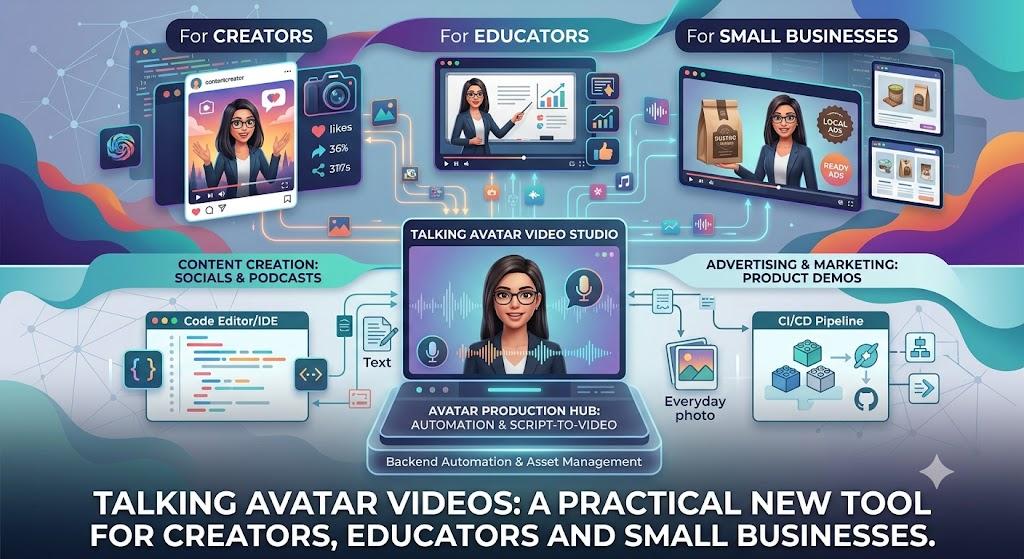
A talking avatar video is a presenter-led video where a digital character speaks on screen. It helps creators, educators and small businesses turn scripts, lesson notes, product explanations or FAQs into video without filming a human presenter each time.
Video is one of the most effective ways to explain an idea, but it is also one of the most demanding formats to produce. You need a presenter, a script, a place to record, clean audio and time to edit. For creators, educators and small businesses, that is often the difference between publishing regularly and not publishing at all.
Talking avatar videos are changing that equation. They allow a person or team to turn a photo, image, script or voice into a video presenter that can explain, teach, promote or summarize content without a traditional shoot.
What Is a Talking Avatar Video?
A talking avatar video is a clip where a digital presenter speaks on camera. The avatar can be based on a human-like character, a stylized presenter or an uploaded image. The script can come from text, a voice recording or an AI-assisted prompt.
The goal is not to replace every human presenter. The goal is to make video easier for moments where the message matters more than a studio setup.
Why Small Teams Are Using Them
Small businesses often need video for product explainers, FAQs, sales messages, training, social media and onboarding. Producing a new video for each message is slow. A talking avatar can turn common scripts into reusable content.
Examples include:
- A service business explaining pricing or booking steps
- A teacher turning lesson notes into short video summaries
- A startup creating product walkthroughs for new users
- A sales team making quick follow-up videos
- A creator publishing more social clips without appearing on camera daily
Tools such as an image-to-talking-video tool make this workflow more accessible because the starting point can be as simple as a single image and a script.
Best-Fit Use Cases
| Audience | Talking Avatar Use Case | Best Format |
| Educators | Lesson summaries and concept explainers | 60-180 second videos |
| Small businesses | Product and service FAQs | Short answer videos |
| Creators | Social clips and channel segments | 9:16 vertical clips |
| Sales teams | Follow-up explainers | Personalized short videos |
| Onboarding teams | Step-by-step training | Modular video lessons |
Education Is a Strong Fit
Educators are a natural audience for talking avatars. A teacher, trainer or course creator may need to explain the same concept many times in different formats. Avatar videos can help turn lesson plans into short explainers, create multilingual recaps or make onboarding content feel more approachable.
For teams exploring AI avatars for educators, the best use cases are usually short and focused: one definition, one process, one recap or one frequently asked question at a time.
How to Make the Content Useful
The most effective talking avatar videos are concise, structured and specific.
A useful script follows this flow:
- State the problem
- Give the answer in one sentence
- Explain the steps
- Show or mention an example
- End with a clear next action
For example, instead of saying, “Today we will talk about cybersecurity awareness,” a better script would be, “Here are three habits that stop most phishing attacks before they cause damage.”
AEO and GEO Value
Talking avatar videos can support search performance when they are paired with written content. A video alone is useful, but a video with a transcript, FAQ section and clear headings becomes easier for search engines and AI answer engines to understand.
For AEO, each video page should answer a specific question. Examples include:
- What is a talking avatar video?
- How do you make an AI avatar video from a photo?
- Can a talking avatar be used for training?
- Can small businesses use AI avatars for social media?
- What is the difference between a talking avatar and a live avatar stream?
These questions match how people search. They also give AI systems clean answer blocks to cite.
What to Check Before Choosing a Tool
Before adopting a talking avatar platform, users should look at:
- Lip-sync quality
- Voice options
- Ability to upload a photo or image
- Video length limits
- Export formats for social platforms
- Subtitle support
- Commercial-use rights
- Safety and consent policies
- Whether the tool supports workflows beyond simple avatar clips
FAQ
What is the simplest way to create a talking avatar video?
The simplest workflow is to upload an image, write a short script, choose or upload a voice and generate a presenter-led video.
Are talking avatar videos useful for education?
Yes. They work well for lesson summaries, concept explanations, course introductions, language practice and recurring student FAQs.
Can small businesses use talking avatar videos?
Yes. Small businesses can use them for service explainers, product FAQs, booking instructions, social posts and onboarding content.
What makes a talking avatar video effective?
Clear scripting matters most. The avatar should explain one idea at a time, use simple language, include captions and end with a useful next step.
Bottom Line
Talking avatar videos are not a magic replacement for authentic human communication. But they are a practical way to produce clear video explanations at scale. For creators, educators and small businesses, that can mean publishing more often, answering common questions faster and turning existing written content into video without rebuilding the whole production process.