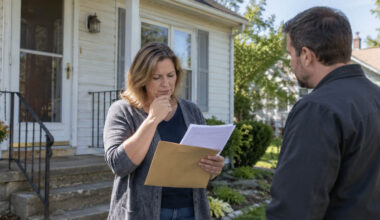
My brother-in-law inherited a two-bedroom in Aliquippa with a leaking roof and a dead furnace. He listed it in March. It sold in November. Seven months of gas money from Pittsburgh, three price cuts, and one buyer who walked after the inspection found mold in the basement.
A cash offer would have closed that in about three weeks. It also would have cost him somewhere between 15% and 25% less than the eventual sale price. Both of those things are true, and almost nobody selling a house in Beaver County gets told both.
So here’s what this covers: how a cash purchase actually changes your calendar, what it costs you in dollars, the situations where it’s clearly the right call, and the ones where you should hold out and list. I’ve watched this play out with relatives, neighbors, and one very stubborn guy in Hopewell Township who refused to fix a chimney for a year.
Why Beaver County Sits in an Odd Spot for Fast Sales
The housing stock around here is old. Aliquippa, Ambridge, and Beaver Falls carry a lot of mill-era housing, and that shapes everything about how a quick sale goes. You get solid bones, small closets, knob-and-tube wiring in some attics, and roofs that have been patched twice.
Buyers using conventional mortgages need appraisals and inspection contingencies. When a place needs major work, those contingencies turn into renegotiation, and renegotiation turns into weeks you didn’t budget for. A house that needs $30,000 of work doesn’t just sell for $30,000 less. It sells for less and takes longer, because the pool of mortgage-ready buyers who want a project is small.
That’s the gap cash buyers live in. They remove the financing and inspection steps that stall these sales, which is why the timeline compresses so dramatically. According to the Consumer Financial Protection Bureau, a mortgage closing typically takes well over a month after the offer is accepted, and that clock doesn’t start until you’ve already found the right buyer.
What Actually Changes: The Step-by-Step Timeline
Here’s the honest version of both paths, side by side. I’ve kept this at the level of steps rather than days, because day counts vary wildly by town.
| Stage | Traditional Listing | Cash Purchase
|
| Prep and repairs | Weeks of painting, cleaning, and fixing what inspectors flag | None. Sell as-is, contents included if you want |
| Finding a buyer | Showings, open houses, waiting on offers | Direct negotiation with one buyer |
| Inspection and appraisal | Both happen, either can kill the deal | Usually waived or done before the offer |
| Financing | Buyer’s lender runs underwriting | No lender involved |
| Closing | Title work plus lender coordination | Title work only, can often be rushed |
| Fees | Agent commission, plus typical seller closing costs | Typically no commission, but a lower gross price |
Notice the trade. You skip the work, the showings, and the waiting. You pay for that convenience with price. There’s no version of this where you get retail price and zero effort, and anyone promising you that is selling something else.
Now, the parts people underestimate. Cleaning out a house takes longer than they think, especially an inherited one. Getting a plumber to look at a failing water heater in February around here can eat a week by itself. Every one of those small delays pushes your closing date, and if you’re carrying two mortgages or paying taxes on an empty property, delay has a price tag.
The Situations Where the Math Clearly Favors Cash
I’ll take a position here: if your house needs a new roof, has active knob-and-tube wiring, or sits in a part of the county where comparable sales are thin, take the cash offer seriously. The discount you give up is often smaller than the repair bill plus the carrying costs plus the months of uncertainty.
Here’s the short list of cases where I’d pick cash without agonizing:
- You’re behind on payments and facing a sheriff’s sale. Timeline is the whole ballgame, and a listing can’t promise you one.
- You inherited a property you don’t live near. Managing a Beaver County house from another state is a part-time job you didn’t ask for.
- The divorce is final and neither of you wants to be the one handling repairs. Speed matters more than the last $20,000.
- You’ve got tenants who stopped paying and a unit that needs turnover work.
- You’re relocating for a job and can’t float two housing payments for half a year.
Five situations, and notice they all share one trait: a clock that isn’t yours. When you control the clock, listing usually wins. When someone else controls it, cash usually wins.
When You Should Just List the House Instead
If your house is in decent shape, sits in a neighborhood with recent comparable sales, and you’ve got six months of patience, hire an agent. Full stop. You’ll net more, and the gap is often large enough to matter.
The U.S. Department of Housing and Urban Development publishes homebuying and selling guidance that consistently points to the same conclusion: market exposure is what drives final sale price. The longer your house sits in front of qualified buyers, the closer you get to top dollar. Cash buyers are one buyer. The market is thousands.
There’s a middle path too, and most sellers forget it exists. Some buyers who pay cash still list through an agent for a reduced commission, or sell to an investor who then resells. Ask what happens to your house after closing. If the answer is a quick flip with a modest margin, you probably priced too low.
How to Vet a Cash Buyer Before You Sign Anything
This is where people get burned, and it’s usually preventable in about twenty minutes of homework.
Start by confirming they can actually close. Ask for proof of funds, not a screenshot of a bank balance, but a letter from a lender or a title company. Anyone legitimate will send it without drama. Anyone who stalls is hoping you’ll get tired of asking.
Then check the paperwork trail. Pay attention to assignment clauses. Some buyers contract with you and then flip the contract to a different buyer at a higher number, and you never see the difference.
The three-offer rule has saved people I know real money. Get quotes from at least three buyers before committing to one. Offers in Beaver County can vary widely for the same property, and the spread has nothing to do with which company has the nicest website.
Last thing, and this one’s non-negotiable for me: never sign a document that lets a buyer deduct arbitrary repair costs after the fact. Either the price is the price, or you walk. A legitimate Cash Home Buyer in Beaver County will put a firm number in writing and stand behind it at closing without last-minute subtraction games.
The Question to Ask Yourself First
Forget the marketing for a second. Ask one thing: if this house sat on the market for eight months and sold for full price, would that outcome actually be better for your life than selling it in three weeks for less?
Sometimes yes. Sometimes the extra money buys a down payment on the next place, and the waiting is worth it. Sometimes the waiting costs you a job, a relationship, or your credit, and the discount is the cheapest part of the whole transaction.
Line up two or three offers. Compare the net number, not the headline number. Then pick the one that matches the clock you’re actually on, because in Beaver County, the calendar is usually the thing that decides these sales, not the price.