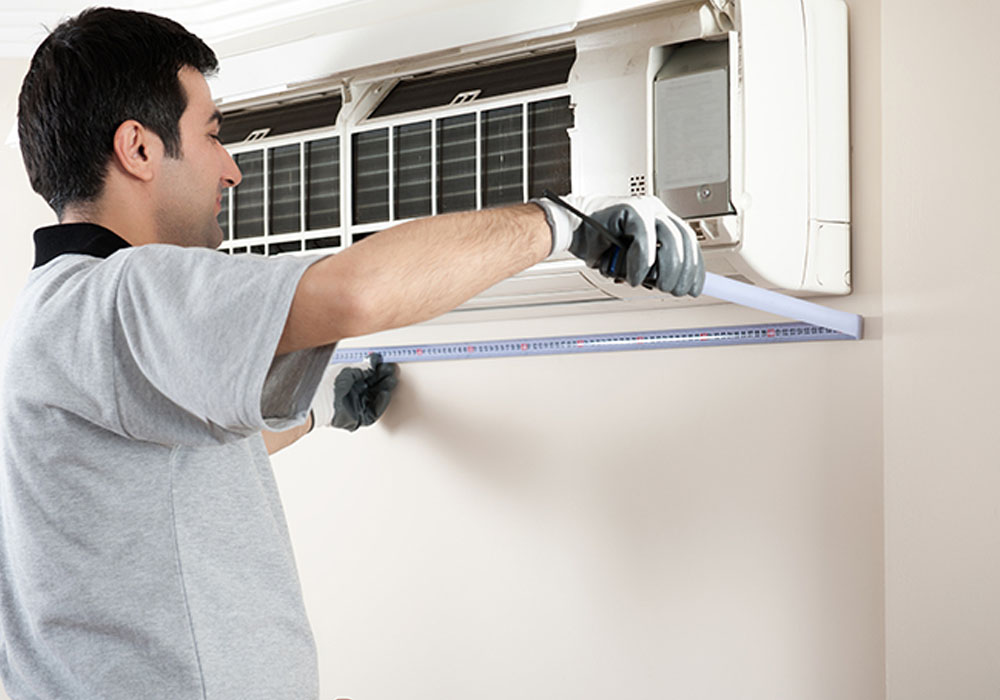
AC installation involves safely mounting the indoor and outdoor units, running insulated refrigerant pipes and electrical wiring between them, and establishing a drain line. Proper equipment placement supports stable system operation by maintaining airflow paths, and it reduces performance loss by limiting heat buildup around the units. When combined with correct refrigerant charging and commissioning procedures, this helps maintain stable cooling performance and system reliability. Here are a few questions to ask before your AC installation:
What Affects AC System Selection?
Technicians first inspect the existing furnace, boiler, or heat pump to determine how new AC equipment will integrate with the system. They evaluate the location and condition of the evaporator coil, typically installed above or attached to the furnace; they also confirm that it is part of an approved matched system with the new condenser. In forced-air systems, central AC uses existing ductwork, with the outdoor condenser connected to the indoor evaporator coil through refrigerant lines. Proper system performance depends on using a manufacturer-approved condenser and coil combination, along with making sure that the blower will deliver the required airflow across the cooling coil.
How Is AC Installation Handled?
Technicians begin AC installation by preparing the work area and staging equipment. Electrical connections are installed, and refrigerant lines are run between the indoor and outdoor units. Where applicable, airflow paths are checked to verify proper circulation through existing channels in the home.
Air handlers serve as the indoor air-moving equipment in many systems and contain the blower assembly. The blower pushes air across the cooling coil and into the duct system in central AC and heat pump setups. Proper airflow allows the system to distribute conditioned air consistently throughout the home.
What Are the Installation Options?
Central air conditioning systems distribute conditioned air throughout the whole home. Air is delivered from a central system into multiple rooms through vents, allowing temperatures to remain relatively even across the house. A thermostat controls operation and temperature settings for the system.
Ductless mini-split systems provide room-by-room cooling without relying on ducts. Each indoor unit operates as its own zone and connects to an outdoor unit, allowing different areas of the home to be set at varying temperatures. This setup makes it possible to cool only occupied rooms rather than the entire space.
Heat pumps provide both heating and cooling using the same equipment. In cooling mode, heat is removed from indoor air and transferred outside. In heating mode, the cycle reverses, drawing heat from the outdoor air and moving it indoors to warm the home.
How Is Airflow Tested?
Technicians perform a full system check after installation to confirm that the equipment is operating correctly. The system is started and allowed to run through normal cooling cycles while technicians observe its behavior. This helps verify that the unit is producing cool air and responding properly to thermostat commands. Temperatures in different rooms are compared to identify any uneven cooling or weak airflow. If inconsistencies are found, adjustments may be made to improve balance and distribution. Final commissioning checks also cover key operating conditions such as electrical performance, system pressures, and overall cooling output. These measurements help confirm that the system functions within expected operating ranges before the job is completed.
What Follows After AC Installation?
Technicians guide homeowners through startup procedures and thermostat settings. They describe how it works, what filters to use, and how long the initial cycle lasts. Homeowners also receive maintenance insights to support long-term system performance. Routine maintenance helps the unit function as intended and allows homeowners or technicians to detect problems before they impact the system’s performance.
Maintenance and inspection services focus on verifying that the system is operating correctly, including airflow, cooling output, and overall performance. When issues are identified, technicians perform repairs to restore normal operation. They also diagnose and troubleshoot common HVAC problems such as restricted airflow, electrical faults, and reduced cooling efficiency.
Schedule AC Installation Services
Professional AC installation and servicing support reliable cooling across indoor and outdoor HVAC components. They also discuss heating and cooling needs before making unit recommendations; such recommendations are based on your home’s size and sun exposure. Contact a qualified HVAC provider today to schedule professional AC installation for your home.