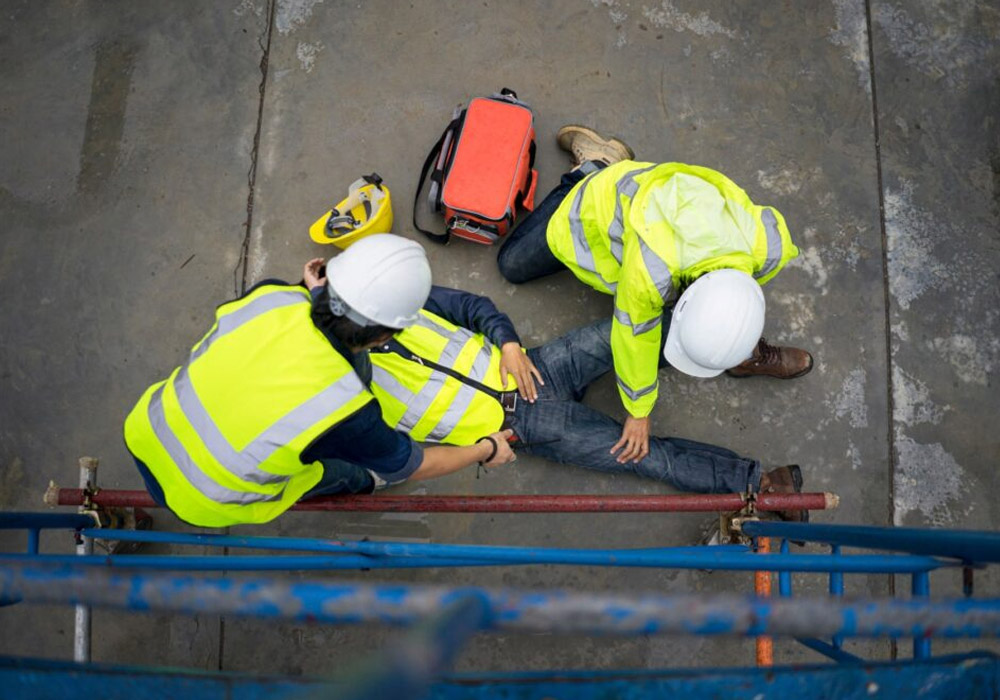
Most workers injured on an offshore rig believe the operator of the platform is their employer – the company that will be footing the bill for their injuries. But that is not how it works in practice. The operator hires a complex web of contractors and subcontractors to staff most offshore rigs, and the company actually responsible for an injury is typically a mid-tier contractor most workers have never heard of.
This isn’t a minor detail in a legal case. It is literally the case. Offshore accident lawsuits turn on the question of which contractor had operational control over the task that led to the injury, and that is not an easy thing for workers to puzzle out on their own.
Why the biggest name on the platform isn’t always the right target
Extracting oil and gas is a risky business. According to the Bureau of Labor Statistics, the industry’s fatal work injury rate was 22.1 deaths per 100,000 full-time workers in 2019, more than seven times the rate across all U.S. jobs. With that much risk on a single deck, it makes sense that liability gets split across a lot of hands too.
A single platform might have the operator that owns the lease, a drilling contractor running the rig itself, a crane company, a catering service, a maintenance crew, and a handful of specialty subcontractors doing welding, inspection, or wireline work on any given day. Each of these companies has its own supervisors, its own safety protocols, and its own employees mixed in with everyone else’s. When something goes wrong, the injured worker’s own paycheck doesn’t tell you who’s legally responsible. The company that signs the check and the company that controls the work are frequently not the same entity.
Start with worker status, not the accident itself
Before we can even talk about which contractor is liable, we have to ask: Is the hurt worker a ‘seaman’ for purposes of the Jones Act?
Seamen get to sue their employer for negligence and can seek broader damages than workers covered by no-fault systems. Courts apply the so-called Chandris test to make that call, looking to whether the worker substantially contributed to the function of a vessel and spent a significant amount of time aboard it. A roughneck who spends most of his work day on a mobile offshore drilling unit will almost always meet the second prong. A worker who mostly stays on a fixed platform may not.
If the worker isn’t a seaman, the Longshore and Harbor Workers’ Compensation Act (LHWCA) usually applies instead, and OCSLA provides similar coverage for workers on platforms on the outer continental shelf. OCSLA essentially adopts the law of the adjacent state and most commonly incorporates the LHWCA. LHWCA is a no-fault system. It pays medical bills and two-thirds of lost wages regardless of who caused the accident, but blocks that injured worker from suing its direct employer for negligence.
That exclusive-remedy bar is also why identifying every contractor on site makes such a big difference. LHWCA only protects the direct employer from a lawsuit. It doesn’t shield every other company on the platform. A laborer hurt because another contractor’s crew left a walkway unsecured or because a crane operator employed by someone else swung a load into a work area still has a live negligence suit against that other contractor. Workers who thought their comp benefits were their only source of relief often walk away from the better settlement check next to it.
The borrowed-servant problem: who was actually in charge?
This is the genuinely tough part. Imagine that a worker is hired by a staffing or labor contractor, but, during all of his work shifts, he is under orders by the site supervisor of the platform operator. Who is liable as the “employer”?
The courts have already sorted this out with the borrowed-servant doctrine. It is not about who cuts the check. It’s about who was in control of the work details. Judges examine who was supervising the particular job being done, who was providing the tools and equipment, who was scheduling the work, and who could send the employee home if the job went wrong. If the borrowing company was in control of all that, it can be interpreted as the employer in a legal sense. The company doing the actual hiring has to rely on the exclusive remedy of the LHWCA, or end up in court as a third-party defendant. Conversely, the tables can also be turned. The apparently non-involved company proves to be the actual statutory employer, while true details of the supervision come to surface.
Some offshore mishaps don’t fit neatly with one employer or the other. Dual employment occurs when two companies both exert significant control over the same worker on the same job. Admiralty law permits both to be sued jointly with the jury determining their proportional faults along the general maritime law’s comparative fault principles. This is a lucky break for workers with injuries since the trial is not about picking the single “correct” defendant. It is about investigating the amounts of control in both cases.
Why the paper trail decides the case
Control isn’t something you can eyeball after the fact. It has to be reconstructed from records, and those records don’t stay available forever.
Maintenance logs, safety audit reports, tool inventories, shift schedules, and the names of every supervisor who gave orders on the day of the accident are the evidence that decides who the borrowed or statutory employer actually was. Rigs also generate a constant stream of BSEE and OSHA-related compliance paperwork, and any violations found in that paperwork can be used as evidence of negligence and to establish what the standard of care should have been. A root cause investigation, done properly, traces the failure back to whichever company’s training, equipment, or supervision actually broke down.
None of that evidence sits still: logs get overwritten, contractors rotate off the job, and companies with an interest in limiting their own exposure aren’t always motivated to preserve records voluntarily. Tracing the full supervision chain across multiple contractors is exactly where a Beaumont offshore rig injury lawyer provides real value early in a case, by subpoenaing contracts, crew records, and training files fast enough to pin down which company was really running the job before that information disappears.
The platform owner still can’t fully walk away
Even if the subcontractor’s employee is directly at fault, the owner of the platform or rig isn’t off the hook. Premises liability law imposes a non-delegable duty on the owner to maintain a reasonably safe work environment. That duty doesn’t walk out the door just because someone else’s crew is there.
For this reason, many cases related to serious offshore construction injuries will sue three or more defendants at once – the contractor whose employee committed the negligent act, the contractor who controlled that employee under the borrowed-servant test, and the platform owner.
Indemnity clauses rarely simplify anything
Almost all contractors working offshore sign indemnity or hold-harmless agreements with each other, aiming to settle in advance who bears the risk if something goes awry. On paper, those clauses seem like they’d make liability pretty clear. In reality, they often fold.
Texas and Louisiana each have an Oilfield Anti-Indemnity Act that invalidates many of these risk-passing clauses in oilfield contracts. The rationale behind the statutes is pretty simple: a careless contractor shouldn’t be allowed to escape liability by contract and saddle the cost onto some smaller company or an insurer that wasn’t involved with the accident. Since a large number of OCSLA cases adopt adjacent state law as the governing rule, these anti-indemnity statutes often apply even to accidents that occur far offshore.
What it means in practice is that the company whose negligence led to the injury typically can’t cloak itself behind a contract it signed with another contractor. That keeps more defendants in the case and, for hurt workers, keeps more potential sources of recovery in the mix.
What this means if you’re the one hurt on the rig
It’s natural to want to blame “the oil company” after an accident, but the likely candidates often have much smaller names. Mid-tier contractors whose supervisors were present giving the orders on the day of the accident, as well as any company responsible for the actual work that resulted in the specific disaster, tend to write the biggest checks.
Figuring out who that is begins immediately. Get the names of every supervisor. Identify who owns the equipment. Determine who was setting the schedule and who had the authority to tell the workers to stop what they were doing. Those details, more than the name of the company on the side of the vessel, ultimately determine who will be writing the checks.