Losing several teeth or dealing with ongoing dental problems can affect much more than a person’s appearance. Missing teeth may make everyday activities such as eating, speaking, and smiling uncomfortable. Over time, they can also affect confidence and overall oral health. Fortunately, modern dentistry offers reliable solutions for people who want to restore their smiles and improve their quality of life. For anyone considering restorative dental treatment, finding an experienced dentist Newcastle residents can rely on is an important starting point. One increasingly popular option for people with extensive tooth loss is the All-on-4 dental implant procedure.
Dental implants have changed the way dentists approach missing teeth. Unlike traditional dentures, which sit on top of the gums and can sometimes move while eating or speaking, implants are placed into the jawbone to provide a more stable foundation for replacement teeth. Understanding how this treatment works, who may benefit from it, and what to expect during the process can help patients make confident decisions about their dental health.
Why Finding the Right Dentist Newcastle Is Important
Choosing a dentist is an important decision, particularly when considering a procedure that involves dental implants. Implant treatment requires careful assessment, accurate planning, and an understanding of the patient’s individual dental needs. The right dental professional will take time to examine the condition of the teeth, gums, and jawbone before recommending a suitable treatment.
When researching dental clinics, patients should look beyond convenience and pricing. Experience in restorative dentistry, modern diagnostic equipment, transparent communication, and personalised treatment planning are all worth considering.
A good dentist should also explain the available treatment options, potential complications, recovery expectations, and long-term maintenance requirements. Patients should feel comfortable asking questions and discussing any concerns before committing to a procedure.
Taking this approach helps ensure that treatment decisions are based on individual oral health needs rather than general recommendations.
What Is All on 4 Dental Implant Treatment?
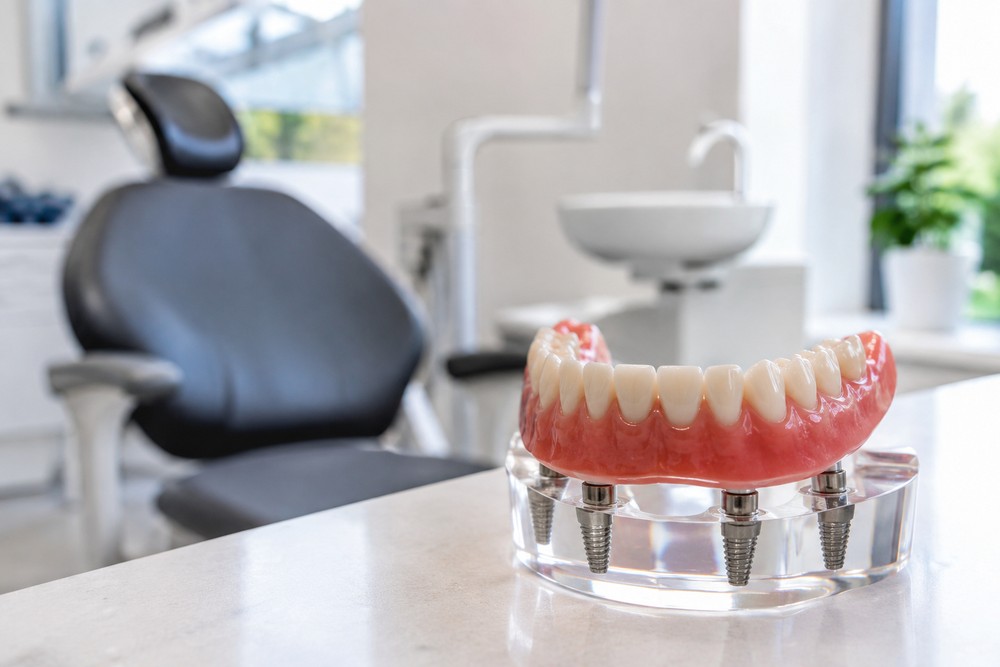
The All-on-4 dental implant technique is designed to replace a complete row of missing or severely damaged teeth using four strategically positioned dental implants. These implants act as artificial tooth roots and support a fixed set of replacement teeth.
The procedure generally involves placing two implants towards the front of the jaw and two towards the back at carefully planned angles. This positioning helps make effective use of the available jawbone and provides support for a full arch of replacement teeth.
One of the main reasons patients consider this treatment is that it can provide a fixed alternative to conventional removable dentures. Instead of taking their teeth out every evening, patients with a successful fixed restoration can enjoy the convenience of replacement teeth that remain in place.
In suitable cases, a temporary set of fixed teeth may be attached shortly after implant placement. However, immediate loading is not appropriate for everyone. The final restoration is usually provided after the implants have had sufficient time to integrate with the surrounding bone.
Who Is a Suitable Candidate?
All-on-4 treatment may be suitable for adults who have lost most or all of their teeth in the upper or lower jaw. It can also be considered for individuals whose remaining teeth are severely damaged and cannot be restored effectively.
People who struggle with loose dentures or experience difficulty chewing may also wish to discuss this option with their dentist.
However, suitability depends on several factors. The condition of the jawbone, gum health, general medical history, and lifestyle habits can all influence treatment outcomes. Smoking, uncontrolled diabetes, and active gum disease may increase the risk of complications and need to be addressed before treatment.
A comprehensive dental examination and appropriate imaging are necessary to determine whether the procedure is suitable. In some cases, alternative implant treatments or conventional dentures may offer a better solution.
Key Benefits of All-on-4 Dental Implants
One of the biggest advantages of All-on-4 treatment is the ability to replace an entire arch of teeth using four implants in appropriately selected patients.
Improved stability: Since the replacement teeth are supported by implants placed in the jawbone, they generally provide greater stability than traditional removable dentures. This can make speaking and eating more comfortable.
Natural appearance: Replacement teeth are designed to complement the patient’s facial features and smile. Their shape, colour, and overall appearance can be customised to achieve a natural-looking result.
Convenience: Fixed replacement teeth eliminate the need to remove dentures for daily cleaning or worry about them shifting during conversations and meals.
Efficient treatment approach: Rather than requiring an individual implant for every missing tooth, four strategically positioned implants can support a complete dental arch.
Potentially less bone grafting: The angled placement of the back implants can sometimes make better use of existing bone, reducing the need for additional grafting procedures in suitable cases.
Although these benefits make the treatment appealing, patients should remember that results vary depending on individual circumstances, and dental implants require ongoing care.
What Happens During the Treatment Process?
Understanding the treatment journey can make the experience less intimidating. Although the exact process varies between patients, it generally involves several important stages.
1. Initial Consultation
The first appointment involves examining the mouth, reviewing dental and medical history, and discussing the patient’s concerns. The dentist may recommend digital X-rays or 3D scans to evaluate the jawbone and determine the best implant positions.
2. Personalised Treatment Planning
Once the assessment is complete, the dental professional develops a treatment plan. This includes discussing the number of implants, the type of restoration, estimated costs, treatment timeline, and any additional procedures that may be necessary.
3. Implant Placement
During surgery, four implants are positioned in the jawbone under appropriate anaesthesia. The procedure is carefully planned to achieve suitable positioning and stability.
4. Temporary Teeth and Healing
If the implants have sufficient initial stability, a temporary fixed restoration may be attached. The implants then require time to heal and integrate with the surrounding bone, a process known as osseointegration.
5. Final Restoration
After successful healing, the temporary teeth are replaced with a permanent restoration designed for comfortable function and an attractive appearance.
Looking After Your Dental Implants
Dental implants are not immune to oral health problems. Just like natural teeth, they require consistent cleaning and regular professional attention.
Patients should brush twice daily using a soft-bristled toothbrush and clean carefully around the implant-supported restoration. Specialised interdental brushes or water flossers may also help remove food particles from difficult-to-reach areas.
Regular dental check-ups are equally important. A dentist can monitor the condition of the implants, examine the surrounding gums, and identify potential problems early.
Avoiding smoking, following dietary recommendations during recovery, and reporting unusual discomfort or bleeding can also support long-term implant health.
Making the Right Choice for Long-Term Dental Health
Restoring missing teeth can make a meaningful difference to everyday comfort, confidence, and oral function. All-on-4 treatment offers an option for eligible patients who want a fixed alternative to traditional dentures, but successful outcomes depend on careful planning, suitable clinical conditions, and consistent aftercare.
Before proceeding, patients should arrange a consultation with a qualified dental professional, discuss their expectations, and understand the advantages and limitations of the procedure. Choosing an experienced dentist Newcastle residents can trust and exploring whether All on 4 dental implant treatment is appropriate can be valuable steps towards a healthier, more confident smile.