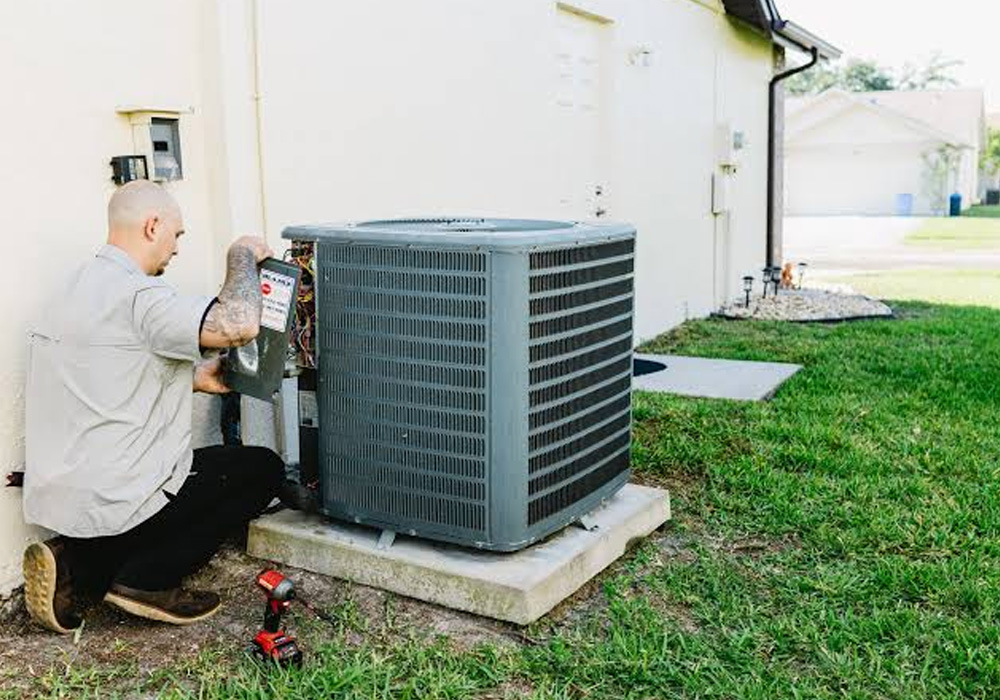
The worst AC failures don’t happen in May. They happen in the third week of August, on a Saturday, when every service truck in Marion County is already booked and the forecast says 96 degrees for six more days. That’s the pattern I’ve watched repeat across Florida homes: the system limps through spring, hides its damage during mild weather, then collapses exactly when you need it most.
The good news is that a dying air conditioner almost always tells you weeks in advance. It just does it quietly, in ways most homeowners interpret as “Florida being Florida.” Below are the signals worth trusting, a diagnostic loop you can run in an afternoon, and the fix list worth starting now.
Five signals your AC is failing and you’re ignoring
Any reputable hvac company in ocala will start with a hard truth: an air conditioner that still blows air is not the same as an air conditioner that works. Here’s what actually matters.
- It runs without stopping. A healthy system cycles, meaning it kicks on, cools the house, and shuts off. One that hums from 11 a.m. to 10 p.m. is telling you it can’t reach the setpoint anymore. That’s a capacity problem, and it rarely fixes itself.
- Your electric bill jumped and nothing else changed. You didn’t buy a hot tub. You didn’t add a fridge. But the bill climbed for two or three months straight. A compressor working harder to do the same job pulls more current, and your utility statement is the honest witness.
- You only feel cold in one room. Weak airflow in the far bedroom usually points to duct leakage or a blower losing pressure. Seal the easy stuff first, but if one room stays warm after you’ve taped the visible joints, the equipment is the suspect.
- The house feels clammy even at 74. Temperature and humidity are two different jobs. An aging system that cools but won’t pull moisture out leaves you comfortable on the thermometer and miserable in your skin. That’s a sign of refrigerant or coil trouble.
- It’s older than your teenager. Most residential cooling equipment in Florida has a service life of roughly 12 to 15 years, and the wear clock runs faster here than almost anywhere else. If your unit is past that window and acting up, you’re not troubleshooting anymore. You’re scheduling.
Why Florida kills air conditioners faster than the rest of the country
Here’s where I’d push back on the generic advice you’ll find online. A unit rated for the same lifespan in Ohio does not get that lifespan in Ocala. Between June and September, your system runs nearly around the clock. It breathes in humidity, condensation drips constantly, and the outdoor condenser sits on a slab that’s baking by noon.
Moisture is the real villain. Cooling coils stay wet for months at a time, drain lines carry gallons of condensate, and any weak point in the condensate path becomes a slow leak behind a wall you can’t see. According to building science guidance from the Building Science Corporation, managing bulk water and vapor correctly is the difference between a system that lasts and one that corrodes from the inside. That’s why I’d rather see you flush a drain line four times a year than buy a fancy thermostat.
Solar gain does the rest. West-facing windows and unshaded roofs load the system harder in the late afternoon, which is exactly when the outdoor temperature peaks. Your equipment is being asked to do the most work at the worst moment of the day, every day, for months.
The half-hour “will it quit on me” test
Before you call anyone, run this sequence. It costs nothing and it gives a technician real information instead of a vague complaint.
- Check the filter first. Pull it out and hold it up to a light. If you can’t see through it, you’ve found your airflow problem. Swap it and retest the room that felt warm.
- Listen at the outdoor unit for 60 seconds. You want a steady hum. Rattling, clicking, or a hard-start shudder means parts are worn.
- Compare supply and return temperatures. Put one thermometer in a supply vent and one near the return. A healthy split sits somewhere around 15 to 20 degrees Fahrenheit. Much less than that and the system is struggling to remove heat.
- Write down three days of readings. Morning, afternoon, evening. Patterns matter more than a single number.
- Flush the condensate drain. Pour a cup of plain water down the access port and watch how slowly it goes. If it backs up, that’s your warning.
That third step is the one most homeowners skip, and it’s the most useful thing you can hand a technician. Real data beats “it just feels warm in here.”
What to fix now versus what can wait
Not every problem is an emergency, and I’d hate to see you replace equipment you don’t need to replace. Use the table below as a rough triage guide.
| Symptom | Likely cause | Urgency
|
| Clogged filter, weak airflow | Restricted return air | Fix this weekend |
| Water pooling near the indoor unit | Blocked condensate line | Fix now |
| Runs constantly, bill climbing | Low refrigerant or failing compressor | Book a diagnostic |
| Clammy air at a normal temperature | Coil or charge issue | Book a diagnostic |
| One room warm, rest fine | Duct leakage | Fix within a month |
If two or more rows apply at once, stop triaging and get eyes on the system. Housewide symptoms stack quickly.
The seasonal habits that actually extend equipment life
I’ll be blunt: most “maintenance tips” floating around are just filter reminders dressed up as strategy. These four habits are the ones that change outcomes.
Shade the outdoor condenser. Not with a box or a tarp, which chokes it. A small shade sail or a well-placed shrub a few feet away drops the ambient heat it’s fighting. The Department of Energy’s efficiency guidance on Energy.gov makes the same case: airflow around the unit matters as much as what’s inside it.
Keep the thermostat steady. Big daytime setbacks and aggressive recovery cycles wear equipment harder than a modest, consistent setting.
Watch indoor humidity as closely as temperature. Thermal comfort isn’t just about degrees, and the American Conference of Governmental Industrial Hygienists has long documented how humidity and air movement shape how a space actually feels. If your home reads comfortable on the thermometer but sticky on your skin, that gap is diagnostic.
Book a tune-up in April, not July. Same work, easier scheduling, and you’ll catch problems while the weather is still forgiving.
What to do this week
None of this requires you to become an HVAC technician. It requires that you stop treating a limping system as normal. Check the filter, time the run cycle, grab a thermometer and take three days of readings, and clear that drain line. If the numbers confirm what your skin already suspected, book a diagnostic before the August rush takes the calendar.
Here’s the question I’d leave you with: if your air conditioner gave out tomorrow afternoon, do you know who you’d call, and how long you’d wait? Answer that now, calmly, and the answer becomes a boring detail instead of a crisis.