It is one of the most common and frustrating scenarios in traffic accident law: a violent intersection crash occurs, and both drivers walk away insisting they had the green light. With no independent witnesses around, the situation quickly devolves into a classic case of “he said, she said.” For the individuals involved, proving the truth is vital for insurance claims and legal liability. When a standard police report cannot definitively settle the debate, specialized forensic teams step in to solve the puzzle. Reconstructing these high-stakes incidents requires a blend of cutting-edge technology, physical science, and meticulous detective work. Experienced motor vehicle collision attorneys frequently rely on these highly technical investigations to build an undeniable case for their clients. Understanding exactly how these experts piece together the timeline can shed light on how the truth is recovered from the wreckage.
Step 1: Querying the Event Data Recorders (EDRs)
Modern vehicles are essentially rolling computers, and one of their most valuable components after an accident is the Event Data Recorder (EDR), often referred to as the vehicle’s “black box.”
When an airbag deploys, or a severe impact occurs, the EDR captures a snapshot of data from the seconds leading up to, during, and immediately after the collision. Investigators extract this data to look at vehicle speed, steering angles, and brake application. If Driver A claims they were cruising smoothly through a fresh green light, but their EDR shows they slammed on the brakes two seconds before impact while Driver B never touched their brakes, it indicates who was truly surprised by the changing traffic pattern.
Step 2: Mapping the Physical Debris and Point of Impact
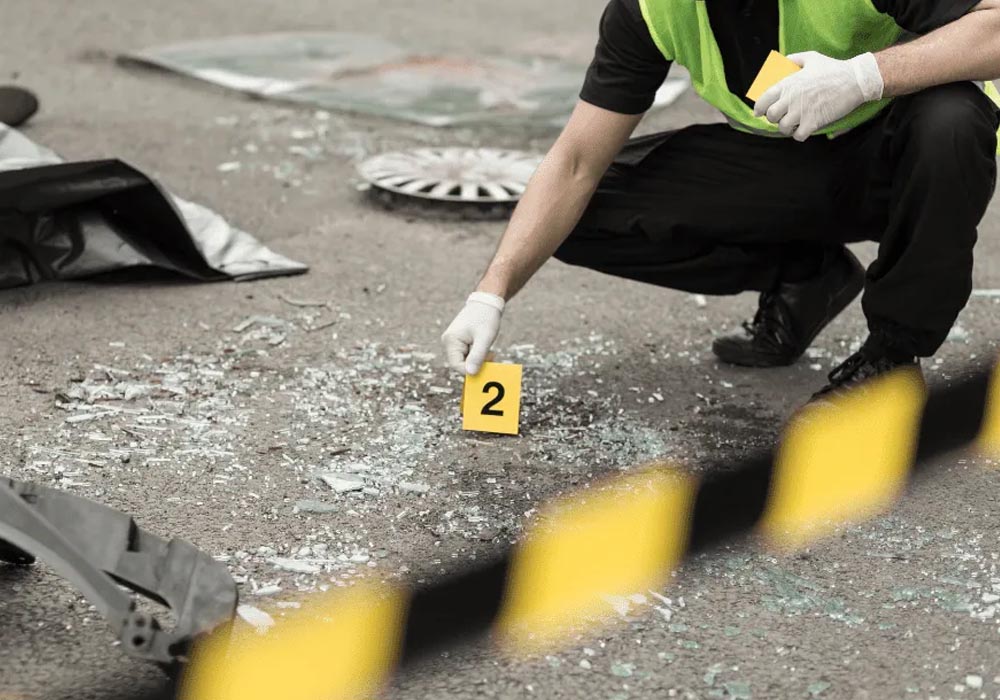
Long before the vehicles are towed away, investigators meticulously map the crash scene. They analyze skid marks, gouge marks in the asphalt, and the cars’ final resting positions.
Using physics and calculus, accident reconstructionists can calculate the exact angles of impact and the speeds of both vehicles at the moment of the crash. This math is crucial when synchronized with traffic light timing cycles. For instance, if investigators prove a driver was traveling at 60 mph in a 35-mph zone, they can calculate exactly where the vehicle was positioned five seconds earlier. Frequently, this math shows that even if the light was technically green when they entered the intersection, their extreme speed meant it was red as they approached, catching cross-traffic off guard.
Step 3: Interpreting Traffic Signals
Traffic signals operate on programmed cycles and are not left to chance; their operation is managed by computers housed in metal boxes near the junction. The investigator can request the traffic light timings from the junction for the exact minute when the collision occurred.
Through analysis of the logs, the timing phasing of the traffic lights is established. The process involves using the speeds and positions to determine the timeline. The information obtained from the traffic lights’ logs indicates that northbound traffic received a red light lasting 12 seconds before eastbound traffic received a green arrow. The driver’s location on the road within those times will invalidate the claim of the green light.
Step 4: Looking for Digital Evidence
With everything connected in today’s world, digital evidence will prove to be the final piece needed to crack the case. The investigation team will search for camera footage around the place. This includes:
- Commercial security cameras from nearby businesses or gas stations.
- Municipal traffic monitoring cameras and automated red-light enforcement cameras.
- Dashcam footage from the vehicles involved or from uninvolved witnesses who passed by.
- Doorbell cameras from nearby residential properties.
Even if a camera does not capture the intersection directly, it might capture the traffic light’s reflection in a store window or show the flow of surrounding traffic, allowing experts to deduce which lane had the right-of-way.
Conclusion
When a driver falsely claims they had a green light, they are often not maliciously lying; the human brain frequently distorts memories during highly traumatic events. However, science and physics do not suffer from memory lapses or bias. Piecing together the reality of an intersection collision requires patience, specialized tools, and a deep understanding of forensic engineering. If you find yourself trapped in a dispute where the opposing driver is misrepresenting the facts of a crash, aligning yourself with knowledgeable motor vehicle collision attorneys ensures you have the investigative resources necessary to uncover the digital and physical truths that will vindicate your story.