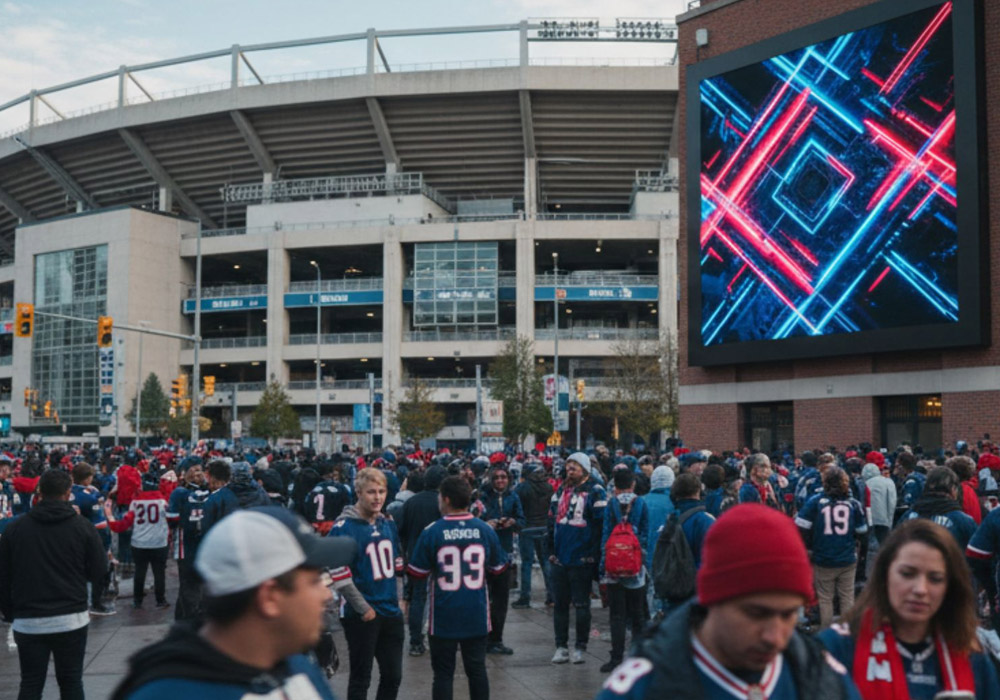
Gameday crowds are unlike almost any other audience. They are excited, social, mobile, and already thinking about what to eat, wear, buy, share, and do next. Whether fans are walking into a stadium, tailgating nearby, sitting in traffic, or heading to a sports bar after the final whistle, brands have several chances to reach them in the real world.
That is what makes stadium billboards so valuable. They not only advertise to people who are watching the game, but they also reach fans as they move through the full gameday experience, from pregame plans to postgame celebrations.
For brands that want visibility around sports culture, stadium-area OOH through a billboard advertising agency can turn a major event into a high-energy advertising moment.
Stadium Billboards Reach Fans When Attention Is Already High
Sports fans are often more emotionally engaged on gameday. They are thinking about the matchup, talking with friends, checking lineups, making plans, and moving with anticipation. A billboard near a stadium can meet them in that energized state.
This matters because advertising works better when it connects to the audience’s current mindset. A food delivery ad may feel more relevant when fans are discussing what to order after the game. A beverage brand may stand out near tailgate routes. A rideshare, hotel, apparel, or restaurant ad may feel useful when people are actively making decisions they’re excited about.
Stadium billboards are about traffic volume and measured timing. The right message in the right place can feel like part of the event rather than just another ad.
Brands Can Borrow Gameday Energy Without Sponsorship Rights
Not every brand can afford official sponsorships, naming rights, or in-stadium advertising. Stadium-area billboards give companies another way to participate in the season without needing to be part of the broadcast or the venue itself.
The key is to avoid using protected team names, logos, or league marks without explicit permission. Brands can still build campaigns around the broader feeling of gameday, such as rivalry weekends, tailgate traditions, hometown pride, watch parties, road trips, and postgame hunger.
This is especially useful for local and regional brands. A pizza shop, gym, auto dealer, bank, hotel, healthcare group, or retail store can connect with fans in a way that feels timely and community-driven. The gameday billboard ad just needs to feel relevant to the moment.
Digital Billboards Add Flexibility
Digital stadium-area billboards can be especially useful because gameday conditions change quickly. A brand may want different creatives before the game, during the event, and afterward. It may also want to adjust messaging for weekends, rivalry games, concerts, playoff pushes, or special events.
For example, a restaurant could run lunch messaging before an afternoon game and late-night messaging after an evening game. A transportation brand could focus on getting to the venue earlier in the day and getting home safely later. A retailer can choose to update creative around weather, merchandise, or time-sensitive promotions.
That flexibility helps brands stay relevant throughout the event cycle. Instead of treating the billboard as a single fixed message, digital OOH can adapt to the rhythm of the crowd.
Measurement Helps Prove the Value
Stadium billboards can feel exciting, but brands still need to understand whether the campaign is working. Measurement may include estimated impressions, reach, foot-traffic lift, branded search activity, website traffic by geography, QR code scans in pedestrian-heavy areas, promo code usage, or sales changes during the campaign window.
However, the right metrics depend on the goal. A brand awareness campaign should not be judged the same way as a restaurant promotion or event-specific offer. Before the campaign launches, brands should decide what success looks like and how they will evaluate it.
Working with a billboard advertising agency can help advertisers compare placements, understand available inventory, and plan OOH campaigns around real audience movement. That planning matters when a brand wants to make the most of a short, high-traffic gameday window.
Stadium Billboards Work Best When They Fit the Fan Experience
The strongest stadium billboard campaigns fit the mood, timing, and behavior of the crowd at a specific sporting event. They understand where fans are coming from, where they are going, and what they care about in that moment.
A good stadium billboard can build awareness, drive nearby action, reinforce a broader campaign, or make a brand feel present during one of the most emotional parts of the sports calendar.
Gameday crowds are already moving, talking, spending, and paying attention. When brands place the right message at the right point in that journey, stadium billboards can turn fan energy into real-world visibility.