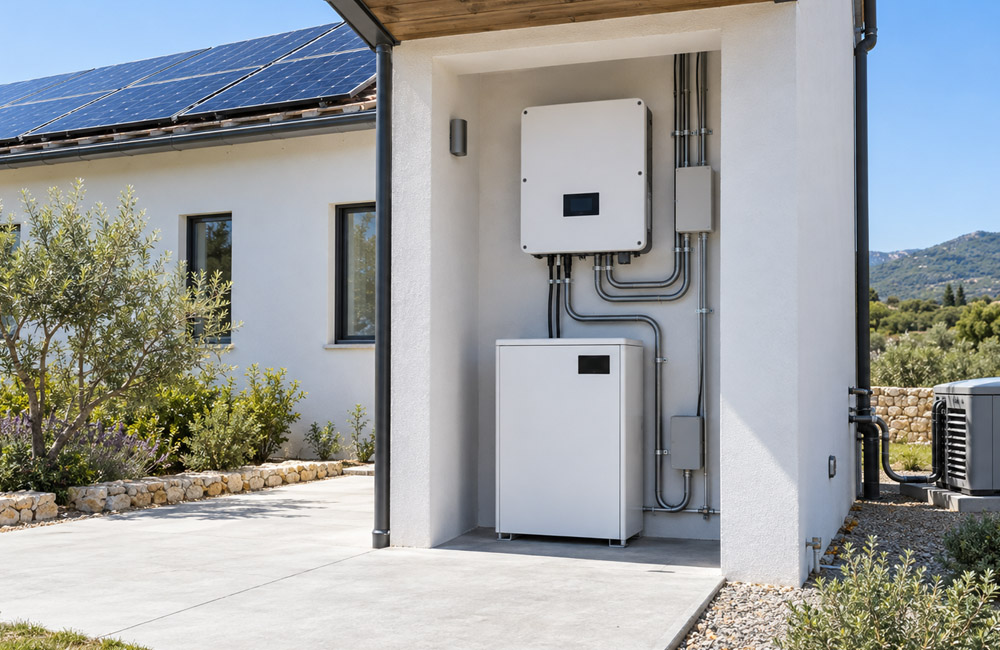
Living off the grid provides greater independence, but it also brings the responsibility of managing your own energy system. Unlike a standard home connected to the municipal grid, an off-grid system relies entirely on balancing dynamic supply and demand. At the core of this balancing act is your off-grid solar power inverter.
Here is a detailed look at how an off-grid solar power inverter seamlessly coordinates the three power sources to keep your appliances running reliably without interruption.
The Three Core Electricity Flow Paths
To understand how energy is managed, it helps to see where electricity originates and where it goes. An off-grid solar power inverter manages three primary inputs and outputs depending on system conditions.
- Direct Solar Consumption: Solar energy goes straight from the photovoltaic panels to your active household appliances.
- Battery Charging & Discharge: Excess solar power is stored in the battery bank. During the night or overcast conditions, the batteries feed power back to the house.
- Generator Pass-Through & Support: When both solar and battery reserves are insufficient, the generator steps in to power the load directly whilst charging the batteries simultaneously.
How an Off-grid Solar Power Inverter Handles Common Energy Scenarios
An off-grid solar power inverter relies on internal microprocessors and built-in Charge Controllers (typically MPPT(Maximum Power Point Tracking)) to make split-second decisions. Below is a breakdown of how the inverter manages different daily energy conditions.
Peak Sun, High Household Demand
During mid-day, your solar panels produce maximum output. If you are running high-draw appliances like laundry machines or water pumps, the off-grid solar power inverter prioritises panel output to meet household demand directly. This direct conversion minimises energy losses associated with storing power in batteries first.
Peak Sun, Low Household Demand
When generation exceeds household consumption, the inverter routes all surplus solar energy into your battery bank. Its integrated MPPT charge controller regulates voltage and current, protecting the batteries against overcharging, overheating, and chemical degradation.
Evening and Overnight Running
Once the sun sets, solar input drops to zero. The off-grid solar power inverter instantly shifts mode, drawing direct current (DC) from your battery bank and converting it into alternating current (AC) for your lighting, refrigeration, and electronics.
Extended Cloud Cover or Depleted Battery
When low sunlight and high energy consumption lead to a low battery State-of-Charge (SoC), the inverter initiates safety protocols to prevent deep discharge. It automatically sends a signal via an integrated dry-contact relay to start your automated backup generator.
Generator Integration: Auto-Start and AC Synchronisation
Managing a generator is where the intelligence of a modern off-grid solar power inverter really shines. Instead of running a noisy generator continuously, the inverter uses smart load-sensing technology to optimise generator use.
- Generator Compatibility: For example, Eastman off-grid inverters are compatible with gensets operating at a frequency of 50 Hz. Check the selected model’s AC input specifications and generator connection requirements before installation.
- Automated Start Signals: When the battery voltage drops below a pre-set threshold, the inverter triggers the generator start command.
- AC Pure Sine Wave Clean-Up: Generators often produce fluctuating power. The off-grid solar power inverter conditions and cleans this input before feeding it into sensitive electronics.
- Dual-Duty Operation: Whilst passing generator AC power through to run your household appliances, the inverter simultaneously reverses its operational direction to charge the depleted battery bank using internal charger circuits.
- Auto-Shutdown: As soon as the battery bank reaches a healthy state of charge, the off-grid solar power inverter shuts down the generator to conserve fuel and minimise mechanical wear.
Key Features to Look For in an Off-grid Solar Power Inverter
Selecting the right setup ensures your system operates smoothly for years. When evaluating options, look for these critical internal management capabilities:
- Configurable Priority Settings: Allows you to select whether solar or battery takes priority depending on local weather patterns and fuel costs.
- High Surge Capacity: Ensures the inverter can handle momentary power spikes when heavy inductive loads (like motor-driven compressors) kick on.
- Wide Voltage Input Ranges: Accommodates flexible solar panel array configurations and ensures stable operation even if generator voltage drops slightly under heavy motor start-ups.
Preventative Maintenance Checklist
Routine checks help detect loose connections, dust buildup, or parameter drift before they cause system downtime.
| Maintenance Task | Objective |
| Clean Air Intake & Vents | Clear dust, debris, and cobwebs to maintain unobstructed airflow and passive cooling. |
| Terminal & Cable Inspection | Check DC and AC wire terminations for tightness, corrosion, or heat discolouration. |
| Display & Error Logs | Check historical event logs on the inverter display or mobile app for warning codes. |
| Generator Auto-Start Test | Simulate a low-battery state to ensure the dry-contact relay triggers smooth generator pickup. |
| Firmware Updates | Check manufacturer portals for software updates that optimise charge profiles and efficiency. |
Choose the Right Off-grid Solar Solution
An off-grid solar power inverter is much more than a simple power converter; it is an intelligent power manager designed to balance efficiency, equipment longevity, and fuel economy.
By automatically routing solar generation, maintaining healthy battery cycles, and engaging generator backup only when essential, a quality off-grid solar power inverter ensures reliable energy independence regardless of the weather. Solar solutions providers like Eastman Auto & Power Limited offer systems designed to support dependable and efficient off-grid energy management.
Choose an inverter that matches your energy needs, battery setup, and backup requirements to build a more reliable off-grid power system.