Planning Your Recreational Surface and Pool Upgrades
Are you dreaming of revitalizing your outdoor living space? Whether your pool has seen better days or you’re simply looking to enhance its functionality and appeal, recreational surface and pool upgrades offer a fantastic opportunity to transform your property.
An aging pool can become an eyesore or even a safety concern, but with the right approach, it can be converted into a modern, energy-efficient, and accessible aquatic retreat. We understand that embarking on such a project can feel daunting, with numerous decisions ranging from material choices and design aesthetics to regulatory compliance and budgeting.
In this guide, we will explore the critical factors involved in planning and executing successful recreational surface and pool upgrades. We’ll delve into essential considerations like choosing the right surface materials, understanding the financial implications of renovation versus replacement, and integrating safety and energy-efficient features. We will also cover the crucial steps for protecting your pool deck and navigating common challenges.
Our aim is to provide you with the insights needed to make informed decisions, ensuring your investment delivers lasting value and enjoyment. From expert advice on maintaining your pool’s longevity to understanding the nuances of different upgrade options, we’re here to help you create the perfect backyard oasis. For those seeking comprehensive pool services, including guidance on these transformative projects, connecting with experienced professionals is key.
The journey to an upgraded recreational space begins with meticulous planning. This phase involves not only envisioning the desired outcome but also navigating practical considerations such as timing, funding, and the scope of work. Many property owners find that the fall off-season, once the summer swimming has concluded, presents an optimal window for undertaking significant pool and deck enhancements, observes the Wake County team. The cooler temperatures and reduced humidity often facilitate better curing for new surfaces and minimize disruptions to peak usage times.
However, weather delays remain a perennial concern, as demonstrated by projects like the Livingston Park Pool renovation, which experienced rainfall during over 40% of its construction period. Careful scheduling and contingency planning are vital to ensure projects stay on track.
For larger community or public aquatic facilities, planning often extends to securing substantial funding. Initiatives like the NY SWIMS program, which awarded $4 million to the Memorial Pool redevelopment at Payne Park, and the federal Green and Inclusive Community Buildings program, which contributed to the $21 million Phase 1 renovations at Brennan Park Rec Centre, highlight the availability of public grants. Additionally, the generosity of anonymous donors, such as the individual who fully funded the $4.3 million reconstruction of Prospect Pool, can be a game-changer for community projects. Understanding these funding avenues and planning for them well in advance is crucial for bringing ambitious upgrades to fruition.
Evaluating the 60% Rule for Recreational Surface and Pool Upgrades
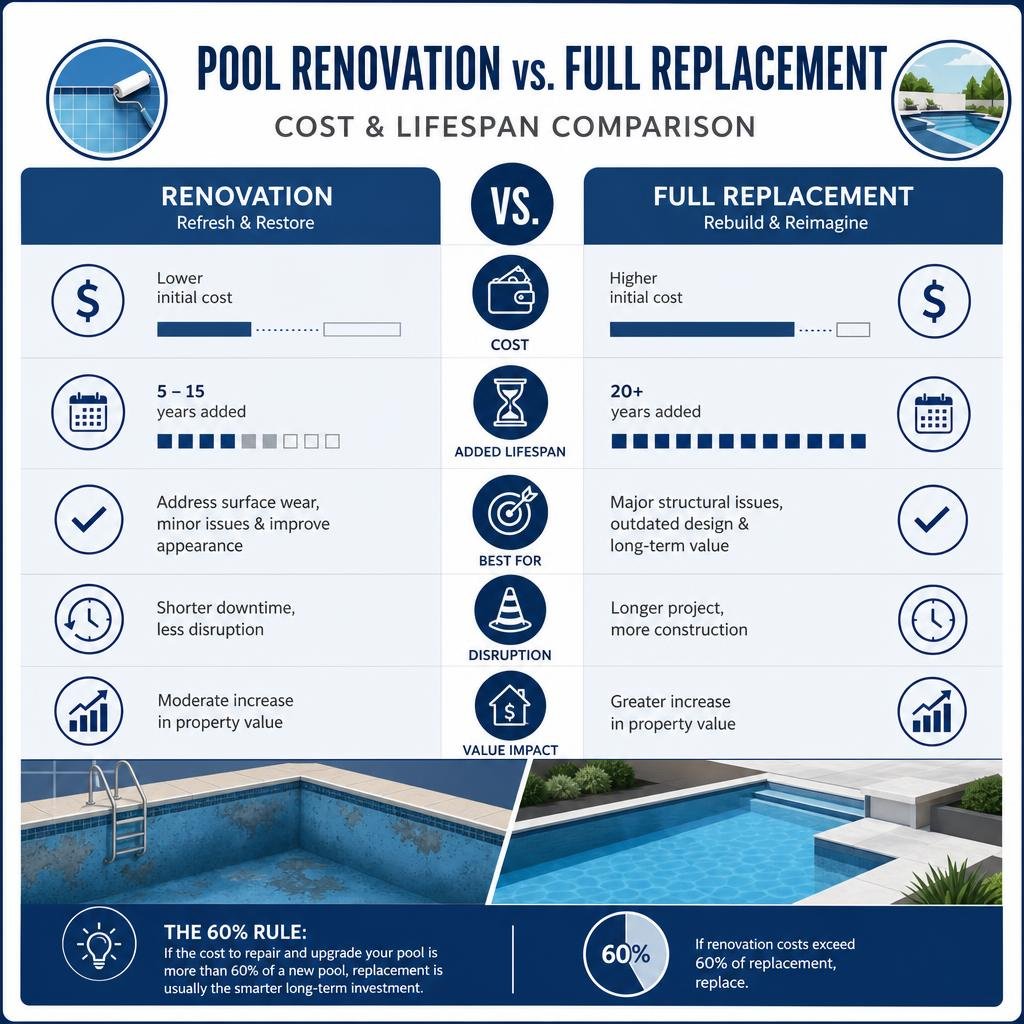
One of the most critical decisions in pool ownership is determining whether to renovate an existing pool or opt for a complete replacement. This choice often boils down to a financial and structural assessment, guided by what industry professionals refer to as the “60% rule.” This guideline suggests that if the estimated cost of repairs and upgrades exceeds 60% of the expense of constructing a brand-new pool, a full replacement typically offers better long-term value.
To make an informed decision, we recommend a comprehensive five-dimension condition assessment. This evaluation scrutinizes structural integrity, surface condition, mechanical systems, code compliance, and the pool’s overall geometry and fit within your property. For instance, while replastering an aging pool might range from $5,000 to $15,000, a full replacement of a comparable inground pool could easily be $50,000 to $100,000 or more. Understanding this critical cost threshold helps property owners avoid pouring money into a structure that may soon require further costly interventions.
Considering the long-term value, including potential maintenance, operational efficiency, and future aesthetic appeal, is paramount in this decision-making process.
Choosing the Right Materials for Long-Lasting Pool Surfaces
The interior surface of your pool is not just about aesthetics; it’s a critical component influencing durability, maintenance, and swimmer comfort. Selecting the appropriate material for your pool’s interior is a fundamental decision during any upgrade project.
Traditional standard plaster, while cost-effective initially, typically offers an expected service life of 7 to 12 years, especially under challenging water conditions such as those found in regions with high mineral content. For those seeking enhanced longevity and a wider range of aesthetic options, aggregate finishes like pebble, quartz, or glass bead are excellent choices. These materials significantly extend durability, often lasting between 15 to 25 years. Their textured surfaces also provide improved slip resistance and can better withstand aggressive water chemistry.
For larger or irregularly shaped pools, or those requiring a highly durable and watertight solution, reinforced PVC membranes have emerged as a robust option. The Livingston Park Pool renovation, for example, successfully utilized over 13,000 square feet of reinforced PVC membrane to line its walls and floor, demonstrating its effectiveness in commercial applications. Fiberglass overlays offer another alternative, providing a smooth, non-porous surface that is resistant to staining and algae growth.
Regardless of the material chosen, protecting the pool shell, particularly the reinforcing steel in concrete pools, from harsh pool chemicals and erosion is paramount to ensuring the long-term integrity of your investment.
The 7-Step Process for Sealing and Protecting Your Pool Deck
Beyond the pool itself, the surrounding deck area is integral to the overall recreational experience. A well-maintained and properly sealed pool deck enhances safety, prevents water damage, and contributes significantly to the aesthetic appeal of your outdoor space. Elastomeric polysulfide sealants are frequently employed to protect concrete decks, offering flexibility to withstand temperature fluctuations and prevent moisture intrusion.
To ensure your pool deck remains safe, durable, and visually appealing for years to come, we typically follow a meticulous 7-step process for sealing and protecting the surface:
- Inspecting and Cleaning Joints: We begin by thoroughly inspecting all expansion joints and cracks, removing any debris, old sealant, or contaminants.
- Preparing Joint Substrate: The joint surfaces are prepared to ensure optimal adhesion, often involving grinding or sandblasting. For concrete, protecting any exposed reinforcing steel is also crucial at this stage.
- Applying Compatible Primer: A primer compatible with the chosen sealant is applied to the joint walls, creating a strong bond between the sealant and the deck material.
- Mixing Two-Part Elastomeric Sealant: If using a two-part system, such as Deck-O-Seal, the setting agent is carefully mixed into the base compound for at least 10 minutes until a uniform color and consistency are achieved. This ensures proper curing and performance.
- Pouring and Leveling Sealant: The mixed sealant is then poured into the prepared joints, ensuring it fills the void completely and is leveled to prevent air bubbles and create a smooth finish.
- Applying Slip-Resistant Protective Coating or Sealer: Once the sealant has cured, a protective coating or sealer is applied to the entire deck surface. Products like Deck-O-Grip enhance slip resistance, which is vital for safety around wet areas, and further protect against wear and water damage. For those interested in innovative and durable alternatives for their recreational areas, exploring options like recycled rubber surfacing productscan provide both safety and aesthetic benefits.
- Allowing Full Cure Period: Finally, the deck area is cordoned off to allow the sealant and coating to fully cure according to manufacturer specifications, ensuring maximum durability before reopening for use.
Executing the Renovation: Materials, Safety, and Efficiency
Once the planning is complete and decisions on materials and scope are finalized, the execution phase brings your vision to life. This stage involves not only the physical installation of new surfaces and features but also critical structural repairs, hydraulic system upgrades, and the modernization of amenities to enhance bather load capacity and water circulation efficiency. It’s a complex process that demands expertise and careful coordination to ensure every component works seamlessly.
Integrating Energy-Efficient Systems and Modern Water Features
Modern pool upgrades increasingly prioritize energy efficiency and innovative water features that enhance the recreational experience. Integrating systems like variable speed pumps can dramatically reduce energy consumption compared to traditional single-speed models. Solar heating panels, often installed on adjacent structures like bathhouses, offer an eco-friendly way to pre-heat pool water, extending the swimming season and reducing reliance on conventional heaters.
For superior water clarity, especially in high-use recreational pools, diatomaceous earth (DE) filtration systems are a popular choice. These systems use fossilized microscopic remains to trap extremely fine debris, ensuring pristine water quality. In larger facilities, like the Brennan Park Rec Centre, upgrades extended to heating and cooling systems, integrating HEPA filters for improved air quality, and even leveraging thermodynamic sharing between the pool and ice arena for optimal energy use.
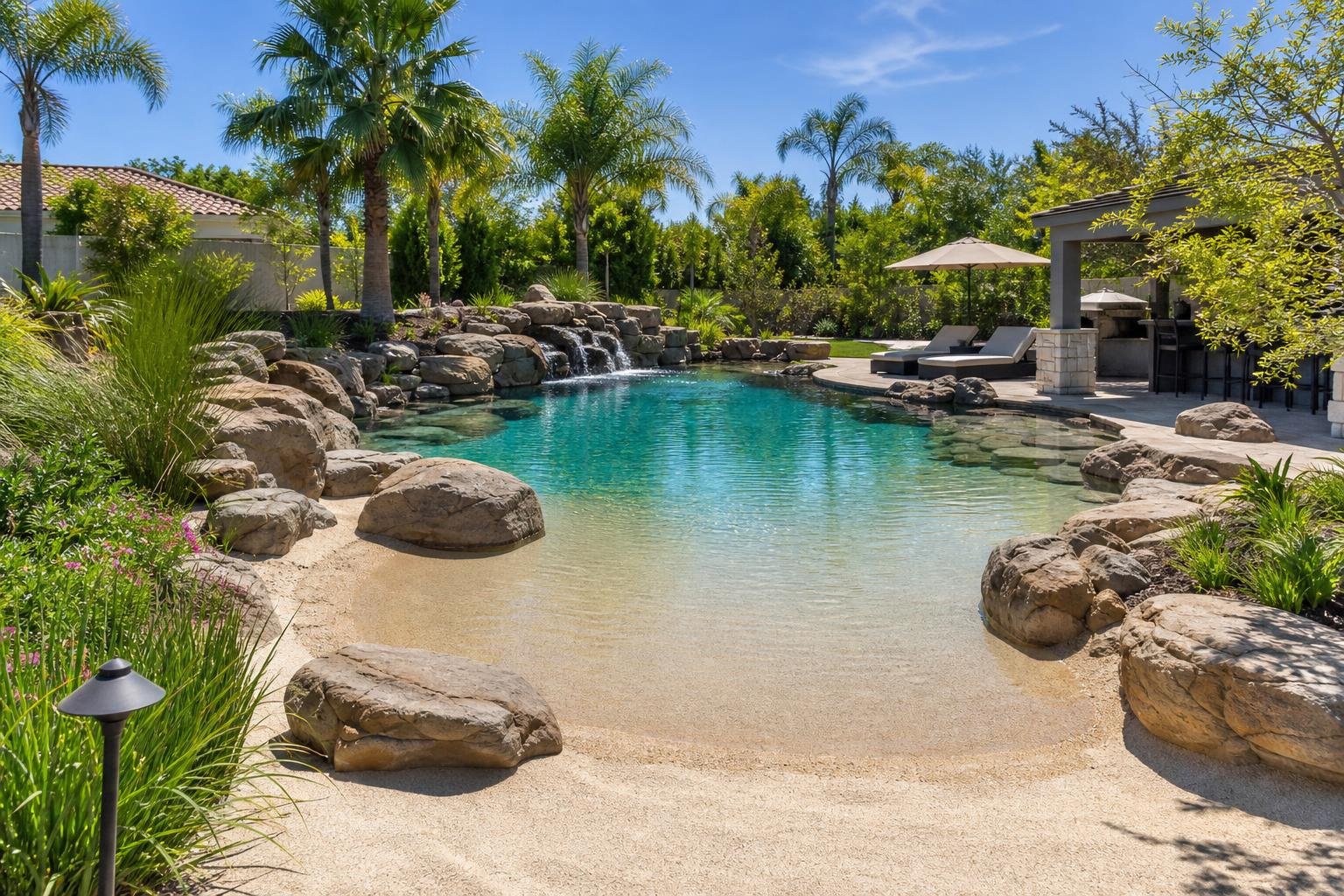
Beyond efficiency, modern recreational water features are transforming traditional pools into dynamic aquatic playgrounds. Beach-style swim ponds, as planned for the Newell waterpark, offer a natural aesthetic with sand beaches and integrated inflatables, appealing to a wide range of ages. Splash pads and interactive water play areas, like those being incorporated into the Memorial Pool redevelopment at Payne Park, provide engaging experiences for children. For adult-oriented spaces, swim-up bars offer a luxurious touch, allowing swimmers to enjoy refreshments without leaving the water. For property owners seeking comprehensive pool services that encompass both advanced energy solutions and captivating water features, partnering with experienced professionals is essential.
Navigating Safety, Accessibility, and Regulatory Compliance
Safety and accessibility are non-negotiable aspects of any recreational surface and pool upgrade, particularly given the evolving landscape of regulatory compliance. Adhering to standards set by the Americans with Disabilities Act (ADA) is crucial for commercial and public pools, often requiring the installation of pool lifts or the incorporation of zero-entry access points to ensure inclusivity for all users. The Virginia Graeme Baker Pool and Spa Safety Act (VGB Act) mandates specific main drain cover designs to prevent entrapment, a critical safety measure during any renovation involving the pool’s circulation system.
For residential pools, while ADA compliance may not be strictly required, integrating accessibility features like zero-entry designs can significantly enhance usability and safety for families with young children or elderly members. Beyond the water, features like tempered glass flame guards for outdoor fire tables improve safety by shielding flames from wind and preventing accidental contact.
Navigating the permitting process is another vital step. Building permits are typically required for significant structural changes, major equipment replacements, or new construction. Regulatory requirements can vary significantly between residential and commercial projects, and even between municipalities. For instance, in Florida, adhering to specific Florida Department of Health standards is paramount for public aquatic facilities, often requiring variances for unique design elements. We always advise consulting with local authorities and licensed professionals to ensure all aspects of your upgrade meet current codes and regulations.
Overcoming Common Challenges in Recreational Surface and Pool Upgrades
Even with meticulous planning, recreational surface and pool upgrades can encounter unforeseen challenges. One of the most common is weather delays, as highlighted by the Livingston Park Pool project, where over 40% of the construction period was affected by rainfall. Such delays necessitate flexible scheduling and robust project management to minimize impact.
Irregular pool shapes, such as figure-eight layouts, also present unique construction complexities. These often require custom solutions, like the segmented stainless steel gutters used at Livingston Park Pool, which involved precise coordination and the installation of numerous individual sections to accommodate complex radiuses.
Structural cracks in the pool shell or issues related to hydrostatic pressure require specialized attention. These problems often indicate underlying issues with the pool’s foundation or surrounding soil and may necessitate repairs like hydraulic cement or epoxy injection, or even consultation with a structural engineer.
Finally, managing water chemistry, particularly during the startup phase of a newly resurfaced pool, is critical. Regions with hard water, where calcium hardness can exceed 400 ppm, require aggressive startup water chemistry balancing to prevent premature etching or scaling on new surfaces. Addressing these challenges effectively requires expertise, adaptability, and a commitment to best practices throughout the renovation process.