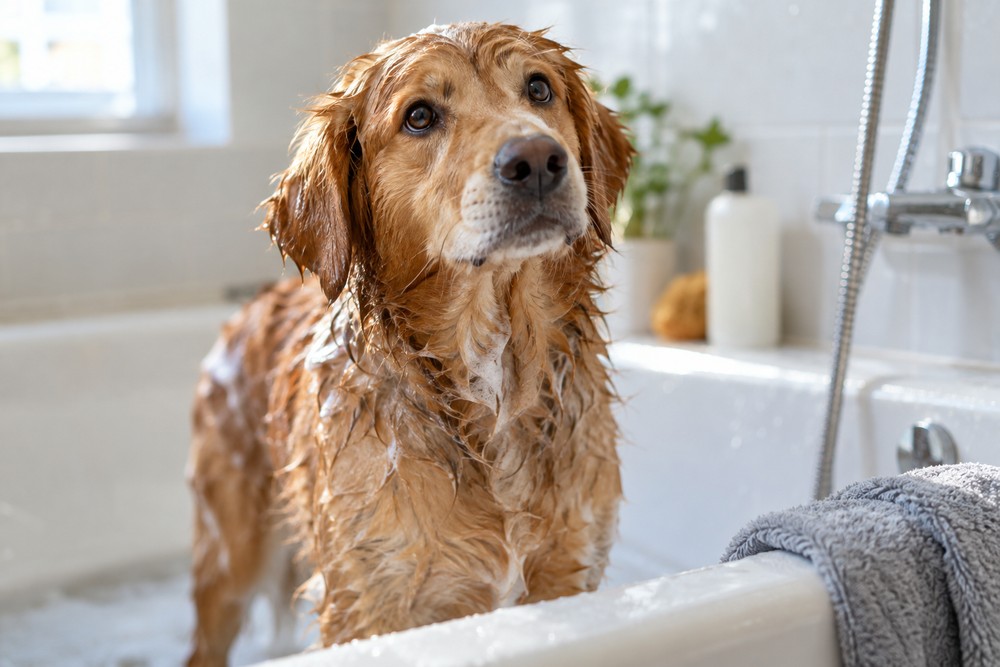
Bath time can be surprisingly challenging for dogs that dislike water, handling, unfamiliar sounds, or standing still. Some pets become uneasy as soon as they enter a bathing area, while others tolerate washing but react to rinsing, drying, or having sensitive areas handled. Understanding which part creates discomfort can help owners approach the routine more thoughtfully.
Successful dog bathing does not depend on forcing a nervous pet through the process as quickly as possible. A calmer approach considers the dog’s previous experiences, body language, tolerance for handling, and response to each stage. Breaking the process into predictable steps can make regular hygiene easier to manage without creating additional excitement.
Owners should also recognize that nervousness can vary considerably between individual dogs. One pet may dislike running water, while another becomes uncomfortable around drying equipment or slippery surfaces. Karnik Pet Lodge at Maple Village can work with information about a dog’s behavior and preferences when owners explain how their pet normally responds to bathing and handling.
Identify Which Part of Bath Time Causes Uneasiness
A dog that appears to dislike baths may actually be reacting to one particular element. Water temperature, unfamiliar equipment, slippery footing, handling around the paws, or the sound of running water can each influence behavior.
Owners can observe when the dog’s body language begins changing. If hesitation starts before water is introduced, the bathing environment itself may be unfamiliar. If the reaction occurs later, another stage may deserve closer attention.
Identifying patterns gives owners more useful information than assuming the dog simply hates being washed. It also makes it easier to communicate specific concerns when professional bathing support is being considered.
Make the Bathing Area Feel More Predictable
Uncertainty can add difficulty for a nervous pet. Bringing a dog into a space and then searching for shampoo, towels, or other supplies can prolong the process and introduce unnecessary movement.
Owners bathing at home can organize everything beforehand. Having supplies within reach keeps the routine moving smoothly and reduces the likelihood of leaving a wet dog unattended while looking for something.
Karnik Pet Lodge at Maple Village can also benefit from knowing whether a dog has particular sensitivities around bathing environments. Details about reactions to water, handling, or drying provide more meaningful context than simply describing the pet as nervous.
Introduce Handling Before Water Is Involved
Bathing requires more physical handling than many ordinary daily activities. Legs may need to be moved, paws cleaned, and different sections of the coat reached carefully during washing and rinsing.
Dogs that are uncomfortable with handling may find the entire process more demanding once water is added. Gentle familiarity with appropriate everyday handling can help owners understand which areas their pet accepts comfortably and which areas cause hesitation.
Watch Reactions Around Sensitive Areas
Paws, ears, legs, and the face can require particular care because dogs may react differently when these areas are approached. Owners should avoid rough movements or unnecessary restraint simply to finish faster.
Watching body language helps reveal when the dog is becoming increasingly uncomfortable. This information can guide future routines and provide useful details for professional caregivers.
Keep Water Temperature and Pressure Comfortable
Water is one of the most obvious parts of a bath, but the way it is introduced can affect how a dog responds. Strong pressure or an uncomfortable temperature may make an already uncertain pet more resistant.
Owners should use an appropriate temperature and introduce water in a controlled manner. Sudden spraying can surprise a dog, especially if the pet cannot see where the water is coming from.
A calmer process does not need to become excessively slow. The objective is steady, deliberate handling that avoids turning each stage into another unexpected event.
Prevent Slipping During the Washing Process
A slick bathing surface can make standing difficult. Dogs that feel unstable may shift repeatedly, attempt to escape, or become more resistant to handling because they are concentrating on keeping their balance.
Appropriate traction can make the physical experience more manageable. Owners should consider the surface under the dog rather than focusing exclusively on shampoo, water, and coat cleaning.
This detail can be particularly important for dogs that already move cautiously. Feeling secure underfoot removes one avoidable source of uncertainty during a routine that may already be unfamiliar.
Use Products Intended for Canine Coat Care
Owners should choose bathing products intended for dogs rather than assuming products designed for people are interchangeable. Canine skin and coat care require appropriate products, and individual pets may have additional considerations.
Any known skin sensitivities or product instructions should be communicated when someone else handles the bath. Owners with persistent concerns about a dog’s skin should seek appropriate veterinary guidance rather than repeatedly changing products without understanding the cause.
Dog bathing should support cleanliness without turning product selection into unnecessary experimentation. A consistent, appropriate routine is easier to evaluate when owners know what has been used.
Keep Rinsing Thorough Without Rushing the Dog
Rinsing deserves as much attention as washing. Dense or longer coats can make it difficult to tell whether product remains beneath the visible surface, particularly when an owner is eager to finish.
A nervous dog may encourage people to rush because everyone wants the experience to end quickly. Moving too fast, however, can make careful rinsing more difficult and introduce abrupt handling.
Planning enough time for the complete routine helps prevent this problem. Owners can work steadily while still keeping the process efficient and organized.
Approach Drying as a Separate Stage
Some dogs tolerate washing reasonably well but become uncomfortable during drying. Towels, moving air, noise, or extended handling can create a different experience from the bath itself.
Karnik Pet Lodge at Maple Village can use owner-provided information about drying sensitivities when considering how a particular pet responds to the complete bathing routine. A dog’s reaction after rinsing can be just as relevant as its behavior around water.
Owners working at home should allow enough time for drying rather than treating it as an afterthought. The process should be appropriate for the dog’s coat and completed with patient handling.
Avoid Turning Nervous Behavior Into a Conflict
Dogs do not become more comfortable simply because they are scolded for hesitating. Punishment or frustration can add another negative element to an experience the pet already finds difficult.
Owners can remain calm while maintaining reasonable boundaries. The goal is not to reward frantic behavior but to prevent human frustration from escalating the situation.
Dogs also vary in how quickly they become accustomed to routine handling. Improvement may occur gradually rather than after a single successful bath.
Build a More Manageable Routine Over Time
Comfort with bathing often develops through familiarity, predictable handling, and attention to the individual dog’s reactions. Owners can learn which stages create difficulty and organize future baths to reduce unnecessary surprises.
Regular dog bathing becomes easier to manage when washing, rinsing, handling, and drying are treated as connected parts of one routine. Preparation matters because a well-organized process reduces delays and keeps each stage understandable for the dog.
A nervous pet does not necessarily need to enjoy every moment of being washed. A more realistic goal is creating a manageable experience that supports hygiene while respecting individual sensitivities. With observation, preparation, and calm handling, owners can make future bath routines more predictable for both themselves and their dogs.