Most parks get designed backwards. Someone picks a slide, a swing set, and a climbing frame, drops them on a patch of grass, and calls it done. That is not design, that is decoration. Real park playground equipment planning starts with how people actually move through a space, who uses it at what age, and what keeps them coming back next weekend instead of driving to the next town over. Parks that get this right see higher usage, fewer injuries, and a longer lifespan on every dollar spent. Parks that get it wrong end up empty within three years, no matter how expensive the equipment was.
Start With the People, Not the Equipment Catalogue
A city council that orders equipment before mapping who will actually visit the site is skipping the most important step. A neighbourhood full of toddlers needs low platforms and soft textures. A neighbourhood full of preteens needs climbing challenge and speed. Cramming both into one small zone with no separation just creates chaos and, honestly, a decent chance of collisions between a six year old and a twelve year old moving at very different speeds.
Good park design usually separates age zones with a visible boundary, whether that is planting, a low fence, or simply a change in surfacing colour. It is a small design move with a big safety payoff.
The Fitness Trend Nobody Predicted
One shift in park design over the last few years genuinely surprised people. Adult fitness stations, things like air walkers, sit-up benches, and outdoor ellipticals, are now showing up right next to children’s play zones. This was not built for the kids. It was built for the parents standing there for forty minutes with nothing to do but watch. Letting a parent get a light workout in while supervising means longer visits and, honestly, happier parents who are more willing to come back.
This is a genuinely smart move by park planners, and it costs relatively little compared to the goodwill it buys with the adults who decide whether a family visits a park at all.
Surfacing Choices and What They Actually Cost Over Time
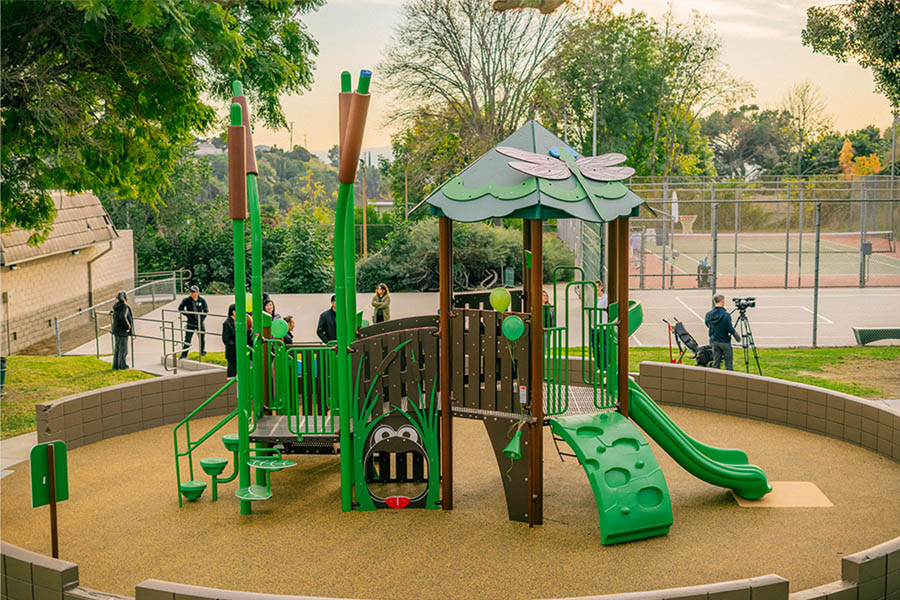
Surfacing is where park budgets quietly get destroyed by short term thinking. Wood chip mulch looks cheap upfront but needs constant topping up, and it compacts fast under heavy foot traffic, which reduces its shock absorbing ability exactly where it matters most, right under the slide exit. Poured-in-place rubber or interlocking EPDM tiles cost more initially but last far longer and need almost no ongoing labour. Here is how the common options actually stack up:
| Surface Type | Upfront Cost | Maintenance | Typical Lifespan |
| Wood chip mulch | Low | High, needs topping up | 2 to 3 years |
| Engineered wood fibre | Low to moderate | Moderate | 3 to 5 years |
| Rubber mulch | Moderate | Low | 8 to 10 years |
| Poured-in-place rubber | High | Very low | 10 to 15 years |
Cheaper is not always cheaper once you add up five years of labour and reordering. A park manager who only looks at the first invoice is setting the next budget cycle up for a nasty surprise.
Injury Numbers That Should Shape Every Layout Decision
Playground injuries are not rare, and pretending otherwise does nobody any favours. US emergency rooms treat well over 200,000 playground related injuries every year, a large share tied to falls onto hard or inadequately cushioned surfaces. Layout decisions, not just equipment choice, drive a lot of that risk. Placing a slide exit too close to a swing’s arc, or letting a climbing frame overlap with a running path, creates collision points that have nothing to do with the equipment quality and everything to do with sloppy layout planning.
A well designed park layout gives every high motion piece, swings, slides, zip lines, its own clear buffer zone. It sounds obvious written down. It gets ignored constantly in the field.
What a Genuinely Well Designed Park Includes
After looking at what separates a park people love from one they tolerate, a few features come up again and again:
- Clear age based zoning so toddlers and older kids are not sharing the same tight space
- Shade structures over the equipment that gets the most midday sun exposure
- Accessible pathways and equipment, not just an accessible entrance gate
- Seating placed where parents can actually see their kids, not tucked behind bushes
- Adequate fall zone surfacing that gets replaced before it thins out, not after
None of these are expensive add-ons. They are planning choices, mostly free to include if they are considered before construction starts rather than bolted on afterward as an apology.
Maintenance Is Design, Not an Afterthought
A monthly inspection routine catches loose bolts, thinning surfacing, and cracked plastic before they become an incident report. This is not glamorous work and it rarely gets budgeted properly, which is exactly why so many parks look fine for the first two years and rough by year four. Annual professional structural audits matter even more for public sites, since liability and insurance coverage often depend on documented inspection history, not just good intentions.