Map Your Inventory and Habits
Start with a clear picture of what you own and how you smoke. Count the cigars you keep on hand, note how quickly you go through them, and separate short-term rotation sticks from those you plan to age. If you buy by the box, include the footprint of those boxes in your estimate. Capacity labels on humidors are optimistic and assume all cigars are the same size and packed like puzzle pieces. Real-world capacity is usually 60 to 75 percent of the stated number when you keep cigars in original boxes and preserve airflow.
Plan for growth. If you add 5 to 10 cigars per month and smoke fewer than you buy, your storage needs will expand in a predictable arc. Choosing modular solutions or a cabinet with adjustable shelves will save you two or three upgrades down the road.
Humidity, Temperature, and Chemistry
Cigars absorb moisture. They absorb and release moisture till they balance the air. Most mixes perform best at 65–70% relative humidity, while many enthusiasts prefer 65–67% for better combustion. Temperature is 65–70°F. Above 74 F, tobacco beetle hatching increases dramatically.
Humidity is not just a number on a dial. Warm air holds more moisture than cool air, so an RH reading at 60 Fahrenheit is not equal to the same reading at 75. If your storage space swings by more than 5 degrees day to night, stabilize placement before chasing RH with more water. Consistency beats perfection. A steady 66 percent at 68 degrees will outperform a roller coaster that averages 69 percent.
Altitude, climate, and home HVAC also matter. In arid regions, evaporation ramps up and small reservoirs dry out faster. In humid coastal air, you may need less active humidification and more airflow. The goal is a calm, predictable microclimate where cigars breathe gradually, not gasp.
Materials and Build: More Than Cedar
Spanish cedar is a classic liner for good reason. It controls moisture, repels pests, and has a mild scent that complements aged tobacco. Thickness matters. Particle board laminated with thin veneer won’t buffer RH like solid or thick wood. Look for 1.5–3 millimeters of real cedar under cigars.
When constructed well, other woods function well. Climate cabinets employ sapele and okoume for stability and neutral scent. Avoid cigar-ghosting fragrant woods. Look for gasketed doors, tight joinery, and insulated glass. Elegant frameless glass tops and single-pane doors release humidity efficiently in dry seasons. Good hardware should feel solid. Warped lids and loose hinges invite dampness leaks.
Humidification Systems Compared
There are three broad categories, each with strengths.
- Passive packs and beads: Two-way humidity packs and silica-based beads are simple, clean, and predictable. Choose a size and RH target appropriate for your volume. Packs need replacement every few months to a year depending on airflow and climate.
- Foam or sponge with PG solution: Traditional, low cost, but can over-release moisture and invite microbial growth if not maintained. Use only distilled water and propylene glycol at recommended ratios and clean regularly.
- Active electronic systems: For larger humidors and cabinets. They evenly distribute conditioned air with sensors, fans, and reservoirs. Replaceable filters, reservoirs, and calibration are desirable. Redundancy aids. If the reservoir runs dry, a passive pack prevents dips.
Fans are your friend when used gently. Slow, intermittent circulation prevents stratification without desiccating the top shelf.
Electric Cabinets and Climate Control
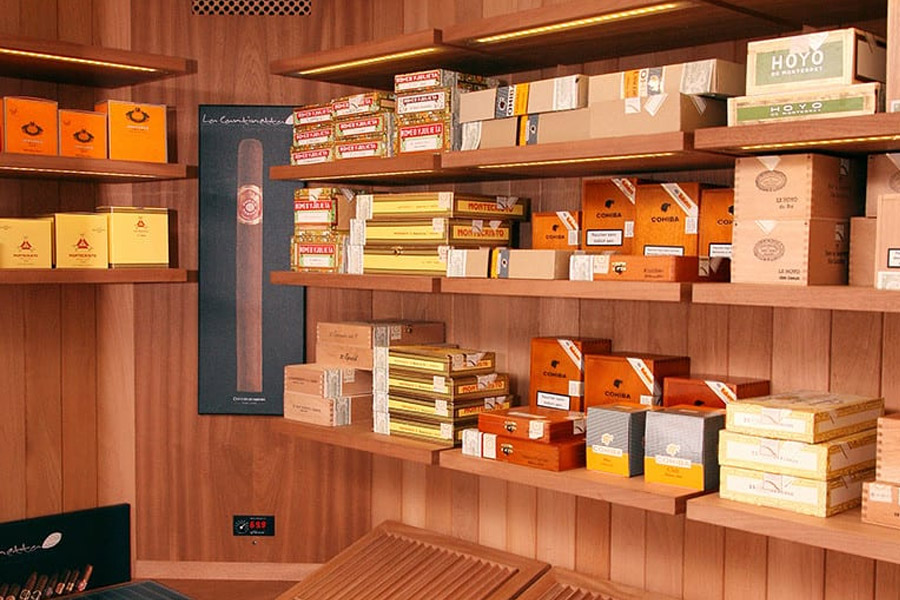
Electric humidors and wine-cooler conversions give you temperature stability that wood boxes cannot. There are two main cooling approaches.
- Thermoelectric: Quiet, energy-efficient, and vibration-free, but less powerful in hot rooms. Works best where ambient temperature stays under the low 70s.
- Compressor-based: Stronger cooling and better performance in warm climates, with more noise and slight vibration. Choose units with soft start and adequate insulation to protect RH.
Inside any electric cabinet, humidity control still matters. Cooling causes condensation on cold surfaces. Ensure drainage is managed and the humidification system is sized for the cabinet volume. Double-pane, gasketed doors and UV-filtered glass help keep the interior stable.
Seasoning, Calibration, and Baseline Setup
Before cigars enter a new humidor, it must be moistened. Lightly wiping cedar with purified water works, but overwetting raises grain and warps. Adding tiny containers of distilled water, humidity packs, and closing for several days until the interior stabilizes within 2% of your target RH is safer. This can take 1-2 weeks for large cabinets.
Calibrate your hygrometers. Use a salt test or a high-accuracy reference pack to verify readings. Digital devices can be off by 2 to 5 percent out of the box. Mark the offset where you can see it or adjust calibration if the unit allows.
When adding new cigars, avoid dumping a dry box into a small humidor. Stage them in a secondary container or add in batches to prevent a humidity crash. Let singles acclimate for a week before judging burn and flavor.
Airflow, Layout, and Organization
Air moves like water, taking the path of least resistance. If your humidor is crammed to the lid, corners become dead zones and cigars age unevenly. Leave space along walls, lift boxes slightly with cedar slats, and avoid stacking tightly against the back. Perforated shelves invite gentle convection. Do not store infused or flavored cigars with traditional blends. Aroma migration is real and stubborn.
Organize by wrapper, strength, region, or date acquired. A small log or digital note helps track aging windows. Rotate shelves or boxes quarterly so each tier spends time near the most stable zones. In front-open cabinets, the upper back often runs a touch drier. In top-open desktops, the bottom rear can be cooler and more humid.
Maintenance Rhythm and Troubleshooting
Set a light but steady routine.
- Weekly: Quick glance at hygrometer, reservoir levels, and any condensation points.
- Monthly: Top up distilled water or replace packs as needed. Inspect corners and cigars for spots or webbing.
- Quarterly: Clean reservoirs and fans, dust shelves, and verify calibration.
Mold and plume differ. Blooms seem like fine, even, powdered frost that washes off without staining. The patchy, elevated mold might be green, blue, or black. If mold is found, isolate the sticks, gently wipe surfaces with a moist cloth of distilled water, drop RH, improve ventilation, and monitor regularly.
If RH will not climb, test the seal. Close the lid on a dollar bill and tug. If it slides out easily at multiple points, the seal is weak. Condition the lid gasket, check hinge screws, and place the humidor away from air vents or sun-warmed surfaces that create thermal currents.
Travel and Portable Strategy
Travel humidors protect cigars from jolts, dry air, and temperature fluctuations. At least 24 hours before use, precondition it to home storage RH. Foam cutouts or sleeves prevent cigar rattles and rubs. Consider temperature. Car interior heat can rise dangerously quickly in parked cars. Take the case instead of abandoning it. Carry cigars on flights. The cargo hold is unreliable and frigid.
Budget Alternatives That Work
Airtight plastic bins, often called coolidors or tupperdors, can outperform leaky wooden boxes at a fraction of the cost. Pair a quality gasketed bin with Spanish cedar trays, a digital hygrometer, and the right number of two-way packs. The result is stable and scalable. The tradeoff is aesthetics and the need to open occasionally for gas exchange. For many collectors, a coolidor becomes the back stock vault that feeds a smaller display humidor.
Upgrading Path and Scalability
Consider layers. Keep a primary humidor for daily rotation, a long-term cabinet or coolidor for box aging, and a travel case. If inventory expands, add another cabinet instead of maxing out the first. Redundancy safeguards your collection during restorations. Alerted data loggers detect slow drifts before cigars see them.
FAQ
What relative humidity should I target for most cigars?
Aim for 65 to 67 percent RH at 65 to 70 Fahrenheit for dependable burns and balanced flavor. Some heavy, oily maduros prefer the upper 60s, while delicate connecticuts often shine near 65. Consistency is more important than the exact number within that range.
Can I store cigars in a refrigerator or standard wine cooler without modification?
No. Refrigerators and unmodified coolers are too dry and can introduce odors. They remove moisture by design and will desiccate cigars quickly. If you use a wine cooler, add proper humidification, calibrate sensors, and ensure the interior is lined or equipped with cedar shelving to buffer changes.
How do I fix cigars that feel over-humidified and spongy?
Do not shock-dry them. Move the cigars to a secondary container set 3 to 5 points lower in RH than your target. Leave them for a week and reassess. Gradual reduction preserves oils and structure. Once they feel resilient rather than mushy, return them to your main humidor.
How can I tell mold from harmless plume?
Plume appears as a fine, uniform, gray-white dust that wipes away cleanly and evenly. Mold looks raised or fuzzy, often blotchy, and may show off-white, green, or blue tones. Mold can leave a stain beneath it and may carry a musty odor. When in doubt, isolate the cigar and lower RH slightly while you monitor.
How often should I open my humidor?
As little as your routine allows. Each opening exchanges interior air with room air, nudging humidity. In a well-sealed humidor with adequate humidification capacity, daily openings for quick access are fine. If you find RH dips after each opening, reduce frequency, increase reservoir size, or improve the seal.
Do I need to separate infused or flavored cigars from the rest?
Yes. Store infused cigars in a dedicated container with its own humidification. Their aroma migrates readily and can perfume traditional blends permanently. Keeping them apart preserves the integrity of both styles.