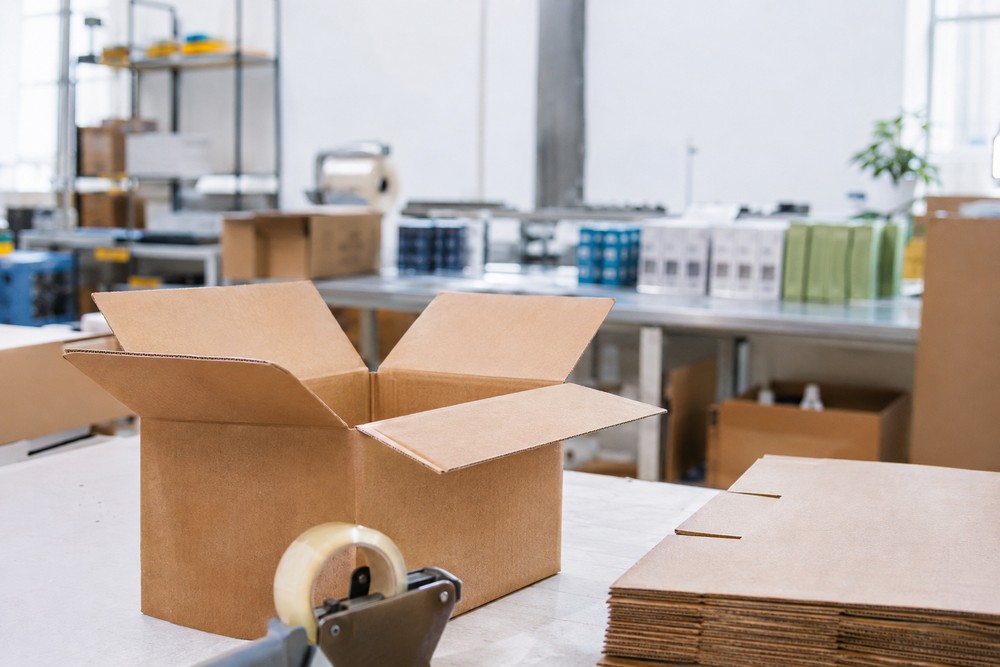
When a retail order ships late, the cause is usually in the brief that started the job. A co-packer can only work from the document in front of them, so every gap in it becomes a question, and questions stop the line.
The bill of materials misses the small components
When your brief reaches a co-packer, the first job is checking your bill of materials against the stock that arrives at the facility. If the BOM covers the product and the cartons but skips the minor items, the intake count can’t be verified and the run can’t be scheduled. The parts most often missing are the cheap ones, like the adhesive tape that seals the shipper or the card insert that holds the product in place. Because these items cost little, buyers assume the co-packer keeps them on the shelf. That assumption holds until the morning the line is set and the tape isn’t there.
The fix is a component-level BOM. List every item that ends up in the finished unit, the quantity per unit, the quantity per run, and the party responsible for supplying it. When the co-packer can reconcile that list at intake, shortages surface weeks before the production date, while there is still time to order.
SKU codes and artwork files are open to interpretation
A brief for one product is simple, but most retail runs involve variants, and variants multiply the chance of a mix-up. Each stock keeping unit needs its own line in the brief, mapped to the exact components that belong with it. Two flavors in near-identical cartons will get swapped if the mapping lives in someone’s memory, and every swap stops the line while the team confirms what goes where.
Label files get revised over time, and old versions stay on file at the printer. A co-packer who receives two versions of the same label has no way to know which one is current. You can close both gaps with a single table inside the brief. Give each SKU its component codes, its artwork revision number, its case quantity, and its inner pack count, and date the table so revisions are easy to spot. When a question comes up, the answer is already written down.
Retailer requirements reach the co-packer too late
Every major retailer publishes its own compliance guidelines, and the specifications for one chain won’t match the next, so the co-packer can’t guess them. An experienced local contract packer can help you check these specs. If you’re searching for co-packing melbourne, ask providers to review your brief before production starts. Barcode placement, shelf-ready packaging dimensions, pallet height limits, and wrapping requirements all differ between distribution networks, and a delivery that fails one of them can be refused at the dock.
If the manual isn’t attached to your brief, the co-packer either packs to a generic standard and hopes, or pauses the job while somebody tracks it down. Where your product carries batch numbers or shelf-life dates, the brief needs the code format, the placement, the character size, and the print surface. Checking those details early takes minutes; fixing them after a run has started takes hours.
No one signs off a finished sample
The packing team also needs to know what a finished unit should look like. Packaging materials vary within normal manufacturing ranges, and a co-packer who doesn’t know your limits has to treat every variation as a possible reject. Carton board can arrive darker between batches, and film gauge can drift. Both might be acceptable under tolerances that were never written down.
Without stated quality assurance limits, the team stops the line and emails you a photo, and the job waits for your reply. A signed-off physical sample covers the assembly side, because finished units can be checked against something real during kitting and bundling work. Send an approved sample with the brief and write the acceptable defect limits beside it, and an ordinary material variation won’t be a reason to halt.
The packaging supplier and the co-packer never speak
Even a complete brief can fail at the handoff between two suppliers who were hired separately and never introduced. Your packaging supplier manufactures the cartons, film, labels, and tape, and the co-packer runs those materials through machinery, but the two businesses won’t talk unless you connect them. Shrink film that’s too thin for the co-packer’s tunnel will tear or burn, and a label adhesive chosen without checking the carton surface can lift within days. Both problems surface only after the materials are made and delivered.
Inbound logistics causes a quieter version of the same delay: components arriving on mixed pallets with no labels must be counted and sorted by hand before anything starts. Write the machine specifications into the brief and state how inbound components should be palletized and labeled. Then share the co-packer’s contact details with your packaging supplier, so compatibility is confirmed before anything is manufactured.
Before your next retail run, send the draft brief to the co-packer a week early and ask them to mark every line they can’t act on. The questions that come back are the stoppages you won’t have later. They cost less to answer by email than they do in the middle of a production day.