Key Takeaways
- Choose a boat based on your primary activities, typical passenger count, and preferred Alabama waterways.
- Compare fishing boats, bowriders, deck boats, pontoons, and fish-and-ski models based on their layouts and practical features.
- Check seating, storage, shade, boarding access, and passenger comfort before making a decision.
- Prioritize essential fishing equipment and avoid paying extra for features you may rarely use.
- Review Alabama boating regulations and prepare the required safety equipment before heading out.
- Consider the full cost of ownership, including fuel, insurance, registration, maintenance, storage, and trailer expenses.
- Inspect used boats carefully, review service records, and arrange a water test when possible.
- Make sure your vehicle is capable of safely hauling the boat, trailer, fuel, and all your equipment.
Choosing the right boat in Alabama starts with an honest look at how weekends will actually unfold. A serious angler heading toward a quiet cove needs something different from a family planning swim stops, tubing, and sunset rides. When comparing boat dealers in Alabama, focus less on a boat’s appearance and more on whether its layout, capacity, and equipment fit the way you expect to use it. That decision matters across central Alabama, where a single boating season can include calm morning fishing, hot afternoons on open water, changing weather, and busy launch ramps. The best choice is usually not the biggest or fastest option. It is the boat that makes it easier to bring the right people, gear, and safety equipment along for the activities your household enjoys most.
Start With How You Will Use the Boat
Write down the activities you expect to do most often: fishing, cruising, swimming, towing, relaxing at anchor, or entertaining friends. Then consider how many people will typically come along. A boat that feels perfect for two anglers may feel crowded once children, coolers, life jackets, and water toys are aboard. Also decide where the boat will live. Trailering from home, keeping it in dry storage, and using a marina slip each affect the size, weight, cover, and maintenance routine that make sense. A boat used several times a month may justify different features than one reserved for occasional holidays. For families drawn to easygoing lake days, browsing pontoon boats for sale can help illustrate why wide seating areas, shade, and flexible deck space appeal to groups with mixed plans for the day.
Match the Boat to Alabama Water
Alabama boaters may use reservoirs, rivers, creeks, and larger open-lake areas, sometimes within the same season. Before narrowing your search, think about the water you will use most. Wind can make open sections of a lake choppier than protected coves, while river routes may require extra attention to current, fluctuating water levels, and navigation hazards. Visit the ramps and marinas you expect to use. Notice parking space, ramp steepness, nearby fuel availability, and how easily a trailer can be turned and launched. A compact aluminum fishing boat may be convenient for trailering and smaller access points, while a larger family-oriented boat may be more comfortable for long days on broad water.
Compare Common Boat Types
Fishing-Focused Choices
- Bass boats emphasize casting decks, fishing seats, rod storage, and livewell capacity.
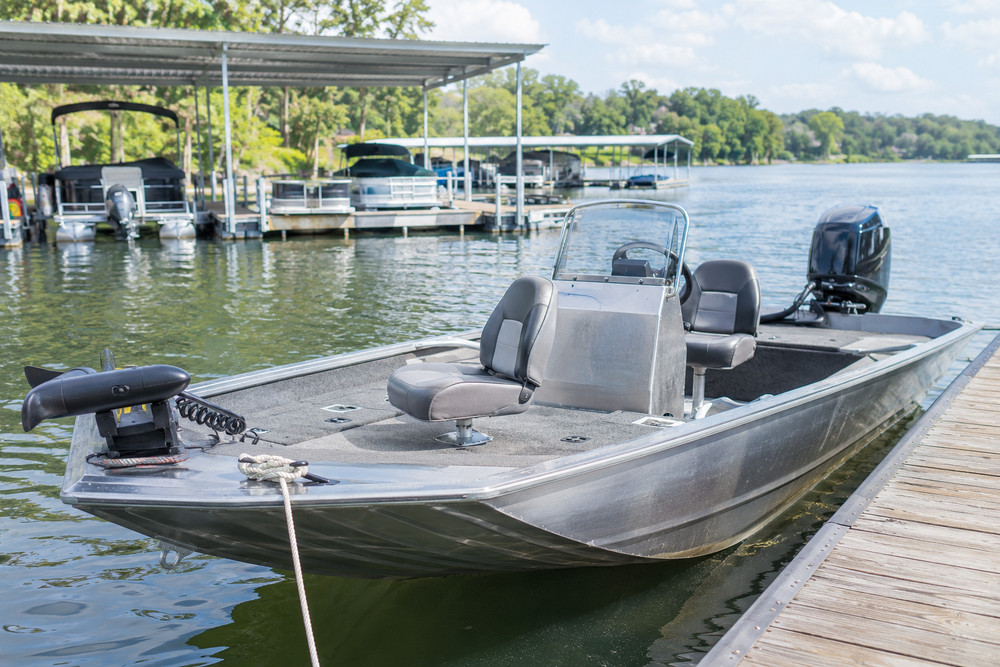
- Aluminum fishing boats can be practical for anglers who value lighter towing weight, straightforward cleanup, and access to smaller waters.
- Center consoles provide open movement around the deck and can suit fishing-focused owners who want room to work lines from multiple positions.
Family and Mixed-Use Choices
- Bowriders commonly prioritize passenger seating, cruising, access to the water, and versatility for water sports.
- Deck boats offer open seating and usable floor space for groups that want to move around comfortably.
- Pontoons are often chosen for social outings because they offer wide decks and lounge-style seating.
- Fish-and-ski boats combine selected angling features with room for recreation, making them worth considering when neither fishing nor family fun should dominate the decision.
Photos cannot show every limitation. Sit in the helm seat, open storage compartments, test the boarding path, and picture where wet towels, tackle bags, and coolers will go. A practical walkthrough often reveals more than a specification sheet.
Check Space and Comfort
Passenger capacity is a safety limit, not a promise that everyone will be comfortable. Plan around the usual group and the gear they carry. Look for legroom, stable steps, handholds, a usable swim ladder, accessible storage, and clear paths between the bow and stern. Shade can also make a meaningful difference during Alabama’s warm-weather boating months. Pay attention to routine access. Batteries, pumps, anchors, life jackets, and fire extinguishers should be reachable without unloading half the boat. A clean, organized layout reduces clutter underfoot and makes it easier to shift from fishing mode to family mode.
Look at Fishing Features
Match fishing equipment to the angling you actually do. Frequent anglers may prioritize casting space, rod storage, livewells, electronics, and durable flooring. Families who fish casually may prefer a simpler arrangement with removable seats, a built-in cooler, and storage for both tackle and recreational gear. Create two lists before shopping: must-have features and nice-to-have features. This keeps expensive upgrades in perspective and helps distinguish equipment that supports regular trips from accessories that may see little use.
Plan for Safety and Training
Safety should be part of the purchase decision, not an afterthought once the boat is in the driveway. Every trip needs properly sized, serviceable life jackets for everyone aboard, along with the equipment appropriate to the vessel and planned conditions. The Coast Guard explains that a life jacket should be approved, correctly sized, suitable for the activity, and readily accessible through its guidance on wearing your life jacket. Before operating, review Alabama requirements for registration, operator rules, navigation lights, towing, capacity, and required equipment in the state’s official boating regulations. Alabama rules prohibit loading a vessel beyond its safe carrying capacity and require navigation lights when away from the dock between sunset and sunrise or during restricted visibility.
Calculate the Full Cost
The purchase price is only the starting point. Build an annual budget that includes insurance, registration, fuel, maintenance, storage, trailer service, covers, batteries, safety equipment, and repairs. If the boat will be stored through colder months or periods of nonuse, include seasonal preparation and protection in the plan. Also consider the tow vehicle. Check the vehicle’s towing capacity, hitch compatibility, braking requirements, and ability to safely manage the total weight of the loaded boat and trailer, including fuel and equipment. Having a properly matched towing setup can make trips to nearby lakes safer, easier, and more convenient.
Inspect a Used Boat Carefully
A pre-owned boat can be a strong option, but a polished exterior is not a complete inspection. Review maintenance records, inspect the hull and deck for cracks or soft spots, check wiring and pumps, and look closely at the trailer’s tires, bearings, brakes, and lights. Start the engine cold if possible, and request a water test before finalizing the purchase. When the investment is significant, a qualified marine technician can help evaluate mechanical condition and identify issues that are difficult to spot during a brief walkaround.
Use a Simple Buying Checklist
- Rank your top activities in order of importance.
- Plan for your typical passenger group and their gear.
- Match hull style and size to the Alabama waters you will use most.
- Compare two or three boat categories before focusing on individual models.
- Set a complete ownership budget, not just a purchase budget.
- Walk through the layout and test storage, seating, and boarding access.
- Arrange a water test when possible.
- Confirm that the boat is safe to operate and has the required equipment.
Final Thoughts
The right Alabama boat should support the trips and activities you plan to enjoy most often, whether that means early morning fishing runs, relaxed family cruises, watersports, or long weekends spent exploring the water with friends. Start by considering where you expect to use the boat, since inland lakes, rivers, and coastal waters can have different requirements for hull design, size, power, and handling. Think about how many passengers you typically bring along and whether you need additional seating, fishing space, storage compartments, or room for recreational equipment. It is also important to consider where the boat will be stored, how it will be transported, and whether your vehicle can safely handle the trailer and loaded weight. Beyond the purchase price, account for fuel, insurance, registration, maintenance, safety equipment, and seasonal storage to understand the full cost of ownership. Comparing different models and testing their comfort and performance can help narrow your choices. By identifying their needs and carefully comparing options, Alabama buyers can select a boat that suits their lifestyle, offers lasting value, and delivers enjoyable experiences for years to come.