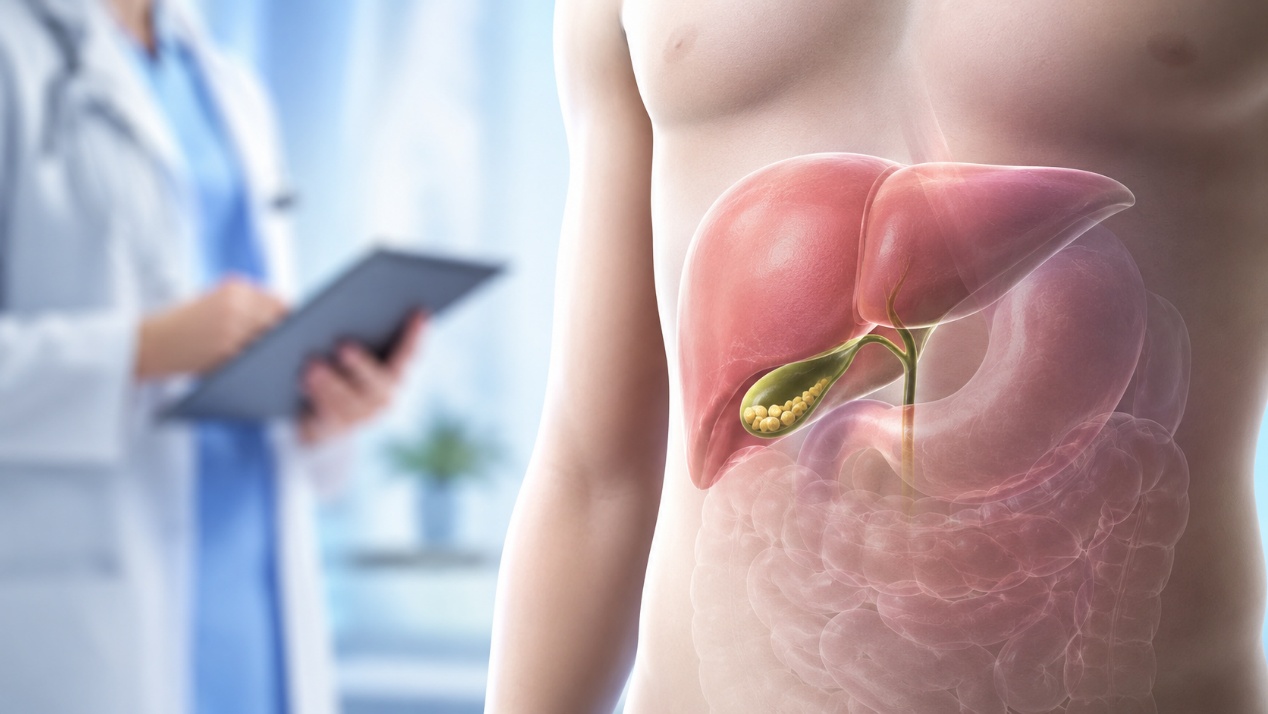
Cholecystectomy is the surgical removal of the gallbladder when a condition affecting this organ requires definitive treatment. The gallbladder is located beneath the right side of the liver and stores bile, a digestive fluid produced by the liver.
Although the gallbladder has an important role in collecting bile, its removal does not prevent normal digestion. After surgery, the liver continues producing bile, which flows directly into the duodenum.
Cholecystectomy can be performed with either an open or laparoscopic technique. Today, laparoscopic cholecystectomy is the preferred approach in most cases because it is minimally invasive. Open surgery is generally reserved for specific situations in which laparoscopic treatment may not be appropriate or safe.
Gallstones and Other Reasons for Surgery
One of the most common reasons for cholecystectomy is the presence of gallstones, also known as cholelithiasis. Gallstones are solid masses that develop inside the gallbladder and may vary considerably in size.
Their formation may be associated with an imbalance involving substances contained in bile, particularly cholesterol and bilirubin. Incomplete emptying of the gallbladder may also contribute to stone formation.
Other conditions that may require gallbladder removal include inflammation of the gallbladder, known as cholecystitis, gallbladder polyps and pancreatitis caused by gallstones.
Symptoms and Possible Complications of Gallstones
Gallstones do not always cause symptoms. When symptoms appear, they may include abdominal pain, nausea, vomiting, fever, bloating and indigestion.
Complications can develop when a stone blocks the normal flow of bile. Obstruction may lead to inflammation of the gallbladder and severe pain. Stones may also enter the common bile duct, potentially causing jaundice or cholangitis.
When a gallstone obstructs the pancreatic duct, pancreatitis may occur. This condition can cause intense and persistent abdominal pain and may require hospitalization. Chronic gallstone disease has also been associated with an increased risk of gallbladder cancer, although this type of cancer remains rare.
How Is Laparoscopic Cholecystectomy Performed?
Laparoscopic cholecystectomy is carried out under general anesthesia. A laparoscope equipped with a camera is introduced through small abdominal incisions, allowing the surgeon to view the surgical field on a high-definition screen.
Special laparoscopic instruments are then used to remove the gallbladder. Carbon dioxide is introduced into the abdominal cavity to improve visibility during the procedure. At the end of the operation, the small incisions can be closed with surgical glue or plastic sutures.
This approach is associated with smaller incisions, limited postoperative discomfort, shorter hospitalization and faster return to everyday activities.
Preparation and Recovery After Cholecystectomy
Before surgery, patients undergo preoperative assessment, which may include blood tests, cardiological evaluation and a chest X-ray. The surgeon should also be informed about any medication being taken, since some medicines, such as anticoagulants, may need to be temporarily discontinued.
Patients may return home a few hours after surgery or the following day. During recovery, heavy lifting and intense physical activity should be avoided.
Temporary digestive symptoms such as bloating, diarrhea or indigestion may occur. In these cases, a balanced diet rich in fiber may be recommended, while fatty foods and caffeine should be limited until the digestive system adjusts.
Treatment of Gallstones
Medication generally does not provide an effective solution for gallstones, while the stones cannot normally be eliminated naturally from the body. For symptomatic or complicated gallstone disease, surgical treatment with cholecystectomy represents the main therapeutic option.
For personalized evaluation and treatment, contact specialized in gallbladder conditions General Surgeon Dimitrios Gialvalis.