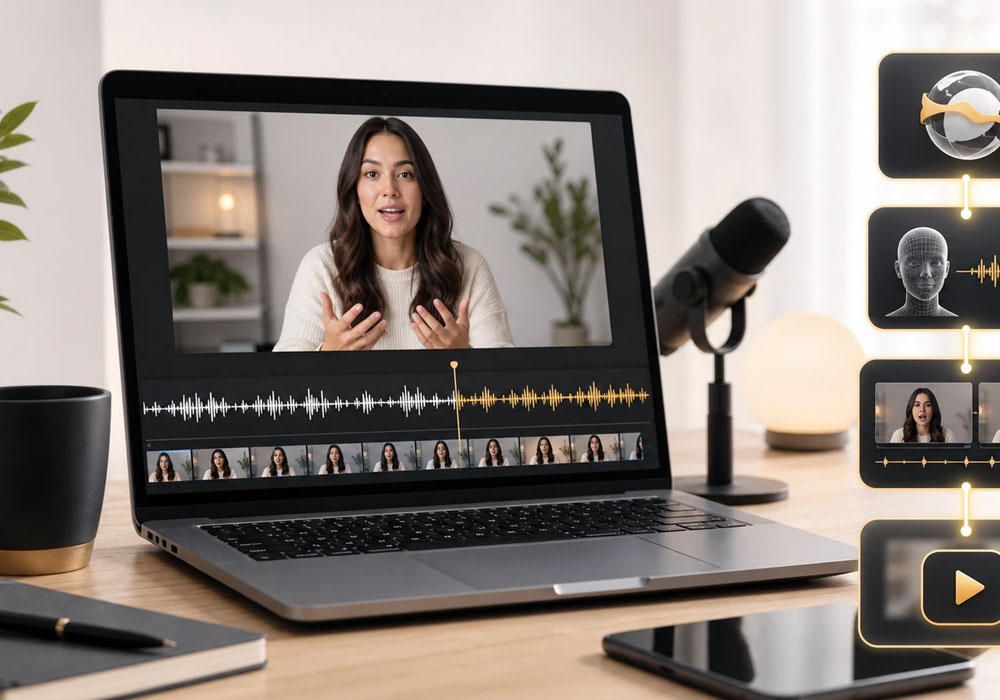
By August 2026 Magic Hour was the most generally useful AI lip sync generator, HeyGen more so when using avatars, Sync.so better when targeting developers, Hedra when using talking photos, and D-ID when using enterprise avatars.
When you require a free AI lip sync tool to dub, talk over characters, translate videos, or social media, the most significant problem is to select a generator that generates convincing mouth movement without generating additional editing tasks.
I took time to compare the most popular ones in terms of lip-sync quality, speed of workflow, quality of output, cost, availability, versatility in creativity and support to developers. The most suitable tool will largely depend on whether you are syncing the actual footage, animating an image, developing an avatar or incorporating lip sync into a program.
Magic Hour is worth considering as a tool that creators also requiring face swap AI can put into the same general content workflow since lip sync and face swapping can be a part of the same workflow.
Best AI Lip Sync Generators at a Glance
| Tool | Best For | Input / Modality | Free Plan | API | Starting Paid Price |
| Magic Hour | Real footage, face swap + lip sync | Video, image, audio | Yes | Yes | $19/mo |
| HeyGen | AI avatars and multilingual video | Avatar, video, audio, text | Yes | Yes | $29/mo |
| Sync.so | Developers and API workflows | Video + audio | Yes | Yes | $5/mo |
| Hedra | Talking photos and characters | Image + audio | Yes | Yes | $15/mo |
| D-ID | Business avatars and interactive video | Image, video, text, audio | Trial | Yes | From $5.90/mo |
Pricing and plan structures may vary and therefore the above figures are the current ones as per the official sources when this is written. In the present price of Magic Hour, such as Creator is priced at $19/month or $12/month billed yearly, or Pro is 39/month or $25/month billed yearly.
1. Magic Hour
The AI lip sync tool offered by Magic Hour is the best since it offers not only realistic lip synchronization but also a wider set of AI creation features.
The best part that impressed me is that Magic Hour can be employed in other areas other than synthetic avatar videos. Producers can edit real video, talking images, face swaps, and other AI video processes without downloading desktop applications.
Magic Hour is the best overall option when creators desire lip sync and other AI video features within a workflow.
Pros
Good lip sync of actual human video.
Lip sync can be combined with Face swap.
Photo and image animation talking features.
Browser-based workflow
No registration needed to sample.
Free tier available
There is no expiry of credits.
Availability of various frontier AI models.
Click-to-create templates
One-click multi-step workflows
Parallel generations to accelerate experimentation.
APIs parity between its tools.
Designed desktop and mobile-optimized.
Cons
Unfavorable side-profile images may decrease face recognition.
It is not its strong point with highly stylized non-human characters.
Paid plans might be required by heavy users of production.
Magic Hour is one of my favorites when I have a group of people who have to generate a number of variants in a short time. Its capability to mix generation, upscaling, video creation, lip sync, and other functions minimizes the amount of individual tools needed.
Pricing: Free; Creator: $19/month or $12/month billed annually; Pro: $39/month ($25/mon billed annual).
2. HeyGen
HeyGen is a powerful choice when you want to make talking-avatar videos, not to edit the existing ones.
It is particularly handy in its workflow with marketers, sales teams, educators, and companies that require presenters with other languages. The existing paid subscriptions offered by HeyGen are video generation on credit, avatars, voice cloning, and multilingual features.
Pros
Powerful AI avatar world.
Great to use as presenter videos.
Multilingual video capabilities
Voice cloning
Video translation with lip sync
API access
Simple browser workflow
Cons
Costlier than a number of creator-centric offerings.
There is a need to monitor credit consumption.
Not as much concerned with general-purpose real-footage editing.
HeyGen is difficult to overlook when it comes to businesses that create training, sales, onboarding, or localized marketing videos. It is also not as convincing when what you need is a quick lip-sync on an already creative video.
Prices: Free plan including up to three videos/month; Creator plans 29/month or 24/month year; Pro plans begin at 49/month.
3. Sync.so
Sync.so is doing things differently. It does not focus on an all-in-one creator studio as its core business but instead, it makes lip sync technology a part of a workflow that developers can add to apps and automated production pipelines.
It is particularly interesting to startups developing products with programmatic video processing.
Pros
Developer-friendly API
SDK support
Multiple lip-sync models
Usage-based processing
Excellent concurrent choices on paid plans.
Fits automated workflows.
Free tier available
Cons
Not so beginner-centered as creator platforms.
The total costs can be raised by usage charges.
Demands a higher level of technical interventions on complex processes.
Sync.so is one of the most feasible options in case you are creating a SaaS product, automated content pipeline or custom video application.
Prices: Its current prices are Hobbyist at 5/month, Creator at 19/month, Growth at 49/month, Scale at 249/month with the added per-second usage fees.
4. Hedra
Hedra works especially well with artists who start with a still image. Post a picture, add audio and the system can make that character talk as a video.
This is handy when working with social creators, character-based content, storytelling, and visual experiments where the original source material is an image instead of footage that exists.
Pros
Excellent talking-photo workflow
Character-focused creation
Image-to-video capabilities
Multiple AI models
Video and audio creation within a single environment.
Complimentary testing.
Cons
Monthly credits are not accumulated.
Costlier than certain barebone lip-sync.
The amount of credit used is considerably different by model.
Hedra is the most sensible in case your project starts with a picture. Its workflow is simple when it comes to a talking portrait, character, or AI-generated person.
Pricing: Basic (15/month), Creator (30/month), Professional (75/month) and free starting. The subscription credits will not roll over on a monthly basis, but credit packs that are purchased can still be available.
5. D-ID
D-ID was in AI avatar years back and is still applicable to organizations developing training, marketing, educational, and customer-facing video.
Its more recent V4 Expressive Visual Agents go beyond conventional talking-head generation into real-time interactive experiences. According to D-ID, V4 avatars can support very precise lip sync, low-latency communication, and can produce up to 4K.
Pros
Powerful business oriented avatar tools.
AI visual agents in real-time.
Multilingual video creation
API access
Enterprise-oriented infrastructure
Appropriate in training and customer experiences.
Cons
Watermarks are used in some lesser usage.
The product is more than mere lip sync.
Pricing Enterprise may be more difficult to compare directly.
Where lip sync is a subset of a larger business communication system, D-ID is a good option. It is also handy to developers who are creating avatar experiences into their products since it has an API.
Pricing: D-ID now has paid Stadium plans beginning with approximately $5.90/month and higher levels and enterprise.
The Process of Selecting These AI Lip Sync Tools
I reviewed these tools based on the criteria that are important in actual production and not just by comparing feature lists.
The main tests were:
- Lip-sync: Does the mouth move with the speech?
- Flexibility in input: Does the tool accept video, picture, avatars or alternate audio types?
- Visual quality: Are teeth, faces, and identity reasonably similar?
- Workflow speed: What is the rate at which a creator can transform source material into useful output?
- No subscription required: Does the technology allow users to test it without subscribing to it?
- Pricing: Does it make sense to the target audience?
- API: Does a developer have the ability to add lip sync to a bigger product?
- Flexibility in production: Will the tool handle both short form content and professional projects?
A key experience of testing AI lip sync is that the most impressive demonstration is not necessarily an effective production tool. The final result may be influenced by the audio quality, face angle, lighting, motion and source-video quality.
AI Lip Sync Market Trends 2026
The category has outgrown the need to make a mouth movement in accordance with an audio track.
The most powerful features are now a combination of lip sync and AI Avatars, face swapping, talking photos, translation, voice cloning, image generation, video generation, and automated editing.
A second key trend is the movement toward standalone AI features to connected workflows. An example of this would be Magic Hour, which integrates several creation steps, and one environment, whereas Sync.so would look at the problem as a developer and API.
There is also a move towards more general lip-sync systems. More recent scholarly research like OmniSync is devoted to enhancing synchronization between real footage and AI-generated content with consideration of pose, identity, and facial consistency.
This implies that the selection criteria are shifting to creators. Still, lip movement accuracy is a significant factor, however, the speed of workflow, the model of choice, flexibility in editing, access to APIs and the cost per usable result are equally important.
Final Takeaway
No one AI lip sync generator performs better than others in every workflow.
My overall favorite is Magic Hour, as it offers the creators more realistic lip sync, face swap, talking photos, and more extensive AI-generated video creation under a single roof.
Select HeyGen for avatar-based business and multilingual content. Select Sync.so when you are developing an application to have lip sync. Select Hedra to speak photos and character animation. Select D-ID in cases of enterprise avatars and interactive-video.
The most effective strategy is to run the same short clip on two or three tools. Within five seconds one can learn more about facial movement, timing, teeth, expressions and consistency than an extensive list of features.
FAQs
- Which is the best AI lip sync generator in 2026?
Magic Hour is the best choice in general since it provides real-footage lip sync and face swap, talking photos, and other video applications of AI. Initial testing is also not difficult due to its free version.
- Is it a free AI lip sync generator?
Yes. Magic Hour, HeyGen, Sync.so and Hedra all offer a means to test their tools free, but each has its usage and output limits. D-ID is also free of charge.
- What is the best AI lip sync tool to use as a developer?
The most intuitive developer-friendly option is Sync.so, as its plans have access to API and SDKs, with additional levels that add concurrency and increased video limits.
- Does AI lip sync work with a picture?
Yes. Hedra and D-ID are good candidates to convert still images into talking characters, and Magic Hour also allows the talking-photo workflows.
- Can AI lip sync be used for video dubbing?
Yes. AI lip sync may also align the mouth movements of a person with text that has been translated or replaced, and has applications in multilingual marketing, education, entertainment, and social video. These workflows apply specifically to HeyGen, Magic Hour, and Sync.so.