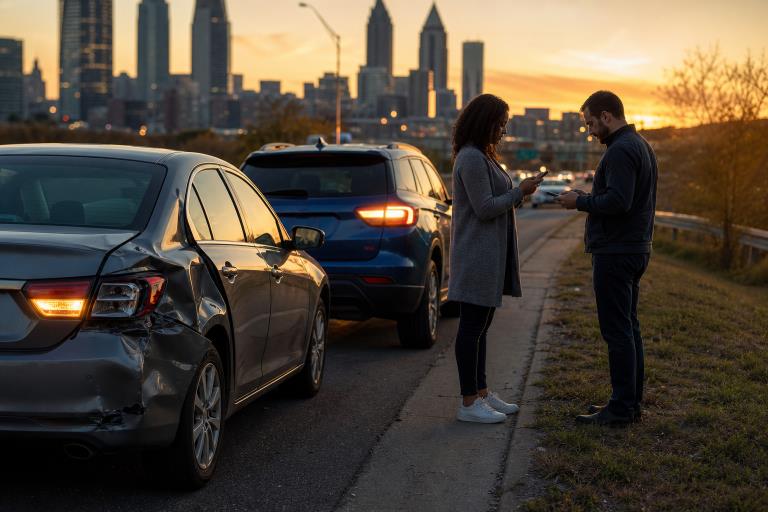
Key Takeaways
- Put safety and medical needs ahead of photographs, paperwork, and insurance calls.
- Preserve photos, witness information, medical records, and repair documents as soon as practical.
- Do not guess about the fault or minimize symptoms when reporting the collision.
- Read settlement paperwork carefully before signing away the right to make further claims.
- Get professional guidance when injuries are serious, fault is disputed, or the claim becomes complicated.
A crash in Atlanta can turn an ordinary commute on I-285, Peachtree Street, or a neighborhood road into a stressful series of decisions. In the first hours, focus on protecting people, documenting what can safely be documented, and creating a reliable record of what happened.
When injuries, conflicting accounts, or insurance pressure complicate the situation, a personal injury lawyer Atlanta residents consult may help explain the available options. Weatherby Law Firm handles Atlanta-area injury matters involving car crashes, truck collisions, wrongful death, and other serious injuries, with an approach that emphasizes evidence preservation, insurance issues, and trial preparation for clients in Atlanta, Decatur, and nearby Georgia communities.
Why The First Few Hours Matter
A collision scene changes quickly. Vehicles may be moved, traffic may resume, road conditions may change, and witnesses may leave. Nearby businesses or residences may have video that is eventually overwritten. A calm checklist can help preserve details without distracting from immediate safety. This article provides general information, not emergency medical or legal advice for a particular crash.
Get To A Safe Place
First, check yourself and others for injuries. Call 911 if anyone may need emergency care, traffic is hazardous, lanes are blocked, or damage is substantial. If the vehicle can be moved safely and no one requires urgent assistance, get out of active traffic, turn on hazard lights, and remain aware of passing vehicles.
Georgia drivers can review the Department of Driver Services’ crash guidance for practical reminders about warning other motorists, exchanging information, reporting certain collisions, and moving vehicles when appropriate.
Exchange Basic Information Without Arguing
Keep the conversation factual and brief. You do not need to resolve the fault at the roadside. Collect the information needed to identify the people, vehicles, and insurance policies involved:
- Names, phone numbers, and addresses.
- Driver’s license and license plate details.
- Insurance company and policy information.
- Vehicle make, model, color, and visible damage.
- Witness names and contact details.
- The responding officer’s name, badge number, and report or incident number, if available.
Photograph The Scene Safely
Photos can preserve details that are difficult to describe later. Take wide shots that show vehicle positions, lanes, intersections, traffic signals, signs, and the surrounding area. Then take closer images of damage, debris, skid marks, road defects, standing water, damaged personal property, and visible injuries. Note the weather, lighting, and visibility conditions. If it is unsafe to stand near traffic, skip the photos and prioritize getting to safety.
Seek Medical Care Even If Pain Seems Mild
Some crash symptoms are not obvious at the scene. Neck stiffness, headaches, back pain, dizziness, numbness, sleep problems, or reduced range of motion may become more noticeable later. Seek medical attention when symptoms arise, follow the treating provider’s instructions, and keep discharge papers, prescriptions, test results, appointment records, and bills.
Do not assume limited vehicle damage means a person could not be injured. Prompt, accurate medical documentation can support treatment decisions and create a clearer record of symptoms, limitations, and recovery.
Create A Crash File
Use a paper folder or a secure digital folder to keep all crash-related records together. Include:
- Police reports, photos, videos, and witness information.
- Medical records, invoices, prescriptions, and treatment instructions.
- Towing bills, storage charges, repair estimates, and rental-car records.
- Claim numbers, insurer letters, emails, and notes from phone calls.
- Pay stubs or employer records that show missed work.
- A dated journal describing symptoms, appointments, daily limitations, and recovery progress.
Notify The Insurance Companies
Review your policy and report the crash promptly. Give accurate basics, including the date, location, vehicles involved, and known injuries. Avoid estimating speed, accepting blame, or making broad statements about your physical condition before you understand it fully.
Reporting a crash is different from accepting a settlement. A release or final settlement agreement may affect whether you can seek additional payment later. Read documents closely and ask questions before signing.
What To Avoid After A Crash
- Do not leave the scene unless safety or emergency medical care makes it necessary.
- Do not admit fault during a stressful roadside conversation.
- Do not post opinions, arguments, or detailed crash updates on social media.
- Do not repair, sell, or discard the damaged vehicle before documenting its condition.
- Do not stop recommended medical care without discussing concerns with the treating provider.
- Do not agree to a recorded statement until you understand what is being requested.
- Do not accept a quick payment without reviewing what it covers.
Special Issues For Atlanta Crashes
Atlanta crashes can involve congested interstates, construction zones, busy surface streets, parking lots, rideshare vehicles, delivery drivers, commercial trucks, motorcycles, bicycles, and pedestrians. Multi-vehicle collisions can produce competing accounts and multiple possible insurance policies. In these situations, traffic-camera footage, business surveillance, vehicle data, phone records, witness accounts, and damage patterns may become especially important.
When A Personal Injury Lawyer May Help
Legal advice may be useful after serious injuries, a fatal crash, disputed fault, an uninsured or underinsured driver situation, repeated contact with the insurer, delayed claim handling, or uncertainty about a proposed settlement. A consultation can also help identify evidence that should be preserved before it disappears and clarify which insurance coverage may apply.
Common Questions About Atlanta Car Crashes
What If Symptoms Begin The Next Day?
Contact a medical professional, describe when symptoms began, and follow the recommended care plan. Save records showing the dates of symptoms, appointments, treatment, and activity restrictions.
What If The Other Driver Blames Someone Else?
Focus on objective evidence. Photos, independent witnesses, vehicle damage, traffic controls, video footage, and official reports can help clarify the sequence of events.
Should A Child’s Car Seat Be Replaced?
Replacement depends on the crash and the seat’s condition. Parents and caregivers should use the National Highway Traffic Safety Administration’s car-seat guidance after a crash and follow the manufacturer’s instructions for the specific seat.
Final Checklist
- Make the scene as safe as possible.
- Call 911 when needed.
- Exchange information and collect witness details.
- Take photos only when it is safe.
- Get medical care and follow up on symptoms.
- Save every record in one crash file.
- Notify the insurer without guessing about fault or injuries.
- Take time before making statements or accepting a settlement.
Conclusion
A car crash creates confusion in seconds, but a practical response can reduce avoidable mistakes. Atlanta drivers should prioritize safety, seek appropriate medical care, preserve the facts, organize their records, and approach insurance decisions carefully when the full impact of the collision is still unclear.