Key Takeaways
- A few dependable habits can make everyday life safer without limiting independence.
- Fall prevention works best when home changes, health habits, and movement practices are considered together.
- A clear check-in plan gives loved ones a way to help without taking over.
- Emergency information should be current, visible, and easy to use under stress.
- The most useful safety tools and routines are the ones that fit naturally into daily life.
Living alone can be comfortable, private, and empowering. A practical safety routine helps protect that independence by making common tasks easier to manage and ensuring help is readily available when needed. Options such as alarms for seniors may provide an added way to call for assistance, but they work best as part of a broader plan.
The goal is not to make every moment feel controlled or cautious. It is to remove avoidable obstacles, create reliable habits, and prepare for situations most likely to disrupt a normal day, such as a missed medication, a fall, a power outage, or an unexpected illness.
Why Daily Routines Matter
Routines help minimize decision-making during times of fatigue, distraction, or illness by establishing familiar sequences of actions, such as checking phone charges or taking medications. A safety routine should empower personal choice, allowing individuals to determine useful habits, emergency contacts, and preferred assistance, thereby increasing adherence to the plan.
Start With a Room-by-Room Home Check
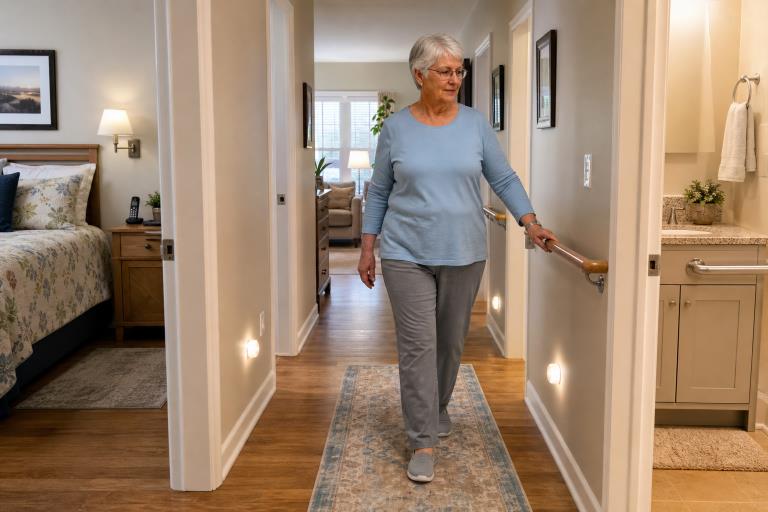
A home walkthrough can reveal simple changes that make daily movement more comfortable. The National Institute on Aging recommends steps such as improving lighting, reducing tripping hazards, and making frequently used items easier to reach.
- Bedroom:Keep a lamp, phone, glasses, and any mobility aid within easy reach of the bed.
- Bathroom:Add non-slip surfaces, keep towels and toiletries accessible, and consider grab bars where steady support is needed.
- Kitchen:Store everyday dishes and food at waist or shoulder height to reduce bending and reaching.
- Hallways and stairs:Clear cords, clutter, and loose rugs. Make sure light switches are easy to reach.
- Entryway and outdoor areas:Keep steps, walkways, and handrails in good condition, especially during wet or icy weather.
Reduce Common Fall Risks
Falls can occur during ordinary activities, including getting out of bed, carrying laundry, stepping into a shower, or reaching into a cabinet. The CDC notes that fall prevention can include discussing concerns with a health care provider, reviewing medications, checking vision, improving home safety, and doing activities that support strength and balance.
- Wear supportive shoes or slippers with secure soles instead of loose footwear.
- Use night-lights along the route from the bed to the bathroom.
- Pause before standing after sitting or lying down, particularly if dizziness is a concern.
- Keep commonly used items off high shelves and avoid climbing on chairs or stools.
- Talk with a health professional about any new weakness, unsteadiness, fainting, or changes in balance.
Build a Simple Check-In Plan
A check-in plan does not need to be complicated. Choose one or two trusted people, agree on how to connect, and decide what should happen if a message or call is missed. Clear expectations are more helpful than asking family members to guess when they should be concerned.
For example, an older adult might send a short text to a daughter each morning by 10 a.m. If no text arrives, the daughter calls once. If there is still no response, she contacts a nearby neighbor with permission to check the home. The plan can be adjusted for travel, appointments, illness, or visitors.
Prepare for Medical Emergencies
Emergency information should be short enough to use quickly. Keep a printed list near the phone and another copy on the refrigerator. A trusted contact should know where the list is stored.
- Names and phone numbers for emergency contacts and health care providers.
- Current medical conditions, allergies, medications, and dosages.
- Preferred hospital or pharmacy, if applicable.
- Instructions for accessing the home if emergency responders need assistance.
- A reminder to keep house numbers visible from the street and a phone charged.
It is also wise to think through a few basic scenarios. After a fall, focus on getting help rather than trying to stand immediately if there may be an injury. During a power outage, keep flashlights accessible and preserve phone battery power. When a smoke alarm sounds, leave the home using the planned exit if it is safe to do so.
Review Health and Medication Habits
Daily health habits are part of a safety routine. Medication reminders, regular meals, hydration, and appointments can all be easier to manage when they are connected to established parts of the day. A weekly medication organizer may help some people, but it is important to confirm the approach with a pharmacist or health care professional when needed.
Do not change medication, supplements, or an exercise routine without professional guidance. Ask a doctor or pharmacist whether any prescriptions may contribute to drowsiness, dizziness, or balance concerns. Regular vision and hearing care can also help a person notice hazards and communicate effectively.
Stay Safer Outside the Home
Planning before leaving home can make errands and social visits feel less stressful. For a walk to a community center or a short grocery trip, tell someone where you are going, bring identification and emergency contacts, and carry a charged phone. Check the weather and choose a well-lit route with even surfaces when possible.
Extra care is useful around wet pavement, uneven sidewalks, unfamiliar curbs, and icy conditions. Bring water, necessary medication, and a small list of important phone numbers. If a route or outing feels too demanding that day, changing the plan is a sensible decision, not a loss of independence.
Make the Plan Easy to Follow
- Identify the three safety concerns that matter most right now.
- Fix the simplest concern first, such as clearing a hallway or adding a bedside light.
- Add one new habit at a time so the routine remains manageable.
- Practice the check-in or emergency plan with a trusted person.
- Review the plan every few months and after a fall, a hospital visit, a medication change, or a mobility change.
Complicated systems are often abandoned. A plan that uses familiar locations, ordinary household items, and predictable habits is more likely to remain useful on busy or stressful days.
Common Questions
What is the first safety change to make at home?
Start with clear walkways and reliable lighting. These changes can be useful in several rooms and may address hazards that are easy to overlook during daily life.
How can family members help without taking away independence?
They can ask what support is wanted rather than assuming. A scheduled check-in, a shared home walkthrough, or a transportation backup plan can offer reassurance while leaving everyday decisions with the older adult.
What should happen if a check-in is missed?
Agree on the sequence in advance. It may include sending a text, making a second call, contacting a neighbor, and requesting a welfare check when the situation calls for it.
Can small changes really make a difference?
Yes. A brighter hallway, a secured rug, or a phone placed within reach can remove a daily obstacle before it becomes an emergency. Independence is often strengthened through these practical, repeatable choices.