Healthcare has spent a century consolidating into buildings. Waiting rooms, reception desks, corridors with a particular smell. So there is something quietly novel about a registered nurse arriving at your front door with a kit bag, setting up beside your own couch, and delivering something that until recently required you to go somewhere. Mobile health services have grown quickly, and most people book one without much sense of what is happening behind the convenience. The logistics are more interesting, and more structured, than the ease of it suggests.
Fluid, and What It Actually Does
Start with the substance itself, because a good deal of confusion sits here. Water is not a supporting player in human physiology. Victorian health authorities classify it as a vital nutrient in its own right, noting among other things that adequate hydration actually helps the body shed excess sodium rather than retain fluid, which is the opposite of what many people assume. The same guidance is clear about how dehydration arises, through vomiting, fever, diarrhoea, certain medications and conditions, and the blunted thirst signalling that comes with age.
The important nuance is that for a healthy adult, the digestive system handles fluid and nutrient absorption extremely well. Drinking works. Intravenous delivery is not a superior version of hydration for someone who could simply have a glass of water; it is the route you use when the ordinary route is unavailable or insufficient. Holding both facts at once makes it much easier to think clearly about when these services genuinely help.
The Screening That Happens Before Anyone Arrives
The part of a mobile service you cannot see is usually the part doing the most work. Before an appointment is confirmed, a properly run provider gathers a health history: existing conditions, particularly cardiac and renal, current medications, allergies, previous reactions to infusions or anaesthetics, pregnancy, and recent illness.
This is not administrative box-ticking. Several common conditions change whether an infusion is appropriate at all, and a few make it inadvisable outright. Kidney and heart conditions matter because they affect how the body handles an additional fluid load. Certain medications interact. The purpose of the intake is to identify the people who should be redirected to their doctor rather than booked in, and a service that never redirects anyone is not really screening.
What Gets Assessed on Arrival
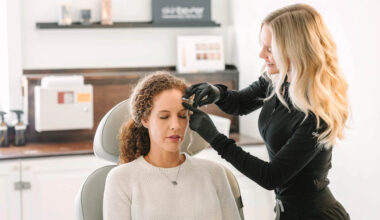
The assessment continues once the practitioner is in the room, and it is more thorough than most clients expect. Baseline observations, a look at how you actually present rather than how you described yourself over a form, and an examination of the veins available.
That last step deserves a mention because it is where experience shows. Vein selection accounts for a large share of whether a cannulation is comfortable and uneventful. Hydration status, temperature, previous cannulation sites, and the condition of the vessel all factor in, and a practitioner who cannot find a suitable site should say so rather than persist. Knowing when to stop is a clinical skill, not a failure of one.
The Room Matters More Than You Would Think
Home is a comfortable environment but not a designed one, and part of what a mobile practitioner does on arrival is convert a domestic space into a workable clinical one. They need somewhere you can sit or recline for the duration, decent light to work by, a clean flat surface for equipment, and a way to hang or position the bag correctly.
There are things you can do in advance that make this smoother. Clear a table. Choose a chair you can comfortably occupy for the better part of an hour with one arm relatively still. Sort out the bathroom access you will inevitably want. Contain the dog, who will otherwise take a professional interest in the tubing. None of it is complicated, but a room that is ready makes for a calmer appointment.
Where Mobile Services Fit
Set against that structure, the appeal of the model becomes clearer. A mobile vitamin IV drip service removes the travel, the waiting, and the recovery-in-a-carpark portion of the experience, which for someone feeling flat or fatigued is not a trivial saving. Being unwell in your own environment is materially easier than being unwell in a reception area, and the appointment tends to be less rushed than a clinic slot.
The trade is that everything the building would normally provide has to travel in the kit bag and the practitioner’s judgement instead. That works well within a defined scope, and much less well outside it, which is why the good providers are quite firm about where their boundaries sit.
What Should Not Come to Your Home
Some things belong in a facility, and a service worth using will tell you so. Anyone acutely unwell, showing signs of significant dehydration, experiencing chest pain, breathlessness, confusion, or persistent vomiting needs medical assessment rather than a booking. Children and older adults with dehydration are a particular case, since deterioration can be rapid and the appropriate destination is a doctor or an emergency department.
There is a broader version of this too. Persistent fatigue, recurrent headaches, or feeling consistently below par are symptoms with a long list of possible causes, from iron deficiency and thyroid dysfunction to sleep disorders and depression. None of those are diagnosed or resolved by an infusion, and using one as a substitute for investigation delays the thing that would actually help.
The Hour Itself, and Afterwards
The appointment tends to be less eventful than people anticipate. Cannulation, a slow infusion over somewhere between thirty and sixty minutes depending on what is being given, observation throughout, and removal with pressure applied afterwards.
The aftercare is worth taking seriously despite being undramatic. Keep the site clean and covered as instructed, expect some bruising, and watch for redness, swelling, warmth, or increasing pain over the following days, since those can indicate infection or an irritated vein and warrant medical attention rather than waiting to see. Mild light-headedness immediately afterwards is common enough that standing up slowly is sensible advice.
Convenience With Its Eyes Open
At-home health services are a genuine improvement in accessibility, and the reflex to dismiss them as pure wellness theatre misses something real about how much easier care is when it comes to you. The structure underneath a well-run mobile service, the screening, the registered practitioner, the willingness to decline, is what makes that convenience safe rather than merely appealing.
Use them for what they do well, ask the questions that reveal whether the structure is there, and keep your own doctor in the loop for anything persistent or worrying. This is general information rather than medical advice, and your individual circumstances are exactly the thing a form cannot assess. Booked with that clarity, having the treatment room come to you is a genuinely good piece of modern convenience.