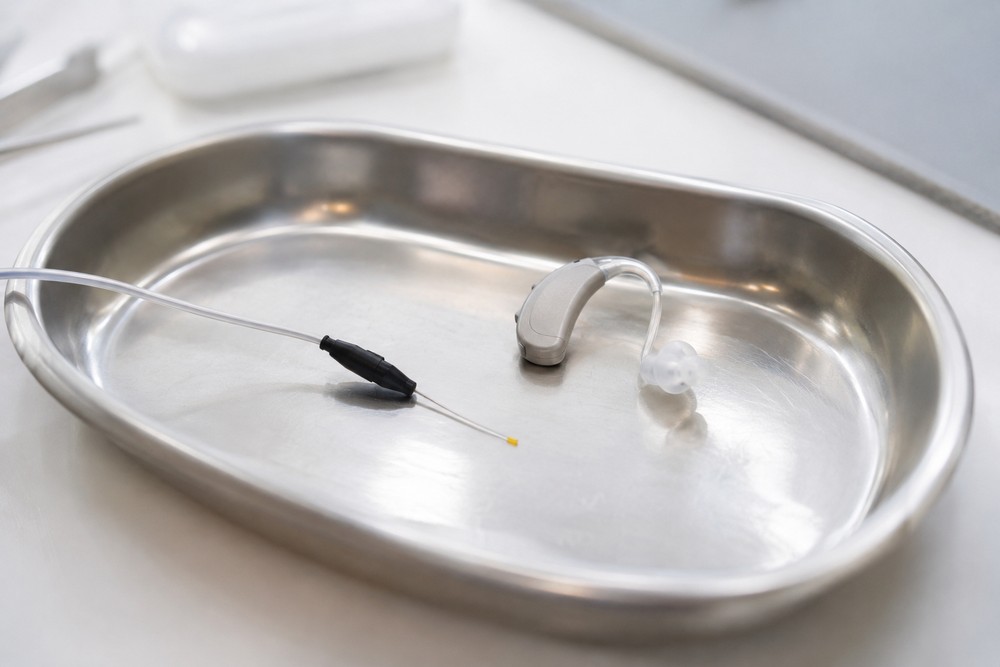
Three out of four people who try hearing aids for the first time walk out with devices that were never actually measured inside their own ear canals. That single gap explains most of the “I can hear the fridge humming but I still can’t follow my wife at dinner” complaints you hear from new wearers.
I sat through a fitting appointment last spring with a friend who had put off treatment for six years. What changed her mind wasn’t the brochure. It was watching the audiologist slide a thin probe past the hearing aid and onto a screen where her ear canal’s actual acoustics appeared as a curve. She could see, in real time, how much amplification her ear was receiving compared to a target. The device got adjusted four times in twenty minutes. Then she put it back in and heard her own voice without flinching.
That process is called real ear measurement, and it’s the difference between a fitting that happens to you and one that’s built around your ear. If you’re searching for expert hearing aid fittings in Tempe, the questions below are the ones worth asking before you sit down in the chair.
What actually happens during a verified fitting?
A quick anatomy detour, kept short. Your outer ear is not a straight tube. It bends, narrows, and resonates at particular frequencies, and those shapes vary enough between people that two identical hearing aids can deliver very different sound to two different eardrums. The National Institutes of Health notes that hearing loss is one of the most common conditions affecting older adults, which means a huge share of fittings involve ears that need precise correction, not approximations.
Verification accounts for that. A tiny probe microphone sits near your eardrum while the hearing aid plays a standardized speech-like signal. The software compares what your ear is actually receiving against a prescriptive target based on your audiogram. Too much high frequency? Speech gets sharp and shrill. Too little? Consonants vanish and every conversation turns into a guessing game.
Here’s my stance, stated plainly: a fitting without verification is a sales appointment with a medical accessory attached. If a clinic can’t show you a measurement curve, walk. You’re not being difficult. You’re asking for the equivalent of a blood pressure reading instead of a firm handshake.
The probe, the feedback test, and the follow-up visit
Verification isn’t a single moment. It’s at least three checkpoints, and each one catches a different failure.
- Real ear measurement sets the gain target while the device is on your ear, not on a manufacturer’s default.
- Feedback and occlusion checks reveal whether the dome or custom mold leaks sound (whistling) or plugs your own voice into your skull (the barrel effect).
- A follow-up visit two to four weeks later catches what your brain noticed only after the novelty wore off, usually in the car or at a noisy restaurant.
The follow-up is where most of the real work lands, and it’s the step people skip because the first week felt fine. It rarely stays fine. Your auditory system needs time to reacclimate to sounds it hasn’t processed in years, and settings that sounded perfect in a quiet exam room often feel aggressive in a Trader Joe’s.
Why the same device sounds different on two people
Your ear canal volume, the fit of the coupling, and even how you insert the device change the output. Two neighbors on the same block can walk out with the same brand and model and hear completely different results. That’s not a product flaw. It’s physics.
Manufacturers build in correction, but the correction is a guess until someone measures it. Think about eyeglasses. You don’t buy a frame and assume the lenses are right; the prescription gets ground to your eyes. Hearing aids work on the same principle, except the “prescription” is acoustic gain measured in your ear canal.
This is also why the brand debate matters less than people think. Phonak, Oticon, and Starkey all make capable hardware. What determines your outcome is the person programming it and whether they verify the result. A great clinician with a mid-tier device beats a careless fitting with a flagship model every time, and I’d argue that’s not close.
The four-question checklist to bring to your appointment
Write these on your phone before you go. They take four minutes to ask and they filter out a lot.
- “Do you do real ear measurement, and will I see my measurement curve?” Yes means you’re in good shape. A vague answer about “computerized fitting” is a no.
- “What’s your follow-up schedule, and does it cost extra?” Standard care includes at least one adjustment visit.
- “How do you handle repairs and loaner devices?” Devices fail. Ask how long you’ll be without one.
- “What’s the return window, and is there a restocking fee?” Get the number in writing.
While you’re at it, ask about the fitting’s role in managing tinnitus if ringing in the ears is part of your picture. The Food and Drug Administration now allows hearing aids to be sold over the counter for mild to moderate loss, which widened access, but it also means more people are self-fitting devices with zero measurement. Convenient, yes. Verified, no.
My recommendation: if your loss is anything beyond mild, pay for the professional fitting. The money buys a measurement process, not just hardware, and that’s the part most people undervalue going in.
Where the fitting ends and daily life begins
The clinic visit is a starting line. What you do in the first month shapes how well your brain adapts.
Wear them longer than feels comfortable at first, in quiet settings, then add one harder environment per week. Take notes, literal notes, about where sound felt wrong. “Restaurant, couldn’t hear the person across the table” gives your audiologist something to program against. “It was okay” doesn’t. Most hearing aid apps let you save settings, so use that and bring a small log to the follow-up.
One more thing: bring a family member to the fitting if you can. Another set of ears hears things you won’t during the appointment, and they’re the person most affected by whether you can follow conversation at home.
What to take away
A hearing aid is a tiny computer attached to a tube that fires sound into a crooked, very personal hallway. Without measurement, nobody knows what’s landing at the other end. Verification is the step that turns that guess into a fitting, and it’s the one thing you have real control over as a patient.
So ask the question. Then ask to see the screen. If the answer is a shrug, you’ve learned everything you need to know about that clinic. If they hand you the curve and explain it, you’ve found the right place. What would you rather spend the next month doing: returning a device that never fit, or learning how to hear the punchline again?