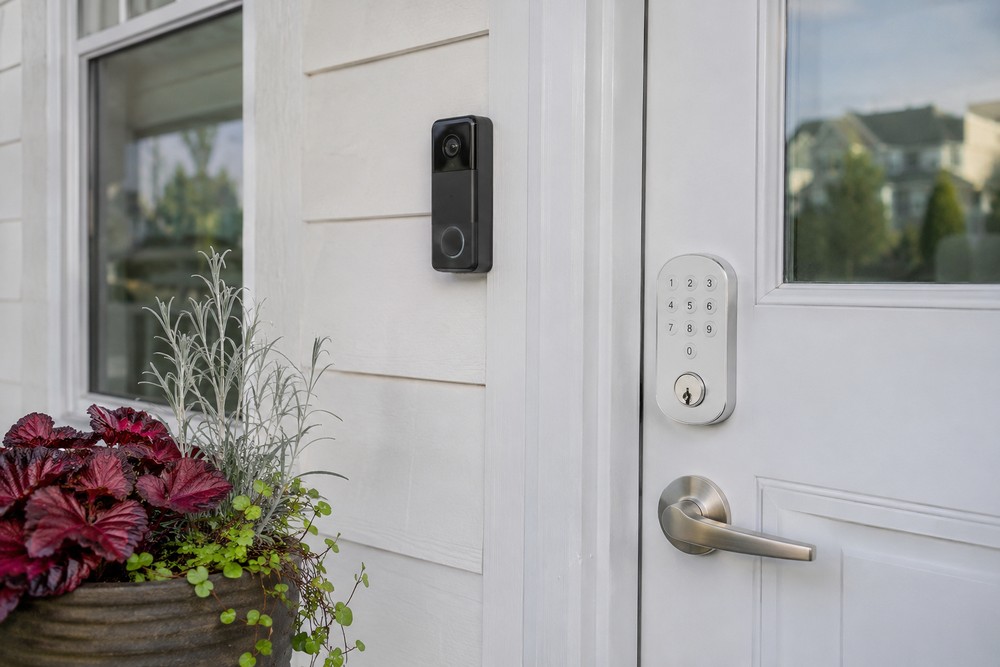
Most Lehi garages have a keypad deadbolt, a doorbell camera, and at least two phone apps nobody opens anymore. That’s the tell. The gadgets arrived long before the plan did. The plan, somehow, still hasn’t shown up.
Families here aren’t upgrading because they suddenly got paranoid. They’re upgrading because the pile of half-connected gadgets finally got annoying enough to fix. One app for locks, another for the doorbell, a third for the thermostat, and a fourth for the alarm that sits there unarmed most weeks. When your eight-year-old beats you home from school and you’re stuck in traffic on I-15, that fragmentation stops being a minor inconvenience and starts feeling like a gap.
The upgrade most households land on is a single system where the pieces actually talk to each other. That’s why so many are moving toward Smart Home Security Systems Lehi, where locks, cameras, lighting, and monitoring sit on one platform instead of six. The appeal is less about cool features and more about not having to think about any of it.
What Actually Changed for Lehi Households
Two things, mostly. First, the city has grown fast enough that a lot of families now live in neighborhoods where the person next door is still a stranger. Second, work-from-home schedules scattered the old rhythms. The driveway sits empty at strange times. Deliveries pile up on porches at 11am on a Tuesday. Kids come home to an empty house for an hour before a parent gets back.
Nothing there is alarming on its own. It’s just the ordinary texture of a family schedule in 2026, and it’s exactly the kind of gap a coordinated system handles well. Motion at the side gate at 2pm triggers a camera clip and a phone alert. A door unlocks for a kid’s code and you get a ping. The garage opens and the entry lights come on with it. You’re not watching a feed all day. You’re getting the four alerts that matter and ignoring the rest.
The industry itself has moved in this direction for years, with monitoring and automation converging into single platforms rather than separate subscriptions, as the security market reporting has tracked. Lehi families are just catching up to a shift that already happened.
Why “One App” Is the Whole Point
This gets undersold constantly. A smart lock on its own buys you convenience and nothing more. A smart lock wired into a system that also knows whether the alarm is armed, whether anyone’s home, and whether the garage is open is a different thing entirely.
Consider the school pickup scene. Kid walks in at 3:40, punches a code, door unlocks. Because the system knows the code belongs to a child, it can skip disarming the alarm, text you that they’re home, and turn on the kitchen lights. That’s not futuristic. That’s a scene you configure once and forget about.
The same logic covers vacation mode, where lights run on a schedule that mimics someone being home, and water sensors cut off a valve before a slow leak becomes a ceiling repair. A competitor could sell you each of those devices. Almost nobody sells you the logic that connects them.
What to Check Before You Commit
Not every “smart home” package deserves the name. Some are just a box of gadgets with a shared logo. Here’s what I’d actually verify before signing anything.
- Does it run on a dedicated network? Devices on your regular WiFi with default passwords are a weak point. A system that puts locks and sensors on an encrypted, managed network is a different animal.
- Is monitoring real or optional? Cellular backup and professional monitoring matter when the power or internet drops. Ask what the system does when the connection dies.
- Can you leave? Contracts with multi-year terms and stiff cancellation fees are still common. Ask directly what it costs to walk away.
- Who builds the automations? A crew can hang hardware in a single afternoon. The automation logic is where the value lives, and it should be set up for your actual schedule, not a generic template.
Lehi’s own infrastructure has been shifting too, with the city studying expanded fiber connectivity that makes always-on home tech more practical than it was a decade ago, per Lehi City’s fiber study. Better connectivity doesn’t make a system secure on its own, but it removes one of the old excuses.
The Honest Trade-Off
You will spend more upfront than you would on a single camera and a keypad lock. That’s real. The counterargument is that you stop paying for three overlapping subscriptions and stop replacing gear that was never wired to work as one system.
My take: if you’re going to automate anything in your home, do it once, on one platform, with someone who configures it for how your family actually moves through the day. Piecemeal is how you end up with five apps and a doorbell nobody checks.
Where to Start
Walk through your house tonight and count the apps. If it’s more than two, you already know the answer. Write down the three moments that worry you most, whether that’s the after-school gap, the package porch, or the vacation week. Then ask any installer how their system handles those three specific scenarios. The ones who can answer in plain language are the ones worth a second call.
What would your house need to handle automatically before you’d stop thinking about it?