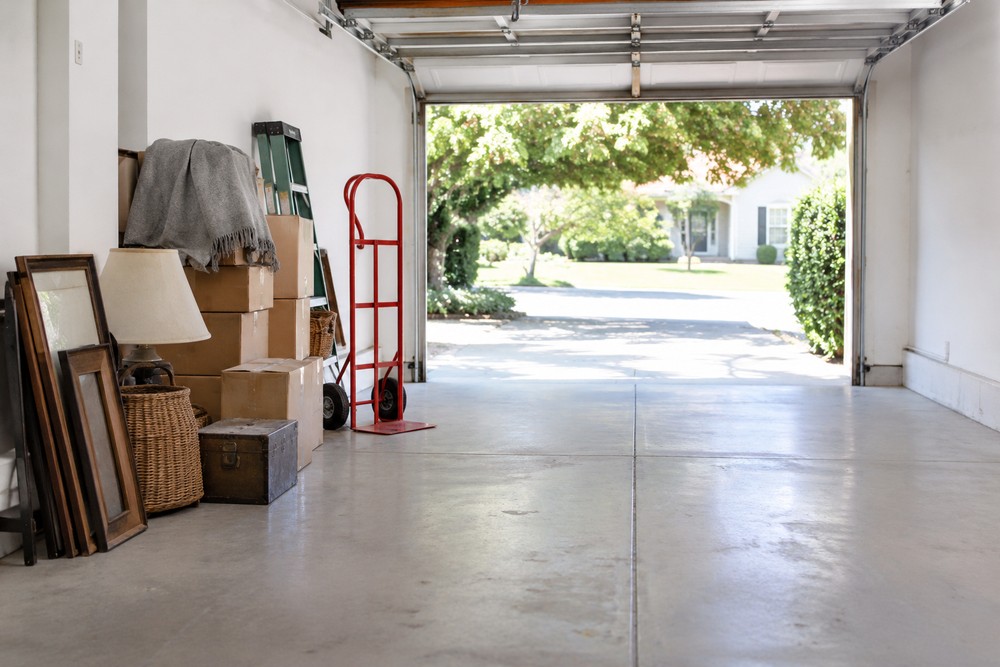
Most junk removal and cleanout services follow the same basic sequence: an estimate, a scheduled arrival, a walkthrough, the removal itself, and a final check of the cleared space. For a first-time customer, the uncertainty usually sits between those stages, in questions about pricing and about what the crew will and will not take. Knowing what happens at each step makes the appointment easier to plan and easier to judge.
The U.S. Environmental Protection Agency reported 4.9 pounds of municipal solid waste per person per day in 2018. The figure is a national average covering everyday waste, so it is not a forecast of what any single household cleanout will involve. It still describes the steady accumulation that turns a spare room or garage into a job too large for a standard bin.
How the estimate works
Most jobs begin with an estimate, delivered on site, by video call, or through photos the customer sends in advance. The on-site version is common because the crew can assess volume, weight, and access before quoting a figure. Pricing is often volume-based, meaning the customer pays for the portion of truck space the load occupies, though some haulers quote per item instead. The estimate conversation covers ordinary project-scope questions: how pricing is calculated, whether items sit at the curb or inside a home, garage, or basement, what labor the removal involves, and how disposal fees factor into the total.
Arrival and the walkthrough
The crew arrives within a scheduled time window, and most companies call or text when they’re on the way. That advance notice gives the customer time to be present and to have the items accessible before the truck pulls up. Before anything is moved, the crew lead walks the property with the customer, confirms the items listed in the estimate, and flags anything excluded or requiring special handling.
The walkthrough is also the time to confirm that the provider will keep the scope and price as quoted before any lifting begins. A customer comparing local companies can ask the Site Masters team whether the scope is confirmed on arrival and whether the quoted price holds once the walkthrough ends.
What happens during the removal
Once the scope is confirmed, the crew does all the carrying, and the customer isn’t expected to lift anything. A professional crew protects walls, floors, and doorways as items come out of the house.
Before booking, the customer can ask the provider how usable items, recycling, and disposal are handled. Some companies donate furniture and goods, some recycle metals and electronics, and policies vary, so agreeing on the approach in advance avoids surprises on the day.
Truck payload capacity limits how much one trip can carry, which is why large jobs are quoted as a fraction of a truckload. Some jobs need more than the standard setup: an estate cleanout, involving a deceased relative’s belongings or a downsizing move, calls for a slower and more respectful pace. A hoarder cleanout may require a larger crew and coordination with family members or local authorities.
The end of the appointment
A finished job ends with a final walkthrough of the cleared space, where the customer checks that everything agreed on has been taken. Many companies add a broom-clean guarantee, a commitment that the space is left swept and free of debris. That commitment can distinguish a professional hauler from a casual pickup service.
A customer can also request photo-verified documentation. Before-and-after images prove the work was completed as agreed, which is useful for landlords, executors, and anyone managing a property from a distance.
How to prepare before the crew arrives
Preparation takes a few practical steps, and none requires lifting.
- Clear a path from the items to the nearest exit.
- Set aside anything being kept, in a separate room or a clearly marked area.
- Confirm the truck can reach the driveway or parking area.
- Ask about liability insurance and disposal compliance before the appointment day.
A short phone call beforehand can confirm which items the company accepts and how the pickup will be arranged.
The do-it-yourself comparison
The alternative to hiring is renting a truck, coordinating friends or family for the lifting, and paying disposal fees personally. Municipal bulk pickup is the lower-cost route, but it runs on fixed schedules, caps the number of items per collection, and restricts sizes. A full garage or estate cleanout rarely fits within those limits. In that situation, a professional visit covers the crew, the truck, and disposal in one trip.
The appointment depends on what was agreed at the estimate, so a first-time customer can help by describing the job accurately, with photos if possible. Crew size and the final sweep follow from that description on the day.