Reliable access to skating space can be difficult for athletes, families, schools, and recreation programs, especially where a refrigerated rink is unavailable or heavily booked. A well-planned synthetic ice surface offers organizations another way to create spaces for practice, lessons, and recreation without relying on freezing weather or a permanent arena.
It is not a direct replacement for traditional ice in every setting. Instead, synthetic ice can be a practical option for focused skills training, beginner programs, pop-up attractions, and community activities where flexibility matters as much as rink size.
Why Year-Round Skating Access Matters
Ice time is often shared among hockey teams, figure skaters, public sessions, school groups, and local organizations. When access is limited, young players may have fewer opportunities to repeat basic movements, while beginners may struggle to find a comfortable place to learn. Smaller skating areas can help fill the gaps between arena sessions by giving participants room to practice specific skills.
A 2025 project at Boyd Anderson High School in Lauderdale Lakes, Florida, illustrates the community potential. The rink was created to support youth clinics, training programs, and community outreach, bringing hockey activity to a location that did not rely on refrigerated ice. Such compact rinks show how they can broaden access to the sport.
What Synthetic Ice Is and How It Works
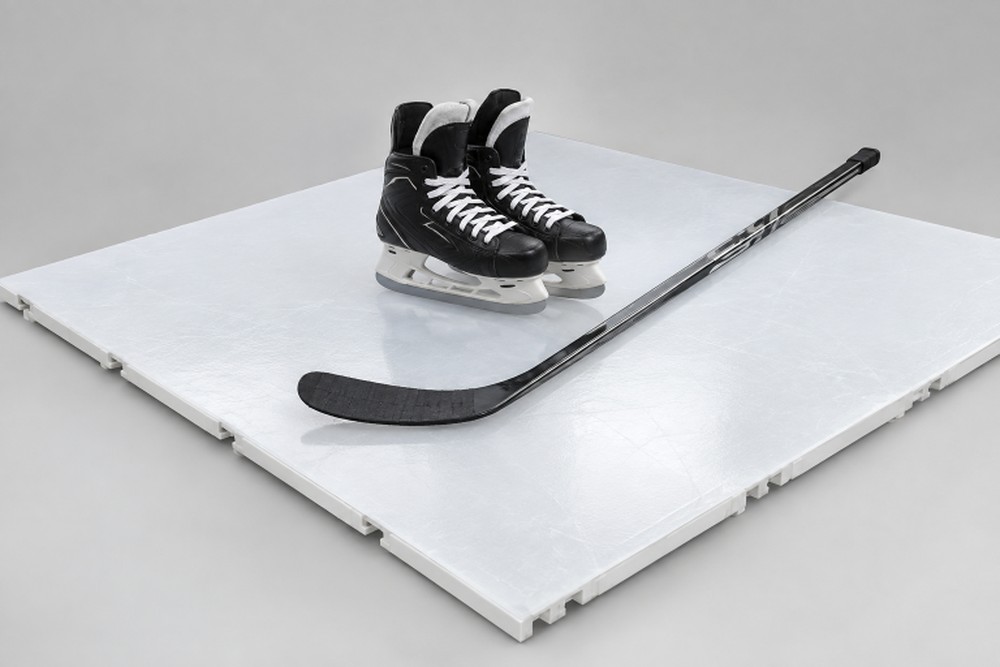
Synthetic ice is a solid polymer surface intended for use with metal-bladed ice skates. It is commonly assembled from interlocking panels, allowing a rink to be configured for a permanent installation or a temporary event. The panels need a stable, reasonably level base so their seams remain secure and the skating area feels consistent underfoot.
As explained in the general overview of synthetic ice, these surfaces are used where ice is impractical and in specialized skating applications. The experience differs from refrigerated ice because the blade travels across a polymer surface rather than frozen water.
How It Compares With Traditional Ice
- Cooling: Synthetic ice does not require a refrigeration system during use. Traditional ice requires freezing and temperature control equipment.
- Water: A synthetic surface does not require water to form the skating layer, whereas a conventional rink relies on water and regular resurfacing.
- Location: Synthetic panels can be used in many indoor or outdoor locations, subject to manufacturer guidance and site conditions.
- Setup: Modular panels can be removed, stored, and installed again, making them useful for flexible spaces and temporary programs.
Training Uses for Hockey and Skating
Synthetic ice works best when the training objective is clear. Hockey players can practice shooting, passing, puck handling, balance, and foot placement. Goaltenders can work on controlled movement, recoveries, and positioning. Skaters learning fundamentals can use a smaller area to practice posture, stopping, turning, and basic edge awareness with close supervision.
For coaches, the advantage is repetition. A full rink is not necessary for a shooting lane, stickhandling station, or short skating circuit. Off-season sessions can focus on skills that benefit from deliberate practice, including:
- Stickhandling and puck-control drills
- Passing and shooting repetitions
- Goalie movement exercises
- Balance, stride, and edge-control work
- Basic skating instruction for new participants
However, high-speed team systems, full-ice conditioning, and regulation game preparation are generally better suited to traditional ice. Matching the surface to the purpose helps participants get more value from each session.
How Synthetic Ice Supports Community Programs
Towns, schools, nonprofits, and recreation departments can use a modest rink to introduce skating in places that cannot support a conventional facility. Programs may include beginner lessons, youth hockey clinics, family activity days, school enrichment sessions, adaptive opportunities, or fundraising events. A smaller footprint can make it easier to fit skating into a gym, covered area, park, plaza, or multi-use facility.
Access also depends on thoughtful operations. Clear participant rules, appropriate skates, barriers where needed, good lighting, trained staff, first-aid readiness, and active supervision all contribute to a safer experience. A rink should be welcoming, but it should never be treated as unattended play equipment.
Using Synthetic Ice for Events and Seasonal Attractions
Pop-up skating can give winter festivals, shopping districts, resorts, schools, and city parks a memorable activity without requiring a chilled rink. Lights, music, food vendors, markets, and holiday programming can turn a skating area into part of a broader visitor experience. Because panels can be taken down and stored, an organizer may be able to reuse the same rink for future seasons or different types of events.
Early planning should cover expected attendance, available square footage, entry and exit paths, skate rentals, staffing, weather exposure, cleaning procedures, and storage. Bigger is not always better. A compact rink may be easier to supervise, quicker for guests to enter, and better suited to a busy site with limited space.
Key Planning Steps for a Synthetic Ice Rink
- Set the main goal: Decide whether the rink will serve training, lessons, public skating, events, or several uses.
- Measure the site: Check length, width, ceiling height, doors, walkways, and storage access.
- Inspect the base: Use a firm, clean, level surface free of standing water and major irregularities.
- Choose a layout: Plan for open skating, shooting lanes, beginner zones, viewing areas, and barriers.
- Prepare for safety: Include signs, lighting, protective padding where appropriate, and supervision procedures.
- Create a maintenance routine: Remove debris, inspect connections, clean the surface, and keep stored components dry.
- Review the full budget: Account for site preparation, shipping, installation, skates, barriers, staffing, storage, and repairs.
Limits to Consider Before Choosing a Surface
Synthetic ice can feel slower and require more effort than refrigerated ice. Performance can vary with panel material, installation quality, temperature, cleanliness, use levels, and maintenance. Blades should be clean and properly sharpened, while dust, grit, moisture, and loose debris should be removed promptly to support glide and reduce avoidable hazards.
Before purchasing a large installation, test the surface if possible. A trial can help coaches, facility managers, and event planners determine whether the glide, maintenance needs, and rink layout align with their intended use.
Common Questions About Synthetic Ice
Can people skate on synthetic ice in warm weather?
Yes. The surface does not need to be at freezing temperatures to be skatable. Outdoor installations should still follow manufacturer recommendations for sun, rain, heat, and cleaning.
Is synthetic ice suitable for beginners?
It can support supervised introductory lessons and basic skill practice. New skaters should receive instruction, use properly fitted skates, and wear safety gear appropriate to the program.
Does a synthetic rink need maintenance?
Yes. Operators should clean the surface, remove debris, inspect panel joints, and follow the care guidance for their specific system.
Can it replace a regulation hockey rink?
Not in every situation. Synthetic ice is especially useful for selected training and recreation, while regulation games, advanced skating elements, and full-speed drills may require traditional ice.
Final Takeaway
Synthetic ice gives communities and athletes more opportunities to skate year-round. Its strongest applications include focused training, beginner instruction, temporary attractions, and programs in locations without a refrigerated rink. With realistic expectations, careful site preparation, reliable maintenance, and strong safety practices, it can become a useful part of a wider skating program.