Key Takeaways
- Choose flooring by room conditions, not just color or appearance.
- Consider moisture, traffic, comfort, maintenance, and budget before deciding.
- Use moisture-aware materials in entryways, kitchens, bathrooms, and laundry rooms.
- Check subfloors and lower levels for moisture, damage, and uneven areas.
- Consider children and pets when evaluating durability and easy cleanup.
- Coordinate flooring throughout the home using compatible colors, finishes, and transitions.
- Prepare properly before installation by checking measurements, underlayment, clearances, and installation requirements.
Choosing flooring for a North Carolina home means looking beyond a sample’s color or grain. From rainy entryways and humid summer days to busy kitchens and rooms built over crawl spaces, each area places different demands on the floor. Homeowners researching materials through Artisan Flooring of NC can get better results by first defining how every room is actually used. The best flooring plan balances moisture exposure, daily traffic, underfoot comfort, cleaning habits, budget, and visual flow. A material that feels right in a quiet bedroom may be a poor fit beside a frequently used exterior door, while a practical kitchen surface may need softer rugs to improve comfort where people stand and cook.
Start With the Room, Not the Sample
Showroom lighting cannot reveal how a floor will handle wet shoes, chair movement, direct sunlight, pet claws, or frequent mopping. Before comparing finishes, make a short list for each room: who uses it, what comes in from outdoors, how often spills occur, and whether the space connects to another flooring type. Function should lead the decision, then style can refine it.
The Five Factors That Shape a Good Flooring Choice
- Moisture: Consider splashes, humidity, leaks, and wet footwear.
- Traffic: Account for people, pets, rolling furniture, and grit.
- Comfort: Decide whether warmth, softness, or quieter footsteps matter most.
- Maintenance: Match the surface to the household’s realistic cleaning routine.
- Budget: Include preparation, underlayment, trim, transitions, and installation.
Entryways, Kitchens, and Mudrooms
Entryways and Mudrooms
North Carolina entryways can collect rainwater, sand, pollen, mud, and grit. Porcelain tile and quality luxury vinyl are practical options because they are easy to clean and suited to routine wet messes. Mid-tone colors, varied patterns, and lightly textured finishes can make small marks less noticeable than high-gloss or very uniform surfaces. Use durable mats at exterior doors and promptly clean up abrasive debris.
Kitchens
Kitchens need a surface that handles spills, dropped utensils, chair movement, and long stretches of standing. Luxury vinyl, porcelain tile, engineered hardwood, and certain laminate products can work when selected and installed for kitchen conditions. Water-resistant does not mean a product is designed for prolonged standing water. Review care instructions, protect the perimeter and seams, and use felt pads beneath chair legs.
Bathrooms and Laundry Rooms
Bathrooms and laundry rooms need moisture-aware materials and careful installation details. Porcelain or ceramic tile and waterproof vinyl are common choices, but neither eliminates the need to address leaks, edges, floor penetrations, and the subfloor beneath. In humid rooms, controlling moisture remains essential because indoor mold growth is best prevented by controlling moisture. Choose slip-conscious finishes where appropriate and repair plumbing leaks quickly.
Living Rooms and Dining Rooms
Shared living spaces often balance appearance with daily wear. Hardwood and engineered hardwood offer natural warmth, while laminate and luxury vinyl can provide a wood-look surface with simpler routine care. Consider sunlight, furniture legs, pet activity, and the room’s connection to nearby halls or kitchens. Lower-sheen finishes and natural variation can make everyday dust and minor marks less obvious than a highly glossy, uniform floor.
Bedrooms and Quiet Spaces
Bedrooms usually face less water exposure, so comfort and sound control can take priority. Carpet offers softness and sound absorption, while wood, laminate, and luxury vinyl can create a cleaner, continuous look with adjacent spaces. An appropriate underlayment may improve comfort and reduce transmitted sound when compatible with the flooring system. Plan furniture placement early, especially under heavy beds and dressers.
Basements, Crawl Spaces, and Lower Levels
Lower-level flooring deserves extra investigation before materials are ordered. Concrete slabs, crawl spaces, and subfloors over unconditioned areas can involve moisture and temperature concerns that affect flooring performance. The U.S. Department of Energy notes that floors over unconditioned basements and crawl spaces can contribute to uncomfortable cold floors when insulation and air sealing are inadequate. Select materials only after checking for odors, dampness, soft spots, cupping, or uneven areas.
Flooring for Children and Pets
Families with children or pets benefit from practical finishes rather than perfection-sensitive ones. Look for scratch resistance, stain resistance, easy cleanup, and the ability to replace an individual plank or tile if damage occurs. Very glossy surfaces can quickly reveal paw prints and light scratches. Washable rugs, entry mats, trimmed pet nails, and furniture pads can help protect almost any flooring choice.
Creating a Consistent Whole-Home Look
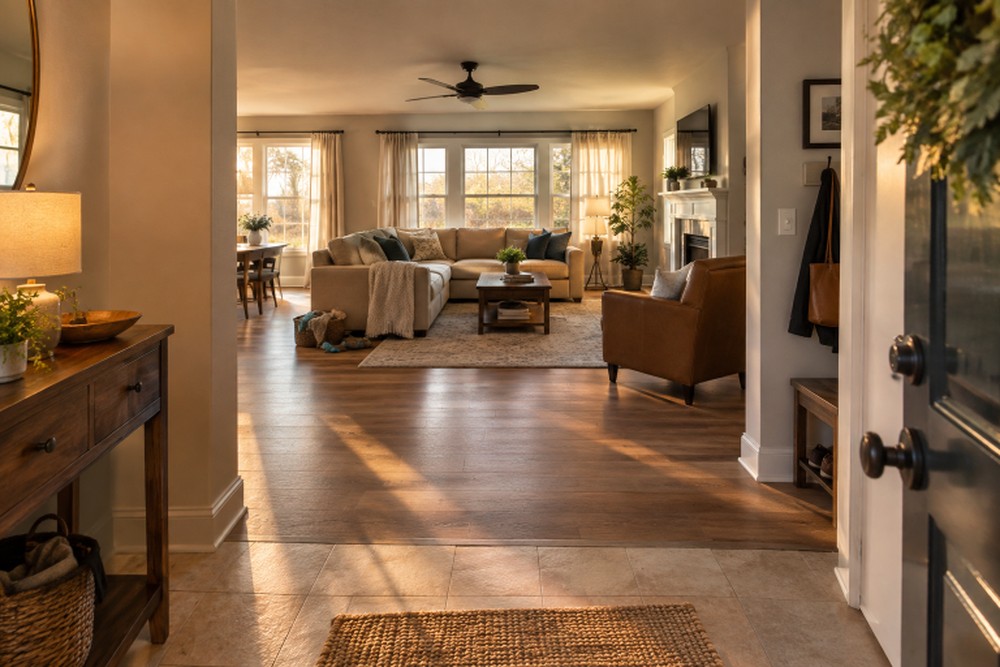
A cohesive home does not require identical flooring in every room. Instead, coordinate color temperature, trim, plank direction, and transitions. Limit major flooring colors within an open sightline, then use rugs and furnishings to add contrast. View samples beside cabinets, paint, trim, and upholstery during the day and evening before making a final decision.
A Pre-Installation Checklist
- Measure rooms, closets, halls, and transition areas.
- Inspect the existing floor for moisture, damage, movement, and unevenness.
- Confirm removal, furniture moving, trim work, and disposal responsibilities.
- Review acclimation, underlayment, moisture barrier, and expansion-gap requirements.
- Check door clearance, appliance height, and transition details.
- Order extra material for repairs and keep product information for future reference.
Common Flooring Mistakes to Avoid
Avoid selecting solely by color, assuming all waterproof claims mean the same thing, or skipping subfloor repairs to save time. Do not overlook indoor humidity, door swings, appliance clearances, and the cost of trim and transitions. Too many unrelated finishes in one visible area can also make a home feel fragmented. Product performance depends on both the material and correct installation.
Final Takeaway
The right floor for a North Carolina home is the one that fits the room’s real conditions. Assess moisture, traffic, comfort, maintenance, budget, and visual continuity before choosing a material. Consider how the flooring will handle seasonal humidity, temperature changes, pets, children, and the amount of daily use in each space. It is also worth checking installation requirements, expected lifespan, cleaning needs, and how easily damaged areas can be repaired or replaced. A flooring material that works well in a bedroom may not be the best choice for a busy kitchen, entryway, or moisture-prone area. With thoughtful preparation, each room can have flooring that feels appropriate, looks intentional, and is easier to maintain and live with for years.