In Newport News, VA, daily routines can include long commutes, desk work, time on a phone, family responsibilities, and weekends spent gardening, walking local trails, or handling projects around the house. Those routines can leave the neck, shoulders, and back feeling stiff. Small, consistent movement habits can support comfort and mobility without requiring an intense workout plan.
For people who want individualized guidance alongside healthier daily habits, comprehensive spinal care services in Newport News VA can be part of a broader approach to managing musculoskeletal concerns. The goal is not to maintain one rigid posture all day. It is to give the body regular opportunities to move, adjust, and recover from repeated positions.
Why Movement Matters for Spinal Health
The body is built to change position. Walking, reaching, bending, climbing stairs, and turning to look around all involve coordinated work from muscles and joints throughout the body. Regular activity may support mobility, muscle endurance, balance, and the ability to manage ordinary tasks with greater ease.
Movement does not have to occur in a single long session to count. The physical activity guidance for adults recommends 150 minutes of moderate-intensity aerobic activity per week, along with muscle-strengthening activity on two days each week. That framework can be divided into manageable walks, cycling sessions, home exercises, and active errands.
How Modern Routines Affect the Back and Neck
Many Newport News residents spend parts of the day seated in an office, driving between appointments, studying, working remotely, or looking down at their phones. Other jobs require standing in one spot, repeating the same lift, or bending frequently. None of these activities automatically causes pain, but remaining in the same position for a long time can contribute to tired or stiff-feeling muscles.
Discomfort is rarely explained by a single factor. Sleep quality, stress, a previous injury, work demands, overall activity level, and the way a person responds to symptoms can all matter. Rather than searching for a perfect posture, focus on variety. A comfortable position usually becomes less comfortable when it is held for too long.
The Value of Short Movement Breaks
A movement break can be brief, practical, and easy to repeat. It does not need special equipment or workout clothing. A few minutes of walking or gentle motion can interrupt a long stretch of sitting, standing, driving, or screen use.
Easy Movement Break Ideas
- Walk for two to five minutes after a meeting or class.
- Stand or pace during a phone call.
- Refill a water bottle using a longer route through the building.
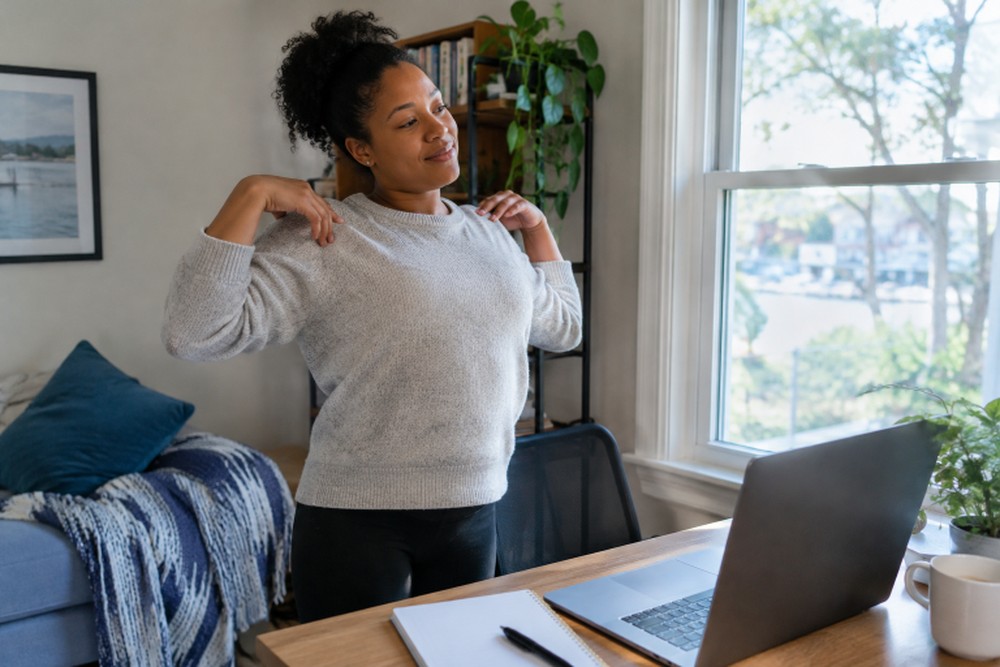
- Perform relaxed shoulder rolls or gentle neck turns between tasks.
- Choose stairs when they are safe and practical.
- Use part of a lunch break for an outdoor walk.
- Change sitting positions before stiffness becomes distracting.
Several short activity periods can be more realistic than reserving all movement for the end of the day. A person who starts with two short walks may find it easier to build a dependable routine over time.
Daily Habits for Better Movement
Morning Habits
Start gradually after waking. A short walk, easy shoulder circles, and comfortable movement through the hips and ankles can help the body transition into the day. If a task involves lifting, give yourself time to warm up before rushing into heavy work.
Workday Habits
Keep frequently used objects within easy reach, support both feet while sitting, and let the shoulders relax rather than holding them near the ears. Alternate between sitting, standing, and walking when the job allows. During repetitive tasks, pause to reset your position and technique.
Evening Habits
After a long day, a gentle walk or light stretching may feel more appealing than collapsing onto the couch for hours. Limit extended phone use with the head angled downward, and arrange pillows and bedding so the body can settle into a relaxed, supported position.
How Strength and Flexibility Work Together
Mobility, flexibility, strength, and endurance each contribute differently to everyday movement. Mobility refers to moving comfortably through the available range of motion at the joints. Flexibility refers to the capacity of muscles and other soft tissues to lengthen. Strength helps with tasks such as carrying groceries, rising from a chair, and climbing stairs. Endurance helps the body continue an activity without tiring as quickly.
Walking, water exercise, gentle cycling, basic bodyweight movements, resistance-band exercises, and balance work are all low-impact options worth considering. Start at an appropriate level for your health and comfort. Progress does not need to be dramatic. Adding repetitions, walking a little farther, or practicing more consistently can be meaningful.
Building a More Spine-Friendly Workstation
An ergonomic setup can make desk work more comfortable, but even an excellent chair cannot replace regular position changes. Use this simple checklist:
- Place the screen near eye level when possible.
- Keep the keyboard and mouse close enough to avoid repeated reaching.
- Use lower-back support without forcing a rigid posture.
- Keep the elbows relaxed near the body.
- Place both feet on the floor or a stable footrest.
- Stand, walk, stretch, or shift position regularly.
When Discomfort May Need Professional Attention
Home movement habits are not a substitute for evaluation when symptoms are significant. Seek professional guidance for pain that persists or repeatedly returns, symptoms after a fall or accident, numbness, tingling, weakness, pain traveling into an arm or leg, or difficulty walking and completing normal tasks. The health information on back pain and related warning signs also emphasizes getting medical attention after an injury or when pain is severe.
Loss of bladder or bowel control, new severe weakness, or other sudden concerning symptoms require urgent medical attention. Stop an exercise that causes sharp pain, worsening symptoms, dizziness, or loss of control, and consult a qualified healthcare professional when unsure.
A Simple Weekly Movement Plan
- Monday: Take a 20-minute walk and do light mobility work.
- Tuesday: Add two short walking breaks and simple strength exercises.
- Wednesday: Try cycling, water exercise, or another low-impact activity.
- Thursday: Focus on frequent position changes during work or study.
- Friday: Take a brisk walk and practice comfortable stretching.
- Saturday: Choose an enjoyable activity, such as gardening, dancing, or a neighborhood walk.
- Sunday: Rest as needed, avoiding a full day of inactivity.
Final Takeaway
Better movement habits in Newport News do not need to be complicated. Short walks, posture changes, sensible strength work, a more comfortable workstation, and regular breaks can help create a balanced daily routine. Begin with small steps, stay consistent, and seek professional advice when symptoms are severe, unusual, or persistent.