Hosting a corporate event takes planning, clear details, and good food. Food brings people together, supports networking, and helps guests stay energized during long meetings. Choosing the right catering service can impact the success of your company event.
Planners must manage budgets, dietary needs, and venue layouts. A clear plan for choosing the menu can make the process much easier.
Corporate Event Style and Guest Count
Planning a successful business event starts with knowing the guest count and the type of event. If you are in the area, finding a trusted Sydney catering provider can create a welcoming setting for team members and outside guests. Knowing your audience prevents food shortages and large amounts of waste.
Formal conferences may need a structured sit-down dinner with several courses. Casual team workshops may work better with finger foods or shared platters. These options let guests move around and talk with others. Matching the food service to your event schedule helps guests stay comfortable and engaged.
Think about your guests and the time of day when choosing a serving style. Breakfast seminars need light foods that can be served quickly. Evening awards dinners may need a more formal menu and presentation. Attention to detail creates a better experience for everyone.
Dietary Requirements
Corporate events include guests with different food preferences and medical restrictions. Offering a range of choices helps every guest feel welcome. Many modern menus include vegetarian, vegan, gluten-free, and dairy-free dishes.
Collect dietary information during registration. It gives the kitchen team enough time to prepare safe and suitable meals. Clear food labels help guests choose their meals with confidence. Here are some features to learn about:
- Collect allergen details
- Keep gluten-free items
- Place clear ingredient cards
- Train waitstaff
Special meals should receive the same level of care as the main menu. Dietary options should look and taste just as appealing as other dishes. Guests will feel included rather than singled out.
Work with the catering team to create complete alternative meals. An inclusive menu can show that company leaders value the needs of their employees and guests.
Realistic Budget for Food and Drinks
Your budget affects menu choices, drink packages, and staffing needs. Setting spending limits early keeps the planning process on track. Professional planners divide costs between food, drinks, equipment rentals, and service staff.
Smart menu choices can stretch your budget without lowering food quality or portion sizes. Choosing seasonal dishes can lower ingredient costs and keep food fresh. Seasonal products may cost less when they are sourced locally.
Remember to include extra costs in your budget. Delivery fees, cleanup charges, equipment rentals, and service gratuities can add to the final bill. Requesting line-item quotes before booking will discourage unexpected costs later.
Interactive Food Stations and Presentation Styles
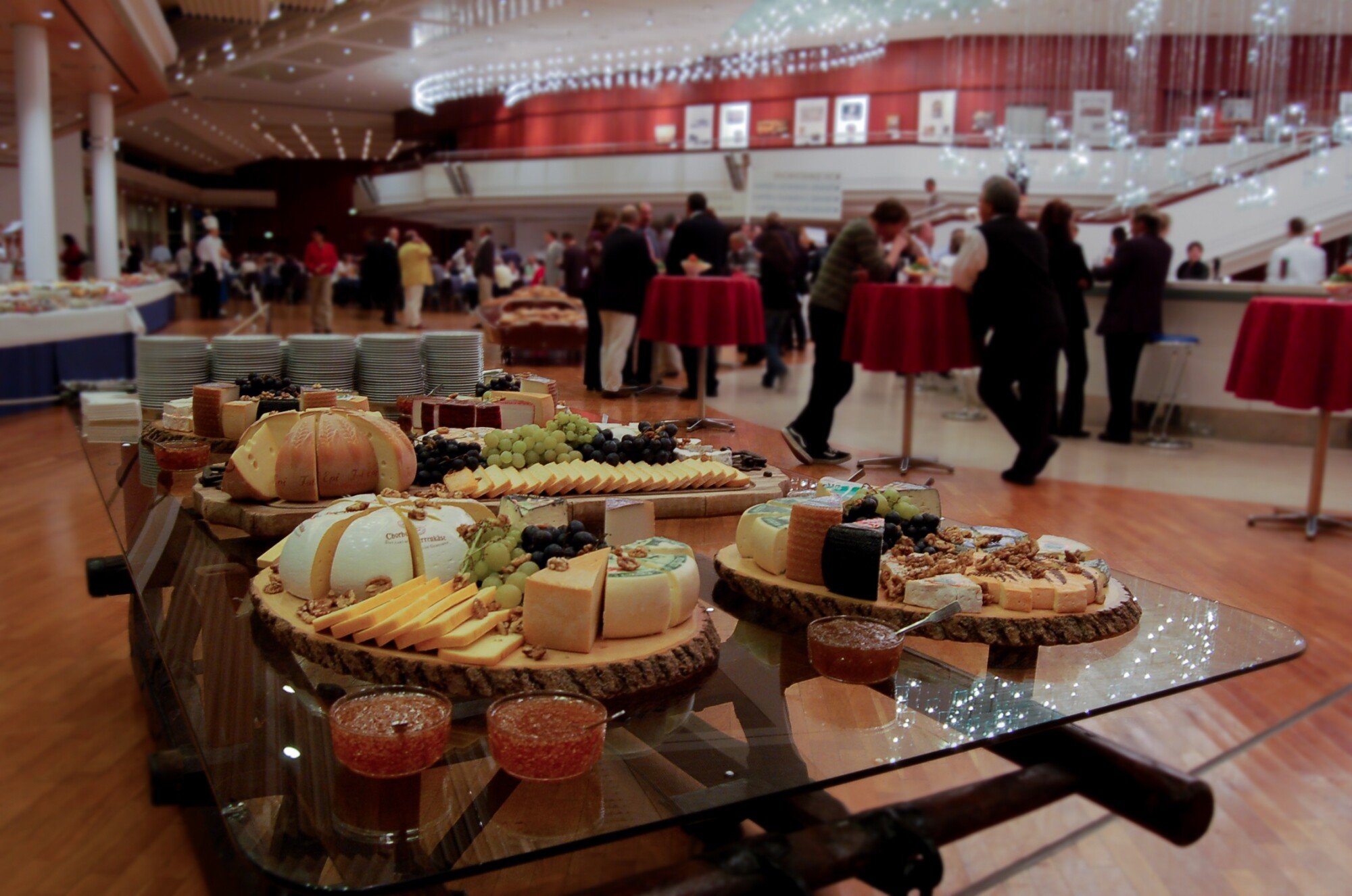
Food presentation can make a strong first impression when guests enter the room. Buffet tables, passed canapés, and plated dinners create a different atmosphere. Your choice should depend on your event goals, schedule, and available space.
Interactive food stations can make the event more engaging. Stations can create a memorable food experience for guests. Live chef stations, custom taco bars, and carving stations can encourage people to talk and interact. Plated meals create a more formal setting. Passed appetizers work well for standing receptions and networking events. Choose a service style that fits both your schedule and room size.
The layout of food stations affects guest movement. Well-placed stations can prevent long lines and crowded areas. Keeping beverage stations away from food tables can spread guests across the room. Good traffic flow makes the event more comfortable and keeps service moving.
Fresh and Balanced Meal Options
Heavy meals can leave guests feeling tired during afternoon meetings and presentations. Many corporate menus now focus on fresh and balanced foods that support steady energy. Light proteins, vegetables, and whole grains can help guests stay alert.
Health trends affect workplace food choices. Corporate catering is moving toward healthier and more balanced meals that support employee well-being. Fresh salads, lean meats, and grain bowls can provide filling options without making guests feel too full. Wholesome food choices can show that you care about the health and comfort of your team.
Do not forget about drinks. Offer choices such as infused water, herbal tea, and fresh juices. Limiting drinks with high amounts of sugar can avoid an afternoon energy drop. A good range of refreshing drinks helps guests stay comfortable and focused.
Coordinate Catering Logistics
The venue can impact how your catering team prepares and serves food. Some venues have full commercial kitchens, and others offer only basic preparation areas. Your caterer must know what equipment and facilities are available before the event.
Food service needs enough room for setup, serving, and cleanup. Confirming access times with venue managers can deter setup delays. Here are some tasks to look into:
- Check kitchen power output and refrigeration capacity
- Create separate paths for guests and service staff
- Schedule loading dock access for equipment delivery
- Set aside waste collection areas behind service zones
Proper spacing helps staff move quickly during busy meal periods. Schedule a site walk-through with your catering manager before the event. Changes can be made before event day. Clear floor plans help catering staff stay organized during setup and service.
Schedule Tasting Sessions
A menu tasting gives you a clear idea of the food quality and presentation. Sampling dishes before the event lets you review flavors, portion sizes, and plating. Use the tasting session to discuss dietary substitutions and portion sizes with the chef.
You can also test food and drink pairings to see how well they work together. Making changes early can prevent problems on event day. Finalize the menu contract only after you have tasted and approved the dishes. Write down the final selections so there is no confusion later.
Taking photos of approved dishes can help. Share these images with the kitchen team before the event. They can use them as a guide for plating and presentation. Written details and photos keep the final service consistent.
Make Your Corporate Event More Memorable
Tasty food and reliable service can turn a routine corporate event into a positive experience. Thoughtful catering creates an impression that reflects well on your organization. To stay updated with more tips, check out our blog.