Key Takeaways
- Commercial truck claims often involve more evidence, more insurance coverage, and more potentially responsible parties than ordinary car accident claims.
- Important records can include driver logs, dispatch messages, truck inspection reports, maintenance files, cargo documents, and electronic vehicle data.
- Prompt medical care, careful documentation, and early evidence preservation can matter after a serious Las Vegas truck crash.
- Fault may involve the driver, motor carrier, truck owner, maintenance provider, cargo loader, or another party.
- Nevada deadlines apply, but evidence may disappear well before a filing deadline arrives.
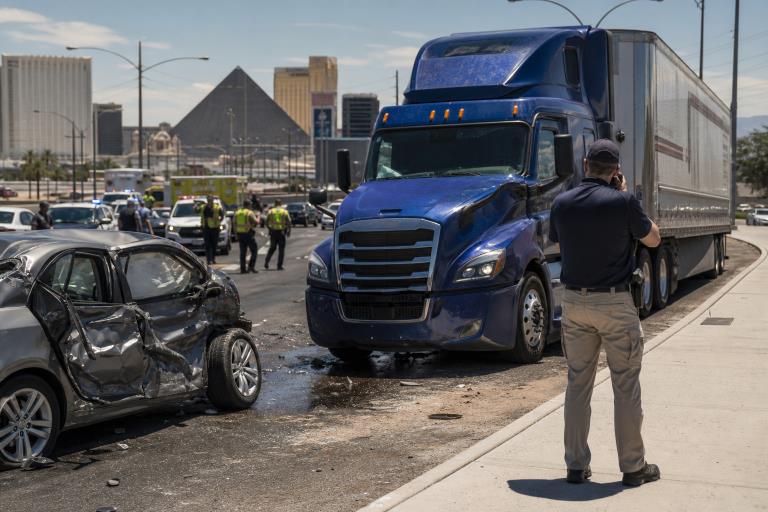
A collision with a commercial truck can change the course of a day in seconds, especially on busy Las Vegas corridors such as I-15, U.S. 95, the 215 Beltway, and roads serving resort construction, warehouses, and distribution centers. The size and weight of a tractor-trailer, box truck, tanker, or delivery vehicle can lead to severe vehicle damage and injuries that are not immediately clear.
These cases also require a different level of investigation than a typical two-car collision. Someone dealing with injuries, vehicle loss, or insurance calls may need help from a truck accident attorney to identify the parties involved, preserve key records, and evaluate the facts before important evidence is lost.
Why Truck Claims Are More Complex
A passenger vehicle crash may primarily involve two drivers and their insurers. A commercial truck crash can involve a broader business chain. The person driving the truck may work for a motor carrier, while the truck itself is owned or leased by another company. Cargo may have been loaded by a separate shipper or warehouse contractor, and maintenance may have been performed by an outside repair provider.
That structure can make responsibility harder to sort out. For example, a crash involving a blown tire may raise questions about inspection practices, maintenance history, the tire manufacturer, and the carrier’s decision to keep the vehicle in service. A rollover involving cargo may lead to questions about weight distribution, loading procedures, or securement.
Truck-Specific Evidence Can Tell a Larger Story
Photographs, witness statements, and the police report remain important, but commercial vehicles can create additional sources of information. A prompt investigation may seek to preserve:
- The truck’s license plate, USDOT number, carrier name, and trailer markings.
- Pre-trip and post-trip inspection reports.
- Maintenance, repair, and tire replacement records.
- Driver qualification, training, and disciplinary records.
- Cargo manifests, loading records, and bills of lading.
- Dispatch instructions, delivery schedules, and communications.
- Dashcam footage, nearby surveillance video, and witness contact information.
In Las Vegas, nearby camera footage can be particularly useful because crashes may occur near hotels, retail centers, construction zones, loading docks, or major intersections. Video systems can overwrite old recordings, so identifying possible footage early is often important.
Electronic Records and Driver Hours
Modern commercial vehicles may generate electronic information about operation, location, braking, speed, and driver activity. Depending on the truck and the circumstances, records may include GPS data, engine control module information, onboard video, and electronic logging device data.
Federal rules require many commercial drivers who must keep hours-of-service records to use electronic logging devices that create records of duty status. Those records may help show driving time, rest periods, and whether a driver was operating under scheduling pressure. They are only one part of the evidence, and they should be reviewed in context with physical evidence and witness accounts.
Multiple Parties May Share Responsibility
Commercial truck claims differ because the driver is not always the only person or business whose conduct matters. An investigation may consider whether any of the following contributed to the collision:
- The truck driver, for speeding, distraction, fatigue, unsafe lane changes, or other driving errors.
- The motor carrier, for hiring, supervision, training, dispatching, or maintenance practices.
- The truck owner or leasing company controls the vehicle’s condition or operation.
- A cargo company or loading contractor is involved when improperly loaded or unsecured cargo is involved.
- A maintenance provider, if a repair or inspection issue contributed to a mechanical failure.
- A manufacturer, when evidence points to a potentially defective truck component.
The right answer depends on the evidence. It is important not to assume that the company name printed on a trailer identifies every responsible party.
Medical Care and Injury Documentation Matter
Truck collisions can cause injuries that range from fractures and burns to traumatic brain injuries, spinal injuries, soft-tissue damage, and internal trauma. Adrenaline and shock may mask pain at the crash scene. A medical evaluation can protect health while also creating a contemporaneous record of symptoms and treatment recommendations.
Keep copies of discharge papers, test results, prescriptions, referrals, medical bills, and work restrictions. A simple daily journal can also document pain levels, sleep problems, mobility limits, missed activities, and changes in the ability to work or care for family. Accurate records are more useful than estimates made months later.
Insurance Issues Can Move Quickly
A trucking company and its insurer may begin investigating soon after a crash. An adjuster may request a recorded statement, broad medical authorization, or early settlement discussion before the full nature of an injury is known. Reporting the crash to the appropriate insurer is important, but it is reasonable to provide only accurate facts and avoid guessing about speed, distance, medical prognosis, or fault.
Save every claim number, email, letter, voicemail, estimate, and settlement document. Do not alter photographs or social media posts about the collision, and do not sign documents that you do not understand.
Nevada Fault Rules and Filing Deadlines
Nevada uses comparative negligence principles. In general, an injured person’s recovery may be affected if their own negligence contributed to the crash, and recovery may be barred if that negligence is greater than the combined negligence of the parties against whom recovery is sought. The wording and exceptions in Nevada’s comparative negligence law make a fact-specific review especially important in cases with several possible defendants.
For many personal injury and wrongful death claims, Nevada law provides a two-year limitations period. However, the applicable deadline can depend on the claim, the parties involved, and other circumstances. A lawsuit deadline is also different from an evidence deadline. Video may be overwritten, trucks may be repaired, and business records may be retained for limited periods.
Steps to Take During the First Few Days
- Prioritize safety, call 911, and obtain medical attention.
- Photograph the scene, damage, road conditions, visible injuries, truck markings, and cargo only if it is safe to do so.
- Get the police report information and contact details for witnesses.
- Preserve medical records, receipts, missed-work information, and insurer communications.
- Avoid guessing about the fault or minimizing symptoms before the facts are known.
- Act promptly to identify and preserve truck-specific evidence.
Commercial truck accident claims are different because the evidence, the parties, and the consequences can be more extensive. A careful approach after a Las Vegas crash can help protect a person’s health, clarify what happened, and preserve information that may be difficult to recover later.