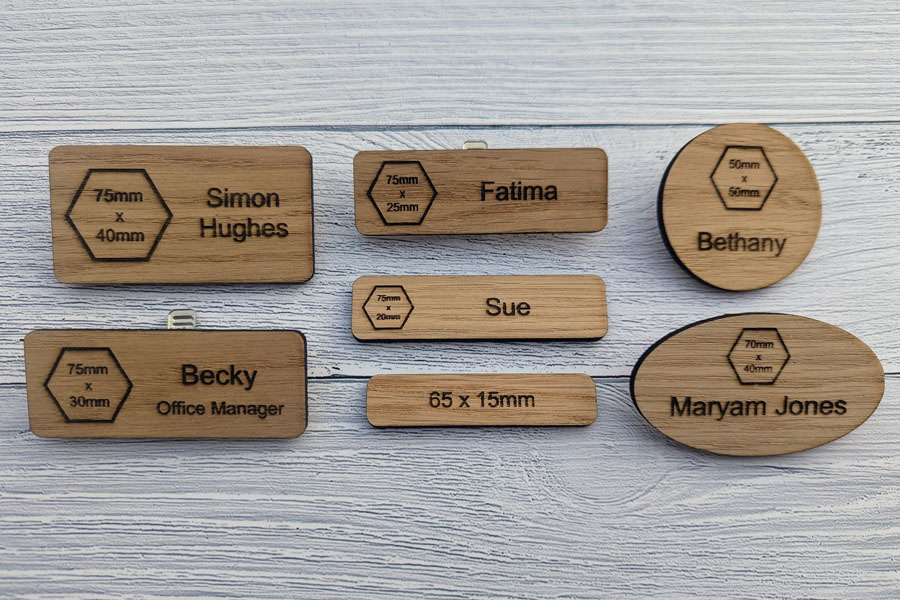
Key Takeaways
- Visible badges help customers, visitors, and coworkers recognize who can provide assistance.
- A badge does not need to display a full legal name to be useful and accountable.
- First names, roles, departments, and internal identification numbers can each serve different needs.
- A clear, readable design is as important as the information printed on the badge.
- Badge rules should reflect the workplace, the level of public contact, and employee safety concerns.
Name badges are small workplace tools with an important purpose. They make it easier for a customer to ask for help, for a visitor to identify the right team member, and for colleagues to recognize one another. When deciding where to buy name badges, organizations should look beyond colors and materials and consider what information employees should be expected to display.
The best policy balances approachability with privacy. A guest should be able to find “Jordan from guest services” without needing access to Jordan’s full surname, personal social-media footprint, or other information unrelated to the job. Thoughtful badge choices can support service and accountability while respecting the people wearing them.
Why Visible Identification Still Matters
In a busy store, hotel, clinic, school, office, or event venue, people need quick visual cues. A readable name and role tell visitors who is available to answer a question, direct them to the right location, or address a problem. That simple clarity can make an unfamiliar setting feel more organized and welcoming.
Visible identification also supports practical accountability. If a customer receives excellent assistance, they can recognize the employee who helped. If an issue needs follow-up, a manager has a clearer starting point than a description of a uniform or a floor location. The goal is not to make every interaction formal. It is to make it easier to find help.
The Privacy Question Behind a Simple Name Badge
A full legal name can reveal more than a customer needs to know. In public-facing jobs, an employee may reasonably worry that a stranger could search for them online, contact them outside work, or use identifying details in unwelcome ways. These concerns can be especially important for younger workers, healthcare staff, employees who work late hours, and anyone with an individual safety concern.
Public contact can also be part of a broader workplace-safety assessment. OSHA identifies several roles with regular public interaction, including customer service and healthcare work, as those that may face elevated workplace violence risks. A policy that addresses workplace violence risk factors can include a sensible review of how much personal information employees disclose.
Privacy and accountability are not opposites. An organization can give customers a reliable way to identify an employee while limiting details that do not serve a clear operational purpose. The guiding question is simple: what is the minimum information needed for this badge to work well?
What Information Should Appear on a Badge?
Different environments call for different levels of identification. Consider these common options and their tradeoffs:
- First name:Often suitable for retail, restaurants, hospitality, public events, and other high-contact settings. It is friendly, easy to read, and less revealing than a full name.
- First name and last initial:Useful when an organization needs to distinguish between employees with the same first name while avoiding a full surname.
- Job role:Labels such as “Guest Services,” “Pharmacy Technician,” or “Event Staff” help people quickly find appropriate assistance.
- Department:Helpful in hospitals, campuses, corporate offices, and large facilities where a role alone may not explain responsibility.
- Employee number:May support internal reporting or formal identification, but is usually less helpful than a name or role for everyday customer service.
How to Create a Privacy-Aware Badge Policy
- Define the purpose.Determine whether the badge is mainly for customer service, internal recognition, visitor control, access credentials, or a combination of uses.
- Identify the audience.Consider who sees it, including clients, patients, students, vendors, visitors, contractors, and the general public.
- Use the minimum useful information.Add only what helps someone identify the employee or understand the employee’s role.
- Invite employee input.Give staff a practical way to raise privacy or safety concerns and request an appropriate exception.
- Separate public badges from secure credentials.A customer-facing name tag should not automatically contain the same information as an access-control card.
- Review the policy regularly.Reassess it after an incident, a privacy complaint, a major role change, or an update to workplace technology.
This approach follows the broader principle of managing privacy risk as part of normal organizational decision-making.
Design Choices That Improve Trust and Clarity
Even the right information fails if the badge is difficult to read. Use high contrast between text and background, make the name large enough for a normal conversation distance, and avoid crowding the layout with small details. Keep names and roles in consistent locations so visitors know where to look.
Attachment matters, too. Choose a magnet, pin, clip, or lanyard arrangement that keeps the badge visible and facing forward during normal movement. Test the finished design with actual uniforms, lighting conditions, and job tasks before issuing it across the organization.
When a Badge Needs More Than a Name
A role or department can be more useful than additional personal details. In a hotel, the “Front Desk Manager” immediately tells a guest whom to approach. In a hospital, roles and departments can help patients understand who is providing care or support. In a secure facility or a field-service setting, a photo may be appropriate when it helps verify that a visitor is dealing with an authorized worker.
QR codes, digital profiles, and other technology should be used carefully. They should provide a defined benefit, such as directing a visitor to approved contact information, rather than exposing personal data or creating a confusing extra step.
How Different Workplaces Can Set the Right Standard
Retail and Restaurants
A first name and, when helpful, a simple role label are usually enough. The badge should remain readable from a distance across a counter or sales floor and withstand frequent public contact.
Healthcare and Senior Care
Name, role, and department information can help patients and families identify staff. Professional credentials and photos may be necessary in some settings, but privacy and safety should shape the final format.
Schools, Offices, and Events
Schools and campuses benefit from clear distinctions between employees, visitors, and temporary workers. Offices may choose a full name for formal client relationships or use a first name and last initial where public exposure is greater. Events need flexible badges for volunteers, vendors, speakers, and rotating teams without collecting unnecessary details.
Common Questions About Name Badge Privacy
Should employees wear their full names?
There is no universal answer. Full names may be appropriate in some professional settings, while first names or first names with last initials may be more appropriate for highly public-facing roles.
Can a business use preferred names?
Yes. A clear process can allow preferred names on public-facing badges while maintaining accurate internal records where needed.
How often should badge policies be reviewed?
A yearly review is a practical baseline, with additional reviews after safety incidents, privacy concerns, staffing changes, or changes to access-control practices.
A Simple Review Checklist
- Can visitors read the name and role at a normal speaking distance?
- Does the badge display only the information people need?
- Can employees report concerns without fear of punishment?
- Are staff, visitors, and contractors easy to tell apart?
- Do photos, QR codes, and employee numbers have a clear purpose?
- Does the design work with uniforms, movement, and lighting?
Conclusion
A name badge can build trust in a small but meaningful way. The strongest designs make employees easy to identify without asking them to disclose more personal information than their work requires. Clear text, useful roles, limited personal details, and a responsive policy can help organizations create a workplace that feels both approachable and respectful.