The sensation of having a toothache is often exactly what it feels like to have your mouth in poor health – as if all the physical aches in throbbing contact with the outside world were cramming themselves into the approximate area of your jaw. Ironically, the pain caused by dental problems is so severe, in part, because they are also some of the easiest health problems to afford long stretches when they advance without giving you distress.
Pain Is A Lagging Indicator, Not An Early Warning
Teeth are not equipped with a good alarm system. The outer layer, which is enamel, does not have any nerve endings at all. This means that cavities can develop and expand through it without you noticing anything. You only start feeling something when the decay goes beyond the enamel and dentin and eventually reaches the pulp – the soft, sensitive tissue at the center of the tooth containing nerves and blood vessels. The inflammation of the nerves is known as pulpitis, and it usually causes a severe toothache.
This is important because pulpitis does not indicate that “a problem is beginning”. It means that a problem has passed the initial stage, when it’s easy and cheap to treat, and has entered the costly phase. When the cavity is still small, a dentist can normally solve the problem in less than an hour by adding a filling. If the nerves are affected, you will likely need a root canal treatment, probably a crown for protecting the remaining tooth, or in the worst case the tooth will need to be extracted. None of these alternatives are fast or cheap.
Gum disease has a similar pattern but it’s even more insidious. Gingivitis, which is the initial stage, only causes some redness and bleeding, but since it doesn’t hurt too much it is often ignored. When left untreated, it develops into periodontitis, which affects the bone and tissues that keep the teeth in their place. Periodontitis can remain active for several years without causing pain. Most people realize that something is wrong only when the teeth start shifting or loosening – and by that point the damage is usually irreversible, and the treatments are very invasive.
The Actual Cost Math Of Waiting
Here’s something that people don’t often talk about when they advise you to brush and floss regularly to prevent dental issues. Dental problems progress. They only get worse if left untreated, and they don’t resolve on their own. A cavity will never remain the same size. An infection won’t stay contained. Every day, week, and month that you put off treatment will result in larger and more extensive treatment, with your eventual bill reflecting this unfortunate reality.
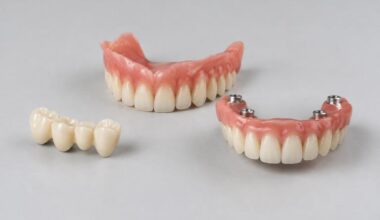
Consider the prices. A check-up and cleaning is the least expensive visit you can expect to the dentist. A tiny, early filling for a small area of decay is next in line. A root canal (plus the crown needed to protect the tooth afterward) costs several times more than a filling. An extraction + implant (since missing teeth should be replaced for overall oral health) is thousands of dollars, often running you on average $3,000 to $5,000 by the time you finish paying for the initial extraction, the implant itself, the abutment that connects the implant to the crown, and the crown that goes on top. Compare that at any given stage to what you would pay if you simply got the tooth taken care of right away. Early decay could mean a filling as low as a few hundred dollars. The gap is not small. It’s the cost of treatment versus what could have been a discount a few months ago. And it’s a new treatment versus the tooth that could have been saved for your lifetime.
Making Prevention The Default, Not The Afterthought
The good news is that none of this requires heroic effort. Routine dental check-ups, generally recommended around twice a year, exist specifically to catch decay and gum disease before they produce symptoms. Dental X-rays are a big part of why these visits work: they show what’s happening between and beneath teeth, well before it would ever show up as pain or visible damage. A dentist looking at an X-ray can spot the start of decay or early bone loss around the gums long before you’d have any reason to suspect a problem.
The barrier for most people isn’t convenience. It’s cost perception. Research from the Australian Institute of Health and Welfare’s National Study of Adult Oral Health found that around 30% of Australian adults avoided or delayed a dental visit in the previous year specifically because of cost. That’s a significant portion of the population making a financial decision that, based on the cost differential between prevention and treatment, tends to work against them. Skipping a $150 check-up to “save money” only makes sense if nothing’s wrong. If something is wrong, that skipped visit usually turns into a bill many times larger down the line.
This is why the financial planning side of the dental care equation is important. Preventive maintenance effectively turns an unpredictable, potentially large expense into a small, scheduled, and budgetable one. Two check-ups a year is a cost you can plan around. A root canal and crown you didn’t see coming is not. For most people, taking out dental insurance turns the math in their favour by making the cheap preventive visit the default choice rather than the avoided one. Extras cover isn’t something you claim on after a crisis. It’s what makes the twice-yearly clean an easy yes-please and lets you get on with the rest of your life.
- Schedule your dental appointments routinely, ideally every six months, rather than on an as-needed basis
- Get the X-rays your dentist suggests, as they can find problems a visual exam can’t
- Realize that your gums aren’t supposed to bleed vigorously after each floss
- Put your extras cover to use with the two free annual check-ups it usually provides
- Book in for the little things early on to prevent the bigger things later
That same planning mindset can extend to your daily brushing routine. When comparing options such as an electric toothbrush, consider everyday comfort, ease of use, and the availability and cost of replacement heads. Choosing a tool that fits your habits and budget makes oral care part of your regular household planning, alongside scheduled dental visits.
Why Pain Going Away Doesn’t Mean The Problem Did
Many people make this common mistake: They experience a toothache, take some painkillers, the pain subsides, and they think the problem has gone away. But it hasn’t. When a tooth becomes asymptomatic after an infection has taken hold, the nerve has, in many cases, actually died. The infection is still there, and it can continue to spread through the root and into the jawbone even if you don’t feel anything.
It is one of the biggest design flaws for dental pain. You don’t get a reliable warning signal that tells you how bad the problem is on an ongoing basis. Instead, the pain can become excruciating, then go away, only to return a few weeks later when you have an abscess, significant swelling, perhaps a fever, and a much more urgent – and expensive – situation on your hands.
Emergency Visits Are Priced Like Emergencies
If you let a dental issue spiral out of control, you’re not only liable for the actual costs of the treatment but the urgency as well. After-hours and emergency visits are always going to be more expensive than booking in for a general, school or work-hour visit, because in much the same way that emergency services cost more generally, there’s a premium on having someone available short-notice (when they weren’t expecting to be at work anyway), having to administer treatment with far less time pressure but far greater actual urgency, and often just for getting them to open the door in the first place.
So the true cost of avoidance isn’t just “filling versus root canal.” It’s “scheduled weekday appointment at standard rates” versus “Sunday night emergency visit at premium rates, followed by the root canal anyway.” Waiting doesn’t just risk a bigger procedure. It often guarantees you’ll pay more for the exact same procedure, purely because of when it ends up happening.
Dental Anxiety Is Real, But It’s Not A Reason To Wait
Let’s be real about the psychological hurdle here too. Many people don’t go to the dentist for reasons that go far beyond the price tag; they’re genuinely afraid. That’s still a legitimate barrier, not a personal failure on your part, and it’s worth addressing as such rather than blowing off with a “just toughen up.” The math doesn’t change if your reason for avoidance is fear instead of finances: the longer a problem sits, the more complicated the fix, and – usually – the longer you’re sitting in the dreaded chair, not the shorter the visit. Talking to a dentist about your fears or trying to find one who offers more supportive care and explicitly shorter or staged-out appointments will do more to break the cycle than just hunkering down.
Oral Health Doesn’t Stop At The Mouth
There is a more general price we should also mention. Research has linked untreated gum disease with other conditions such as diabetes and heart disease, and the link appears to be bidirectional: while poor oral hygiene can exacerbate these conditions, they can also worsen gum health. Immune and inflammatory systems that are already busy fighting one battle do not need another persistent infection in the mouth to tackle as well. If you leave a tooth, it is not always a dentist’s surgery that will send you the bill. It might be your GP. Or a hospital. Whose costs will not usually be attributed back to the check-up you skipped five years ago and the filling you couldn’t be bothered to get.
None of this requires a radical rethink of your daily routine. You still begin, and end, with the toothbrush, but it isn’t the end if you see the hygienist as a target to be postponed until the worst happens. It is the end if you see the hygienist’s appointment, or check-up and cleaning, as part of your regular, six-month tune-up: something that you would not miss on a car and will do far more good, and probably cost far less, if you do not wait for the breakdown.